
The Middle East and North Africa moved from cash to digital faster than almost any region. In Saudi Arabia, e-payments made up 79% of retail transactions in 2024, up from 70% a year earlier, according to the Saudi Central Bank. That shift, plus one of the largest migrant workforces in the world, makes payments and remittances one of the strongest product opportunities in the region.
This guide is for teams that want to ship a product, not read another market report. We cover the decisions that make or break a MENA payments or remittance app: which local rails to integrate, how to handle FX and settlement, what the regulator expects, and how to design for Arabic and cash-heavy users. It draws on our own work building fintech applications for the region. For the market-entry and licensing side, we cover that separately in our guide to MENA regulatory sandboxes.
Why MENA payments are worth building for
Saudi Arabia has one of the world's highest smartphone-penetration rates and a young population, the profile that adopts new payment apps fastest. The wider MENA digital payments market is on track to grow at roughly 11% a year through 2031, according to Mordor Intelligence.
Remittances are the second pillar. GCC workers sent $131.5 billion home in 2023 on GCC Statistical Centre data, the largest remittance outflow of any region in the world. Many of those senders still rely on slow, high-fee transfer channels, which is where a well-built app wins.
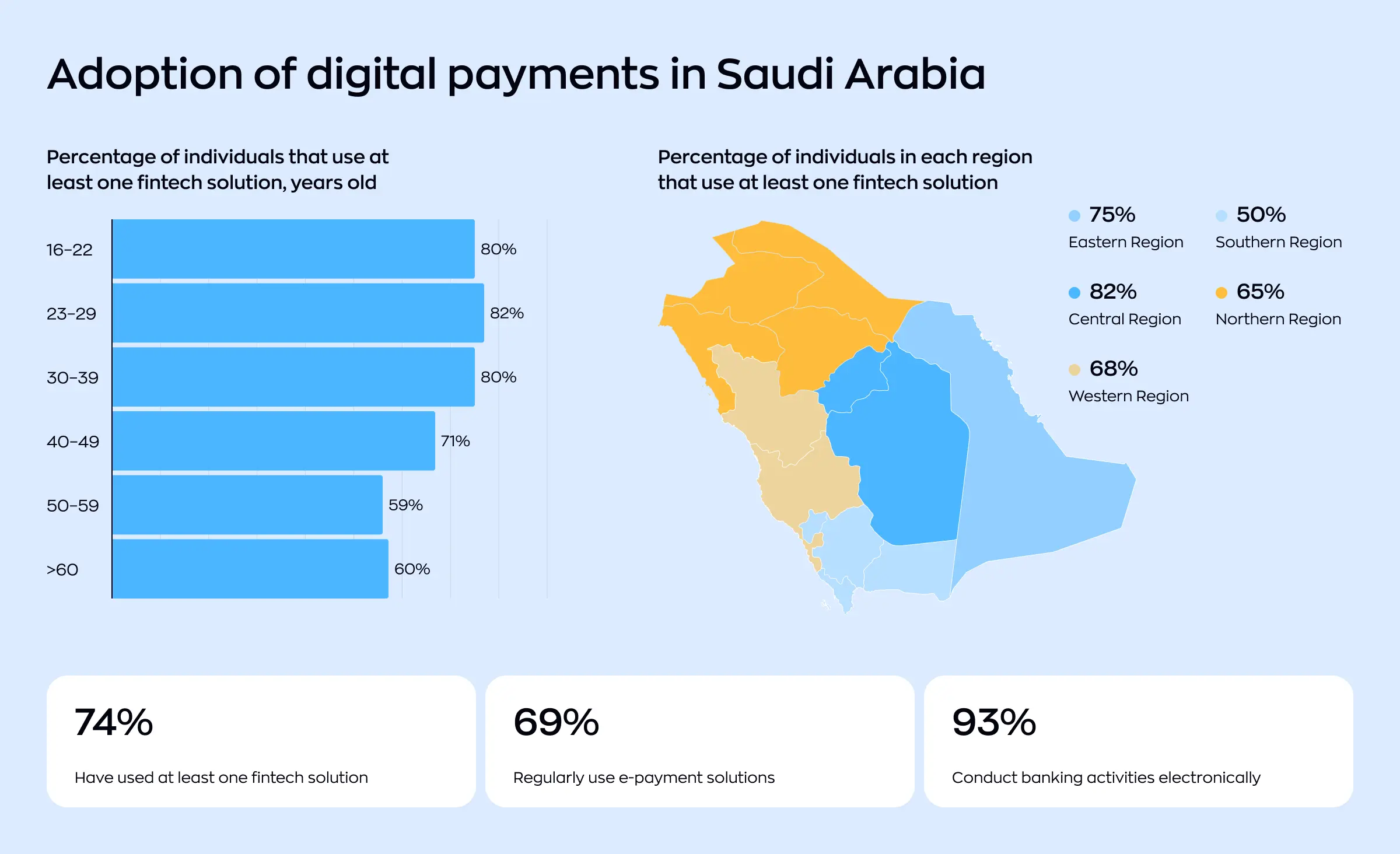
A large unbanked and underbanked population is the third driver. A payment app that lets people transact without a traditional bank account, and that supports cash-in and cash-out through agents, brings new users into the formal economy.
First, decide what kind of product you are building
Payments and remittances sound like one category but split into distinct builds, and the type sets both scope and compliance load. A domestic P2P wallet moves money between users in one country. A cross-border remittance app connects senders to payout partners in each corridor and carries the heaviest FX and licensing work. A merchant or bill-payment app focuses on accepting money rather than sending it. Pick one as your first version; trying to be all three at once is the fastest way to blow the budget.
Pick your local payment rails first
The single most common mistake we see is teams building on global card networks and international wallets alone, then discovering that local users expect the domestic rail. In each MENA market, start with the instant-payment system and the dominant local card scheme, then add international methods on top.
Instant-payment rails are now the backbone of the region. Saudi Arabia's Sarie system, built on the ISO 20022 standard and live since 2021, is now the backbone of real-time transfers in the kingdom. The UAE's Aani lets users send money in real time with a phone number, email, or QR code, and its Open Finance framework, Al Tareq, adds account-to-account access between banks through open APIs. Integrating these is what makes a transfer feel instant instead of taking a day.
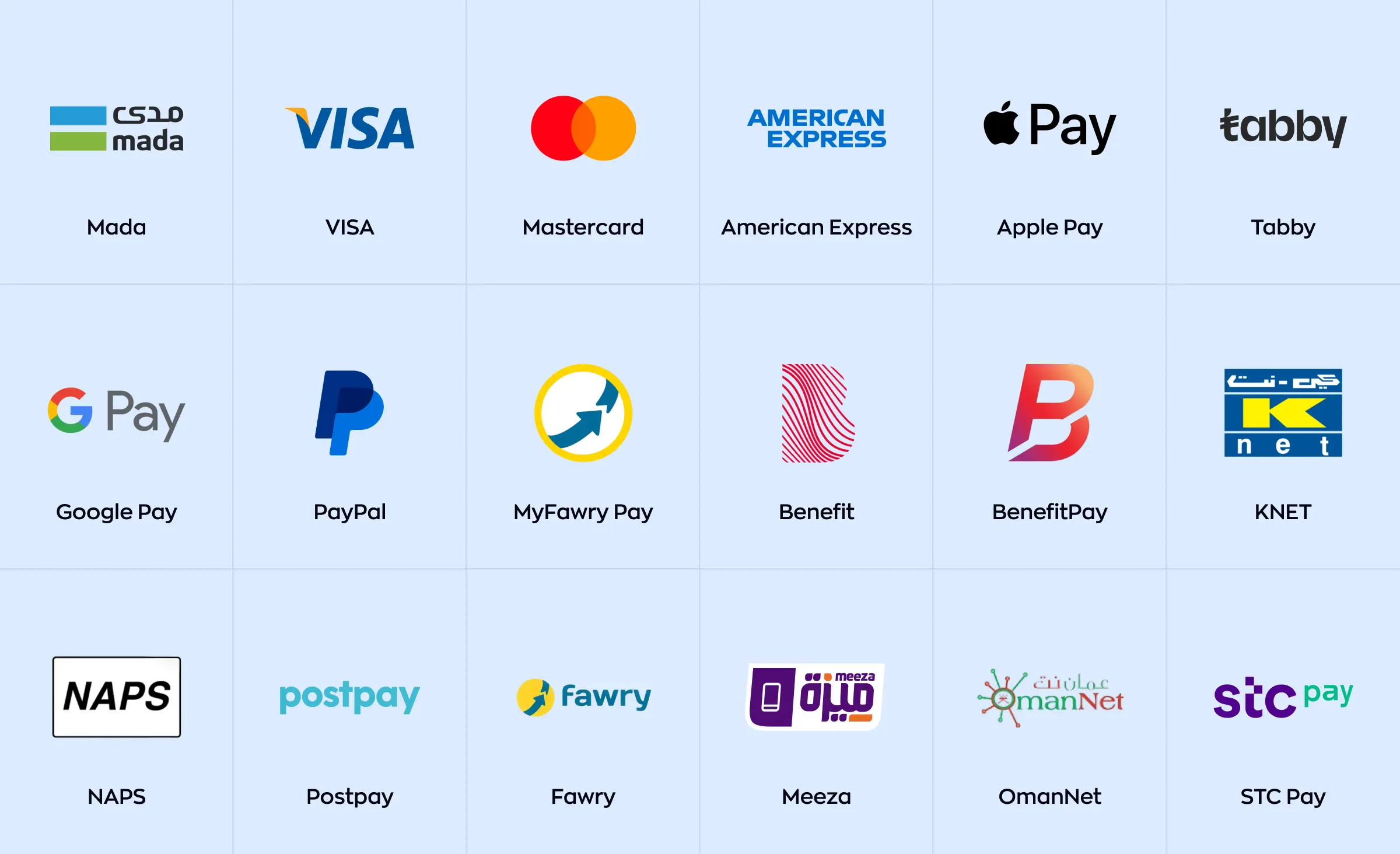
Local card schemes matter just as much. In Saudi Arabia, mada dominates card payments, so any merchant flow that ignores it will lose transactions. Here is how the priorities break down across the main markets:
| Market | Instant-payment rail | Dominant local scheme | Common wallets |
|---|---|---|---|
| Saudi Arabia | Sarie | mada (dominant card scheme) | urpay, Apple Pay |
| UAE | Aani | Jaywan (launched 2024) | Careem Pay, Apple Pay, Google Pay |
| Egypt | Instant Payment Network (IPN) | Meeza | Vodafone Cash |
| Kuwait | WAMD (launched 2024) | KNET (dominant online scheme) | Apple Pay, local bank wallets |
In Saudi Arabia, stc pay has transitioned to STC Bank, a digital bank. Evaluate its current banking services separately from the wallets listed above.
In Egypt, InstaPay is a consumer application running on IPN. Confirm your integration path to IPN with a participating bank or authorized payment partner. For cash access, assess Fawry's cash-in and cash-out agent network as a separate integration from the wallet itself.
The practical rule: budget for one instant rail plus one card scheme per market as your baseline, and treat buy-now-pay-later and international wallets as add-ons once the core works.
Handle FX and settlement transparently
For a remittance app, FX is the product. A sender in Dubai transferring money to family abroad cares about two numbers: how much arrives and how fast. To deliver both, the app connects to a licensed payout partner in each corridor and quotes a rate that already includes the provider's spread over the mid-market rate.
Three mechanics decide whether users trust the transfer:
- Locked, transparent quotes. Show the exchange rate, the fee, and the exact amount the recipient receives before the user confirms. Hold that quote for a fixed window so the number does not move mid-transaction.
- Multiple payout options. Recipients have different access to banking, so support direct bank deposit, cash pickup at agents, and mobile wallets.
- End-to-end tracking. Give the sender real-time status from initiation to payout. Visibility is what turns a one-time user into a repeat sender.
On the engineering side, settlement timing and reconciliation with each partner are where most of the hidden work lives. Instant account-to-account systems such as Sarie and Aani can settle in seconds; card settlement and non-instant bank transfers may take longer. Model pending, settled, and reversed states according to each provider's settlement timing and finality rules.
Build for compliance from day one
Payment and e-money services in the GCC are regulated activities. You cannot launch on goodwill: each market requires authorization from its regulator, and the app has to be built to pass a technical review. The main authorities are SAMA in Saudi Arabia; the Central Bank of the UAE, with the DFSA (DIFC) and FSRA (ADGM) covering the financial free zones; and the Central Bank of Bahrain. If you are still choosing a market or testing a model, a regulatory sandbox is often the fastest legal path in, which we cover in our guide to MENA regulatory sandboxes.
These requirements shape the build directly:
- KYC and AML in the payment flow. Verify identity during onboarding and refresh those checks when risk signals, policy, or applicable rules require it. Apply transaction monitoring and relevant sanctions screening to each transfer; this does not mean repeating identity verification for every payment. We integrate specialized KYC and fraud providers through their SDKs rather than rebuilding identity checks, and configure verification, document scanning, and risk scoring for the product's applicable requirements.
- Data residency and privacy. Personal financial data must be stored and used only as the local law allows, and money flow in the UAE differs from European and US models. Plan where data lives per market before you write the first migration.
- Licensing ownership. The license sits with you or a licensed partner, not with the development team. In most GCC markets the operator needs its own authorization, or an already-licensed partner bank through a banking-as-a-service arrangement, so plan the licensing route early. We help evaluate BaaS providers on technical fit so integration does not become the bottleneck after the contract is signed.
- Sharia-compliant structure where it applies. Products aimed at the broader GCC market often need to avoid interest-based (riba) mechanics, using profit-sharing or cost-plus (murabaha) models instead. This is a product and legal decision to make up front rather than a feature to add later, especially for any credit or savings features.
“In a regulated payments product, the architecture is your compliance posture. Audit trails, data isolation, and least-privilege access have to be designed in, because you cannot bolt them on before a regulator's technical review. The part teams underestimate is the ledger: reconciling pending, settled, and reversed states across rails that clear at different speeds is where most of the real engineering goes.”
Evgeny Leonov, CTO at Ronas IT
Design for Arabic, trust, and cash habits
A payments app in MENA earns trust by feeling native, and three design choices carry the most weight.
Right-to-left is a launch requirement
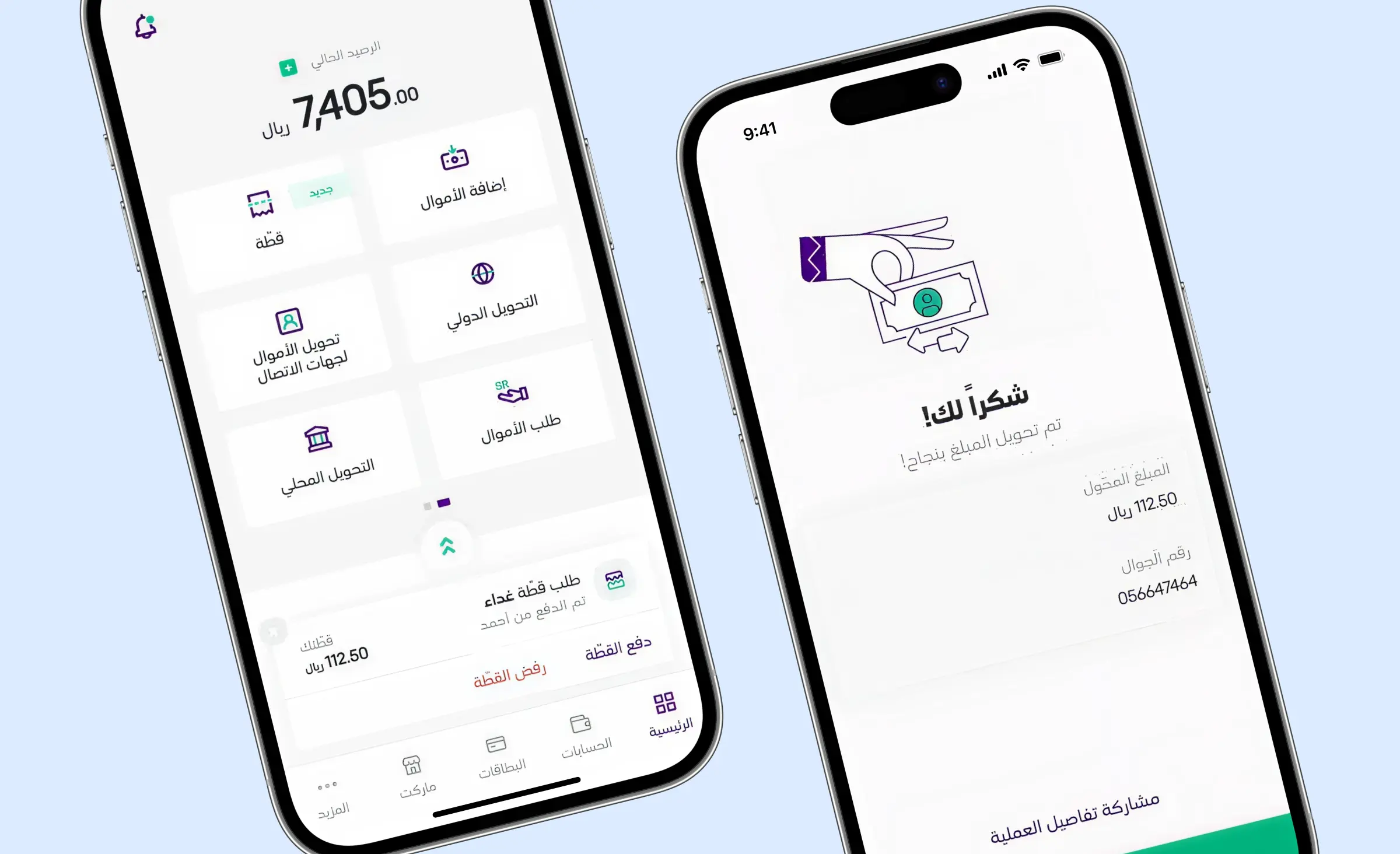
Arabic support requires a right-to-left layout as well as translated strings. Adapt layout and navigation for RTL, mirroring directional icons such as back arrows while leaving non-directional icons unchanged. Localize number and currency formatting without reversing the order of digits. Inconsistent RTL behavior undermines trust in a category where users are handing you their money. We treat RTL as a first-class layout from the first screen, which is far cheaper than retrofitting it. We go deeper on this in our right-to-left design guide, and on the wider build in our guide to creating a mobile banking app.
Keep the flow short for new digital users
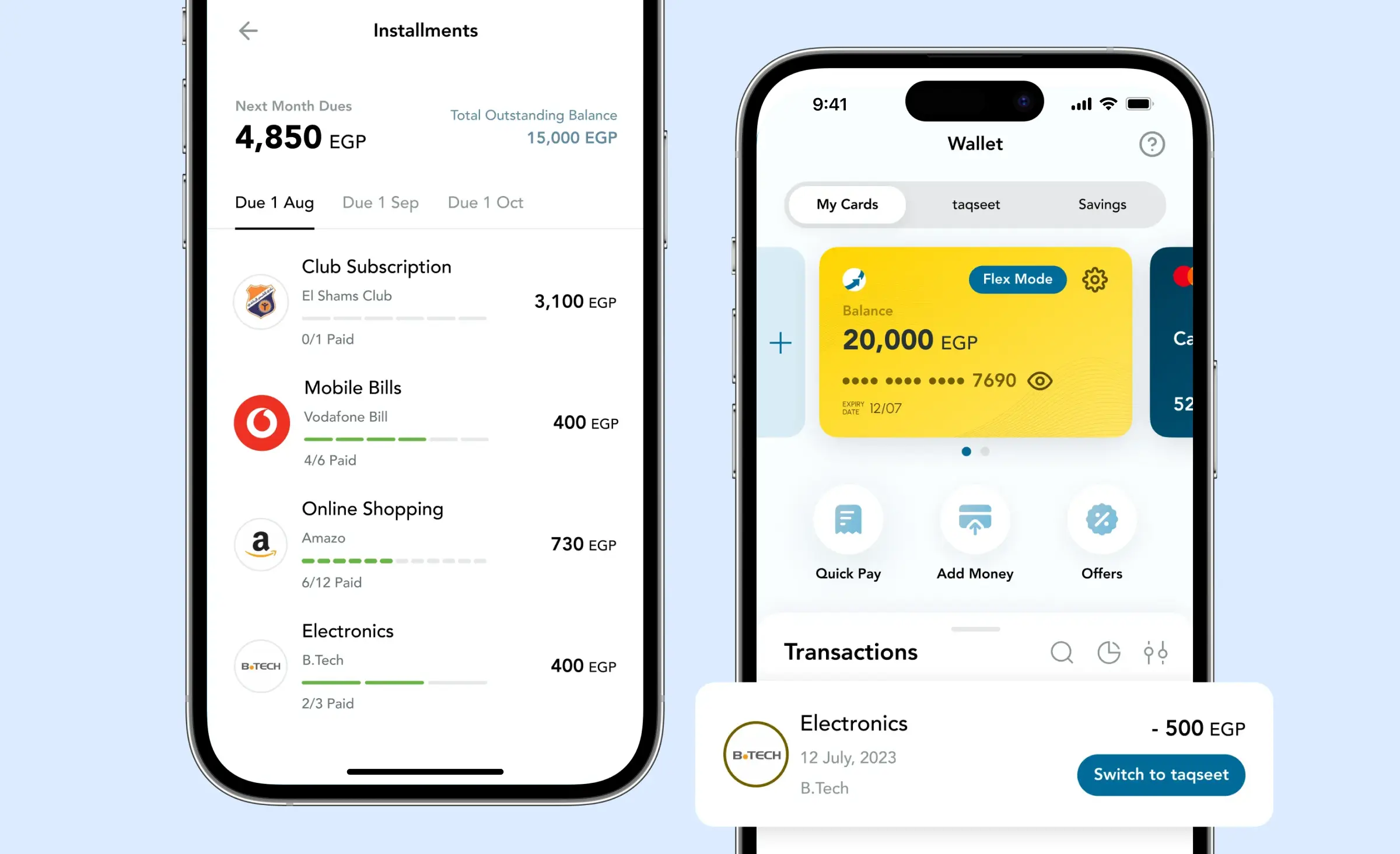
Many users are new to digital payments, so every extra step pushes them back toward cash. Design for the minimum number of taps to complete a transfer or payment, with clear instructions and no jargon. The bar is set by the global wallets people already use, so the experience has to match that level of ease.
Bridge cash and digital with an omnichannel model
The move from cash to digital is gradual, so the app should span both. Let users load a wallet with cash at an agent and then spend it digitally, or pay for online services through a physical outlet. Egypt's bill-payment networks show the pattern working at scale: cash on one side, digital services on the other, with the app bridging the two. This is how you reach the unbanked instead of waiting for them to open bank accounts.
Core feature set for a MENA payments product
Beyond the rails and compliance, a competitive app needs a focused feature set. We group these into three layers so scope stays realistic for a first version.
Everyday payments
- QR payments. The fastest way to reach small merchants who lack card terminals, and the default in-store method across much of the region.
- NFC contactless. Tap-to-pay through modern POS for urban, tech-forward users.
- P2P transfers. Send money with just a phone number, which fits close-knit family networks and undercuts slow bank transfers.
- Bill and top-up payments. Utilities and mobile credit inside the app remove the queues that make cash feel necessary.
Remittances
- Low fees and instant delivery. The whole point of a new remittance app is to beat legacy channels on cost and speed.
- Flexible payout. Bank deposit, cash pickup, or wallet, so money reaches the recipient whatever their access.
- Transfer tracking. Real-time status that reassures the sender their money is on its way.
Value-added services
- Micro-financing. Small credit lines for users and businesses that formal banks skip.
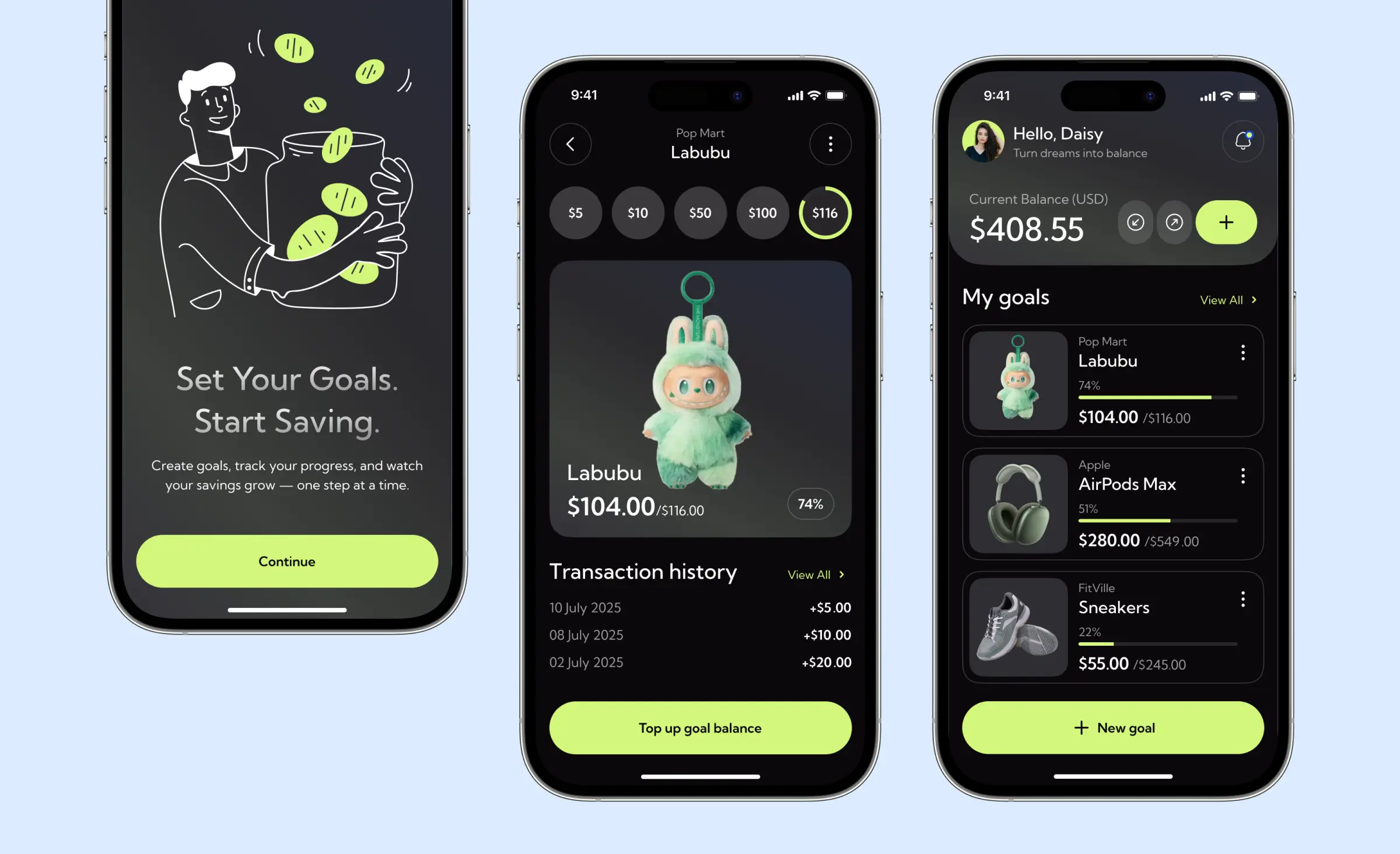
- Budgeting and analytics. Spending insights that help a young, first-time user manage money, a feature we designed into our own neobank work.
- Financial education. Short in-app modules that build confidence and reduce support load.
How Ronas IT builds MENA payment products
Fintech is a large share of our portfolio, and we have designed and built mobile banking and payment products for the region. Our approach starts by mapping the target market's regulatory and payment landscape, then building on a stack we know holds up under financial-grade load: React Native for the app, Laravel for the backend, and managed cloud databases with replication and backups.
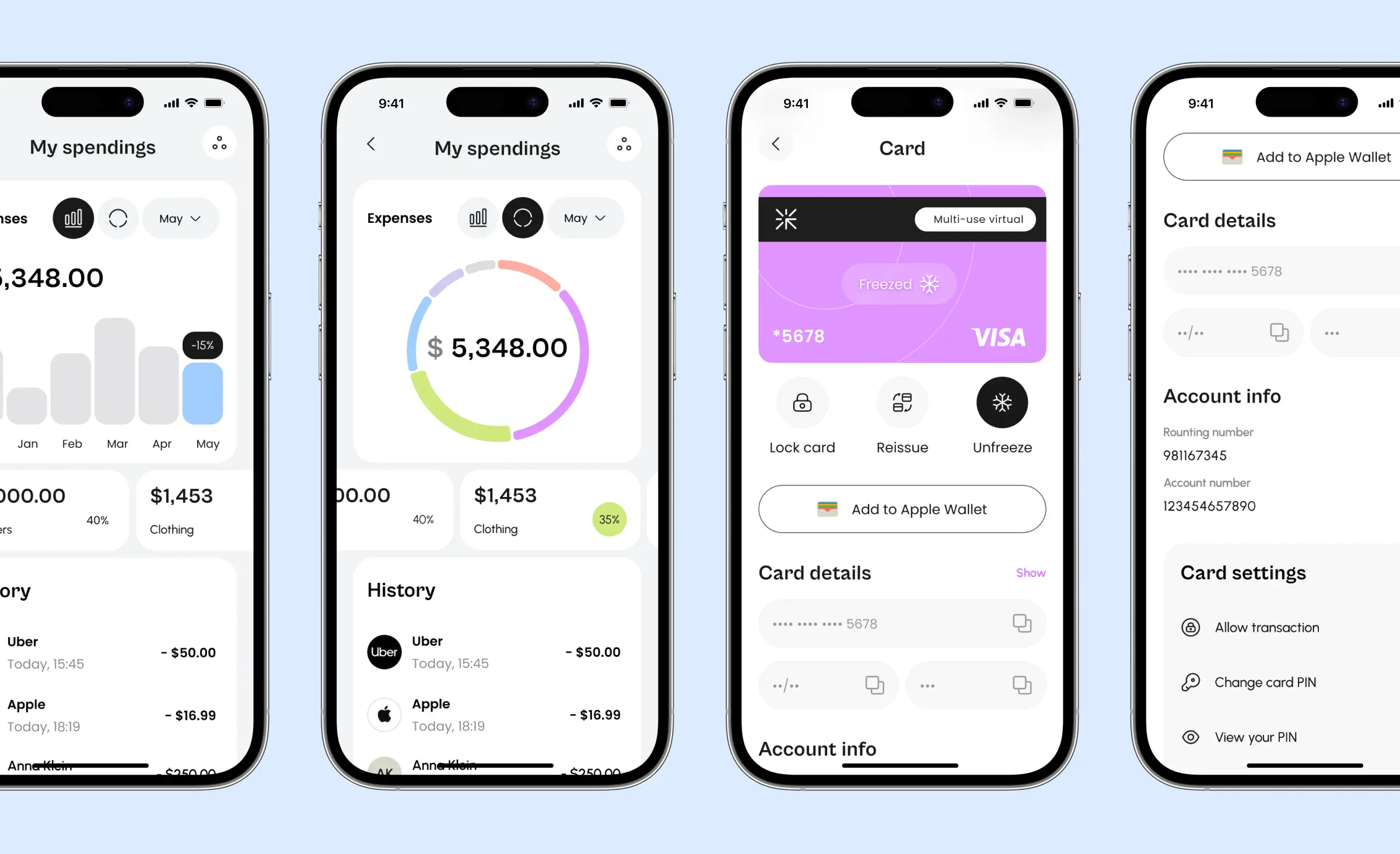
For a UAE client, we designed a mobile neobank app with a strong focus on financial analytics and an AI assistant, and helped the client evaluate banking-as-a-service providers that fit the region technically. That project noted directly how money flow in the UAE differs from European and US models, which is exactly the kind of local difference that shapes architecture.
On the production-security side, our US neobank build shows the pattern we apply to regulated payment products: a microservice architecture that isolates sensitive data per service, KYC through Persona and Sardine, and least-privilege access so developers never touch the full dataset. That app went into production, passed App Store review, and onboarded its first verified users. The same principles transfer to a MENA build, with the local rails and regulators swapped in.
What to do next
If you are planning a MENA payments or remittance product, work in this order: pick your first market and its local rails, confirm the licensing route (direct or through a BaaS partner), then scope the KYC and FX flows before anything else. Those three decisions drive most of the cost and timeline.
We usually start with a short proof of concept to validate one rail and the KYC flow, then scope the full build. A production, compliant payments product sits in our fintech tier on our pricing page, since licensing, local rails, and KYC/AML carry more scope than a generic MVP. For the licensing and market-entry side, a regulatory sandbox is often the fastest way in.



Frequently Asked Questions (FAQs)
How much does it cost to build a payment app for the MENA market?
Which local payment rails should a MENA app integrate with?
Do I need a license to launch a payments app in the GCC?
How do remittance apps handle FX and cross-border transfers?
Is right-to-left Arabic worth building first or retrofitting later?
What slows a MENA payments launch beyond the build itself?
How do you serve unbanked and underbanked users in MENA?
What tech stack do you use to build a MENA payments app?
Related posts


Related Services
React Native App Development Services
Save time and costs with Ronas IT's React Native app development, allowing cross-platform capabilities for iOS and Android. Our team has built 20+ React Native apps since 2020, ensuring rapid development, flexible maintenance, and cost-effective solutions.
MVP Development Services
Need to launch your startup quickly? Ronas IT offers urgent MVP development services, allowing you to get a fully-functional app in 4 to 12 weeks, depending on scope. Ideal for testing business ideas, presenting to investors, or entering the market swiftly. Benefit from our extensive experience and accelerated development process.
Fintech Software Development Services
We build secure, scalable fintech solutions like neobanks, trading, and investment platforms — tailored to your market and regulatory needs. Our team ensures robust KYC, compliance, and data privacy, delivering modern, user-friendly interfaces and flexible microservice architectures. From code audits to full-cycle development and ongoing support, we help you launch and manage high-performing fintech apps with confidence.