
To add Buy Now, Pay Later to an Australian online store, you connect a licensed provider such as Afterpay, Zip, or Humm to your checkout, either through a platform plugin or, for a custom app, through the provider's API or Stripe Payments. Since 10 June 2025, BNPL is regulated credit, so the provider carries the licence while you keep your checkout and data handling compliant. This guide walks through the technical steps, the 2025 rules, timelines, and costs.
We've shipped this exact integration for merchants selling into the Australian market, so the steps below come from real builds, not theory.
What is BNPL and how does it work for merchants?
BNPL stands for Buy Now, Pay Later. It lets a customer buy now and repay in several instalments, usually interest-free if they pay on time. The provider pays you, the merchant, upfront for the full purchase, typically settling to your account within a few business days, and then collects repayments from the customer. You carry no repayment risk; in return the provider charges a merchant fee per transaction, which we break down under costs below.
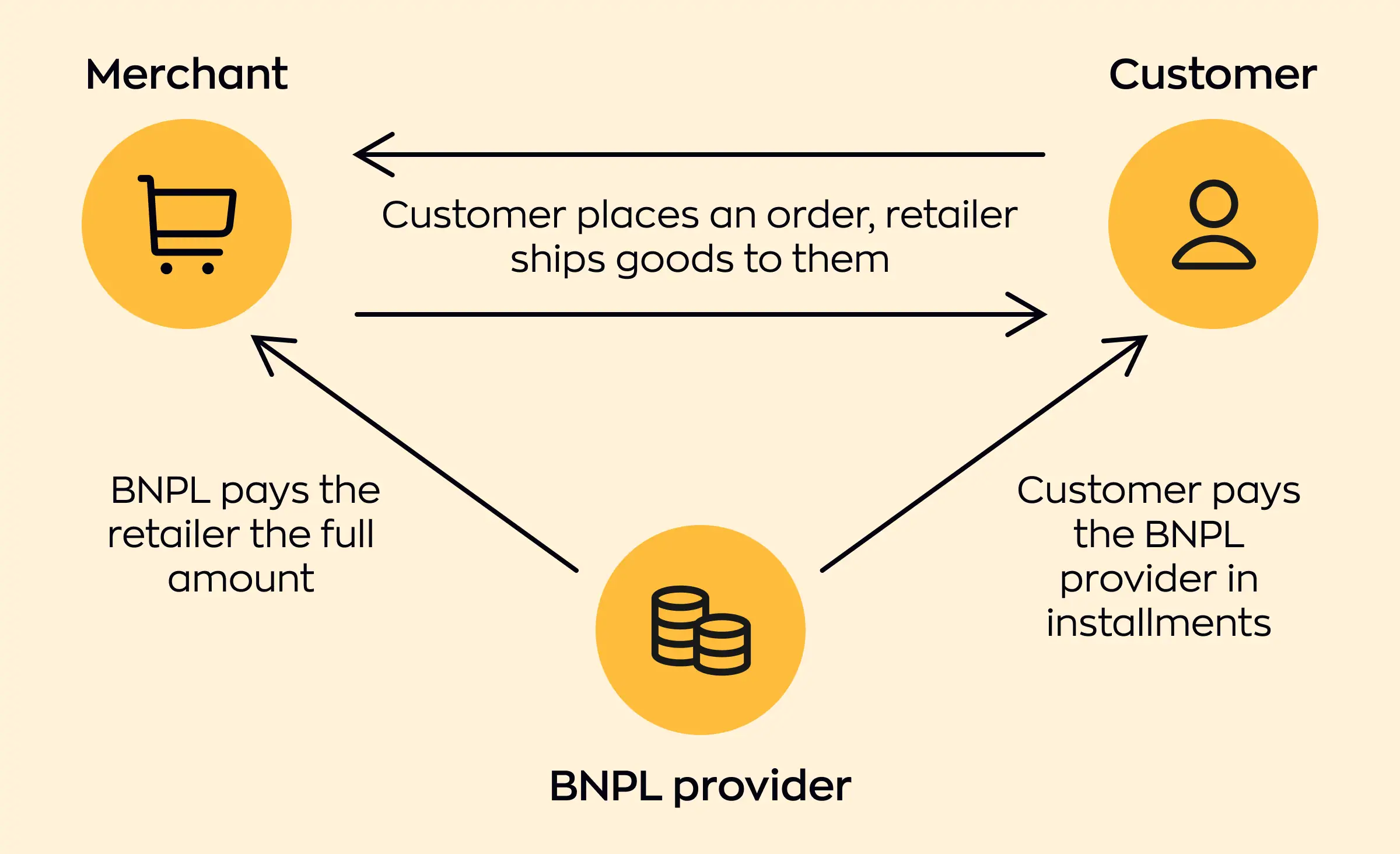
For an online business, BNPL is a checkout feature that can lift conversion and average order value by letting shoppers split the cost. That is why so many retailers and fintech products build it in. For most merchants the decision to offer BNPL is already made; the work is connecting a provider cleanly and staying compliant while you do it.
Why is BNPL so popular in Australia?
The Australian BNPL market is large and still growing. Per Mordor Intelligence, it was worth about USD 19.5 billion in 2025 and is projected to reach USD 48.66 billion by 2031, a compound annual growth rate of about 16.45%. That scale is why BNPL is now a default expectation at checkout rather than a nice-to-have.
A handful of providers dominate. Afterpay leads on consumer reach, Zip Co suits higher-value or longer-term purchases, and Humm covers larger-ticket and interest-free retail, with global players like Klarna and PayPal also active. BNPL has spread well beyond fashion into automotive, healthcare, education, and home furnishings, which widens the range of merchants that benefit from offering it.
What drives adoption
Demand comes from both sides of the checkout. Many Australians, especially younger adults, prefer instalments over credit cards and are comfortable with digital financial services, so a familiar pay-later option reduces friction at the moment of purchase. For a product team, that means BNPL now sits in the same tier as cards and digital wallets: if a competitor offers it and you do not, you hand price-sensitive shoppers one more reason to abandon the cart.
Which BNPL provider should you integrate?
Choosing a provider is a business decision before it is a technical one. It comes down to your average order value, your audience, and the fees you are willing to absorb. The table below summarises the main options and the integration approach each one implies.
| Provider | Best fit | Typical integration path |
|---|---|---|
| Afterpay | Everyday retail, broad consumer reach, lower-ticket carts | Platform plugin, direct API, or via Stripe Payments |
| Zip | Higher-value or longer-term purchases | Platform plugin, direct API, or via Stripe Payments |
| Humm | Larger-ticket and interest-free retail | Platform plugin or direct API |
| Klarna | Global brand reach; shoppers who already use Klarna | Direct API (Pay in 4 not offered via Stripe in Australia) |
| PayPal Pay in 4 | Merchants already running PayPal at checkout | Through PayPal directly (not via Stripe in Australia) |
One detail worth knowing: Zip sells two products. Zip Pay is an everyday account with a limit up to about AUD 1,000 that stays interest-free, while Zip Money handles larger purchases, roughly AUD 1,000 to 5,000 on direct application and more through partnered retailers, over longer terms where interest can apply after the interest-free period. If your average order value is high, that difference changes which product fits.
Klarna and PayPal's Pay in 4 are also active in Australia, but their instalment products need their own integrations; Stripe Payments supports Afterpay and Zip through Checkout or a custom checkout. This lets a single-merchant store offer both without a separate integration for each provider. Marketplaces can additionally use Stripe Connect for seller onboarding and routing payments between parties, as we did in the case below.
Challenges of adopting BNPL
The upside is clear: flexibility for customers, higher conversion for merchants. The trade-offs are worth planning for before you write any integration code.
Integration and maintenance effort
BNPL touches checkout, order management, accounting, and support. Each provider has its own API and posts webhooks differently for payment-state changes, so your backend needs a normalization layer to treat them consistently. Adding two or three providers by hand multiplies that work, which is why the provider choice matters for engineering, not just for fees.
Fees on every sale
Providers charge a merchant fee on every transaction: a percentage of the sale plus a small fixed amount. It is the single line that changes your unit economics the most, and it never goes away. We break down the actual rates in the cost section below.
Disputes, refunds, and returns
Providers usually carry the repayment risk, but you still handle disputes, refunds, and chargebacks in your own system. Some merchants also see more returns when shoppers buy on instalments, so your refund flow has to reconcile cleanly with the provider.
Regulated credit as of 2025
Since 10 June 2025, BNPL is regulated as credit in Australia. Providers must hold an Australian Credit Licence and meet conduct obligations, and merchants inherit new expectations around disclosures and customer processes. The next section covers what this means in practice.
When BNPL is not worth adding
We do not recommend BNPL for every store. If your average order value is under about AUD 30, a 4 to 6% merchant fee can wipe out the margin the extra sale earns you. It also adds little if your audience skews older and pays by card, or if your category already faces high return rates, since instalment shoppers tend to return more. In those cases the honest answer is to skip it and spend the effort on checkout speed instead.
The 2025 BNPL rules, in plain terms
From 10 June 2025, all BNPL contracts in Australia fall under the National Consumer Credit Protection Act 2009 (NCCP Act) as a new category called low cost credit contracts (LCCCs). This puts BNPL in the same framework as traditional credit, but with lighter, tailored obligations. ASIC set out how it works in Regulatory Guide 281, published on 8 May 2025.
For merchants, the key point is that these obligations sit with the provider, not with you as a seller of goods. Your job is to partner with a compliant provider and keep your own checkout, disclosures, and data handling in order.
Key obligations for BNPL providers
- Credit licensing: Must hold an Australian Credit Licence (ACL) authorising credit activities. Under the transitional arrangements, a provider that lodged an accepted application by 10 June 2025 can keep operating while ASIC assesses it.
- AFCA membership: Must join the Australian Financial Complaints Authority before offering BNPL products.
- Responsible Lending Obligations (RLO): Must check each customer’s financial situation and decide if the contract suits them. For higher-risk products, they must do a deeper check. If the credit limit is AUD 2,000 or less, the provider can presume the contract meets the customer’s needs and goals, but it must still confirm the customer can afford the repayments without hardship.
- Fee caps: Total fees are capped at AUD 320 in the first year and AUD 245 each year after, with default (late) fees limited to AUD 120 a year within that overall cap.
- Disclosure and contractual requirements: Must provide clear disclosures of fees, terms, and hardship processes, and update all BNPL contracts to comply with NCCP regulations.
- Anti-avoidance measures: BNPL firms cannot design their products to avoid credit laws. ASIC will watch for and act on any rule-breaking.
Consumer protections
- Responsible lending: Providers must decline contracts if they would cause serious financial problems for the customer. They must give a written reason if asked.
- Dispute resolution: Providers must join AFCA, so customers have access to an independent complaints service.
- Hardship support: Providers must have clear steps to help customers in financial difficulty, just like with traditional credit.
Partner with a provider that is fully licensed and transparent about costs, and expect onboarding to be more rigorous than it was before 2025. Confirm your provider's licence status before you integrate; that single check protects you from building on top of a partner who cannot legally operate.
How to integrate BNPL at checkout: a step-by-step playbook
Australian merchants add BNPL by integrating a licensed third-party provider such as Afterpay, Zip, or Humm. That is the fastest and most reliable route, and the same pattern used when you build a fintech or banking app. Building your own BNPL scheme from scratch means owning credit risk, lending checks, and licensing, which rarely pays off for a merchant. Here is the practical sequence.
1. Choose a BNPL provider
Compare providers on fees, customer experience, setup, and support, using the average-order-value and audience guidance above. Each has its own onboarding rules, so check that your business meets their requirements, such as minimum sales volume or approved product categories.
When you connect to a third-party BNPL provider, make sure they:
- Hold a valid Australian credit licence
- Use responsible lending checks, ensuring the customer can repay
- Provide all legal disclosures to customers
- Meet data privacy and security obligations
- Offer clear complaint and hardship procedures
2. Integrate BNPL into your software
Most providers offer plugins for Shopify, WooCommerce, Magento, or BigCommerce, which is the quickest path if you run one of those platforms; Afterpay and Zip both publish official apps for Shopify and WooCommerce, so enabling them is closer to installing an app than writing code. For a custom website or app, developers wire the provider API or SDK into checkout so BNPL appears next to cards and wallets. If you expect to support more than one provider, Stripe Payments lets a single-merchant store offer supported methods through Checkout or a custom checkout. Use Stripe Connect when building a platform or marketplace that needs connected seller accounts and payments routed between parties.
The real engineering work is not the button; it is the states behind it. Plan for pending, approved, declined, refunded, and partially refunded flows, and make sure each one reconciles between your order system and the provider. Getting these edge cases right up front is what keeps support tickets down later.
3. Ensure compliance with local laws
When you partner with a licensed BNPL provider, most compliance responsibilities are handled by them. Even so, your business should:
- Display terms and conditions clearly in your app or website
- Store and process customer data in line with Australian privacy law (such as the Privacy Act)
- Set up workflows to manage returns, refunds, and complaints according to BNPL regulation
- Stay updated on any changes to credit and privacy requirements
4. Add the BNPL option to checkout
At checkout, customers choose the BNPL provider, enter their details, and receive approval or denial within seconds. Know Your Customer (KYC) checks that verify the shopper's ID and creditworthiness happen automatically in the background, separate from the one-time merchant verification you complete during onboarding.
How we integrated BNPL for an Australian marketplace
We built a mobile marketplace app for the Australian market that connects local makers of organic, cruelty-free cosmetics with eco-conscious shoppers. We ran the whole build, from business analysis and UX/UI design through mobile app and admin panel development, using React Native for the app and Laravel for the backend.
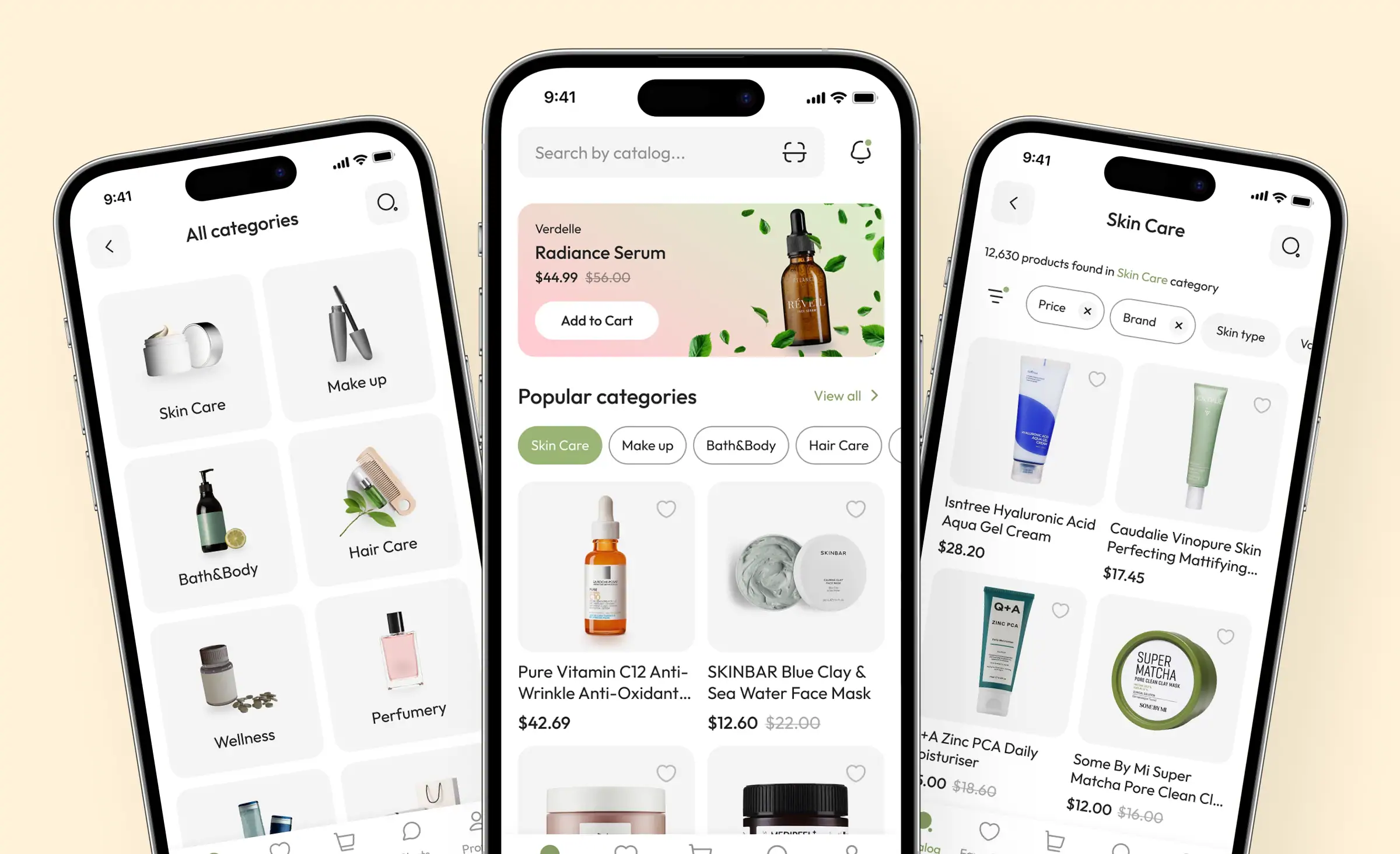
Because Australian shoppers expect BNPL, the app had to support providers like Afterpay and Zip from day one. Rather than integrate each provider separately, we routed payments through Stripe Connect, which supports both and works reliably in Australia and New Zealand. The same integration gave us fast seller payouts and automated Know Your Business (KYB) verification through Stripe, so we did not need a separate identity solution.
“On a marketplace, the trap is integrating three providers three different ways and then maintaining all of it. We route BNPL and payouts through one payment layer, so adding or swapping a provider is a configuration change, not a rebuild. That is what let us keep the payment work to a single integration and hit a four-month MVP.”
Evgeny Leonov, CTO at Ronas IT
The same discipline of pushing payments and identity checks to a licensed partner carries over to other markets. On a US neobank app, we routed banking through a Banking-as-a-Service provider and KYC through dedicated vendors rather than building those regulated pieces ourselves, which is the same pattern behind using a licensed BNPL provider instead of your own credit scheme.
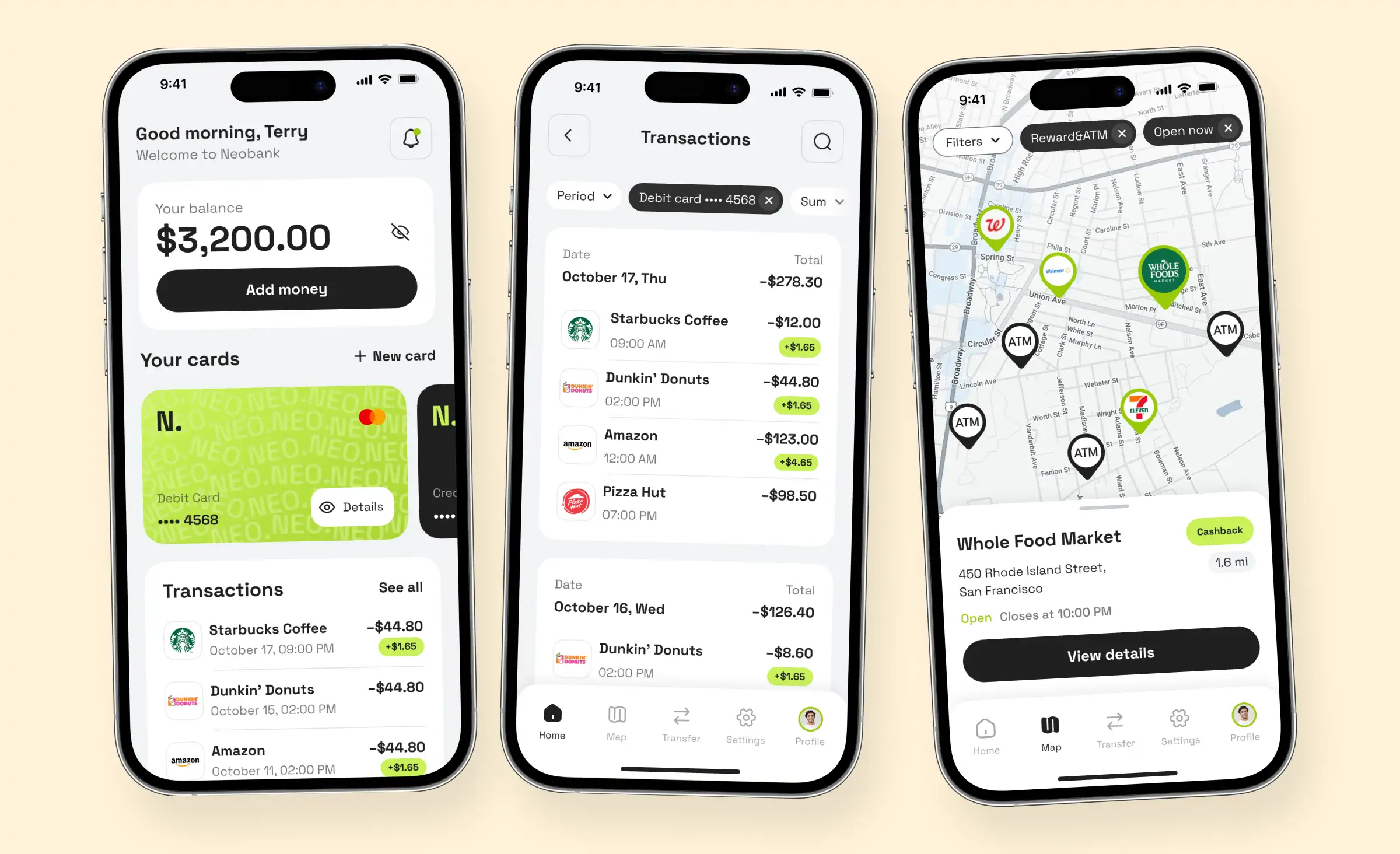
To handle payments and banking there, we integrated Bond as our Banking-as-a-Service (BaaS) platform to connect the app with major US banks and automate account creation, card issuing, and direct deposits. Our team passed the SOC 2 audit that engagement required and considered PCI DSS and ISO/IEC 27001 requirements when building the product, though the app did not hold separate certifications for those two standards. We used Persona and Sardine for KYC identity and fraud checks, sending user data straight to verification and banking partners instead of storing it on our servers.
How much does BNPL integration cost and how long does it take?
Integration is engineering time, not a fixed price tag, and the answer depends on whether you already have a store. If you run an off-the-shelf platform, adding a provider plugin is cheap and takes a few days to a couple of weeks, mostly spent on provider onboarding and testing. Wiring BNPL into a custom checkout through a provider API or Stripe Payments usually takes 2 to 4 weeks of development, with provider approval and merchant verification (KYB) running in parallel. On our pricing page that work falls under third-party API integration, from $3,000 and from one week, a far smaller line item than a full build.
If you are building the app itself rather than extending one, payment integration is part of that larger scope. At Ronas IT, a basic MVP starts from $15,000 and a full-featured build from $25,000, with BNPL and payment work included rather than billed separately.
The recurring cost matters more than the build. Providers charge a merchant fee on every sale: Afterpay, for example, charges roughly 4 to 6% plus AUD 0.30 per transaction in Australia, with larger sales usually at the lower end. If you sell through Shopify without Shopify Payments, its own transaction fee stacks on top, so model the total against your margins before you commit.
Key takeaways for adding BNPL in Australia
Before you brief a developer or install a plugin, work through this short checklist.
- Pick a provider by average order value and audience: Afterpay for reach, Zip for higher-value carts, Humm for larger tickets.
- Before you integrate, confirm the provider holds a current Australian Credit Licence with the appropriate authorisations, or qualifies under the transitional arrangements with an application accepted for lodgement by ASIC by 10 June 2025 that is still pending assessment.
- For a single-merchant store, consider Stripe Payments to offer supported BNPL methods through one integration. Use Stripe Connect for platforms or marketplaces that onboard sellers and route payments to them.
- Design for every payment state up front: pending, approved, declined, refunded, and partially refunded, each reconciled with your order system.
- Keep your own checkout compliant with clear disclosures and Privacy Act data handling; the licensing burden sits with the provider, but the customer-facing experience is yours.
Get those five right and BNPL becomes a low-risk addition to checkout rather than a compliance headache.



Frequently Asked Questions (FAQs)
How do I add BNPL to my Australian online store?
How long does BNPL integration take?
Do I need a credit licence to offer BNPL as a merchant?
Does BNPL actually increase sales?
How much does it cost to integrate BNPL?
Which BNPL provider should Australian merchants choose?
What changed for BNPL in Australia in 2025?
Will adding BNPL to my existing app require a rewrite?
What does BNPL cost me per sale as a merchant?
Related posts



Related Services
React Native App Development Services
Save time and costs with Ronas IT's React Native app development, allowing cross-platform capabilities for iOS and Android. Our team has built 20+ React Native apps since 2020, ensuring rapid development, flexible maintenance, and cost-effective solutions.
MVP Development Services
Need to launch your startup quickly? Ronas IT offers urgent MVP development services, allowing you to get a fully-functional app in 4 to 12 weeks, depending on scope. Ideal for testing business ideas, presenting to investors, or entering the market swiftly. Benefit from our extensive experience and accelerated development process.
Fintech Software Development Services
We build secure, scalable fintech solutions like neobanks, trading, and investment platforms — tailored to your market and regulatory needs. Our team ensures robust KYC, compliance, and data privacy, delivering modern, user-friendly interfaces and flexible microservice architectures. From code audits to full-cycle development and ongoing support, we help you launch and manage high-performing fintech apps with confidence.