AI in Australian superannuation: How funds optimize retirement savings in 2026


Australia’s superannuation system holds about AUD 4.4 trillion in retirement savings as at March 2026, spread across industry funds, retail funds, public sector schemes, and self-managed super funds (SMSFs). The system is compulsory, with employers contributing 12% of workers’ ordinary time earnings since 1 July 2025. That scale is exactly why the industry is now one of the most active adopters of AI in Australian financial services, and why getting the build right matters.
At Ronas IT, we build financial platforms for fintech and investment clients, so we look at AI in superannuation as an engineering problem, not a slide of buzzwords. This article covers where AI actually helps a super fund, what APRA now expects from AI governance, and the technical foundation a fund needs before any model goes near member data.
The state of AI in Australian superannuation in 2026
The pressure to modernize comes from consolidation. According to KPMG’s Super Insights 2026, the top 24 funds hold around 96% of APRA-regulated superannuation assets, excluding SMSFs, and nine mega funds each manage more than $100 billion. Larger funds compete on member experience and cost, and both of those levers increasingly run on data.
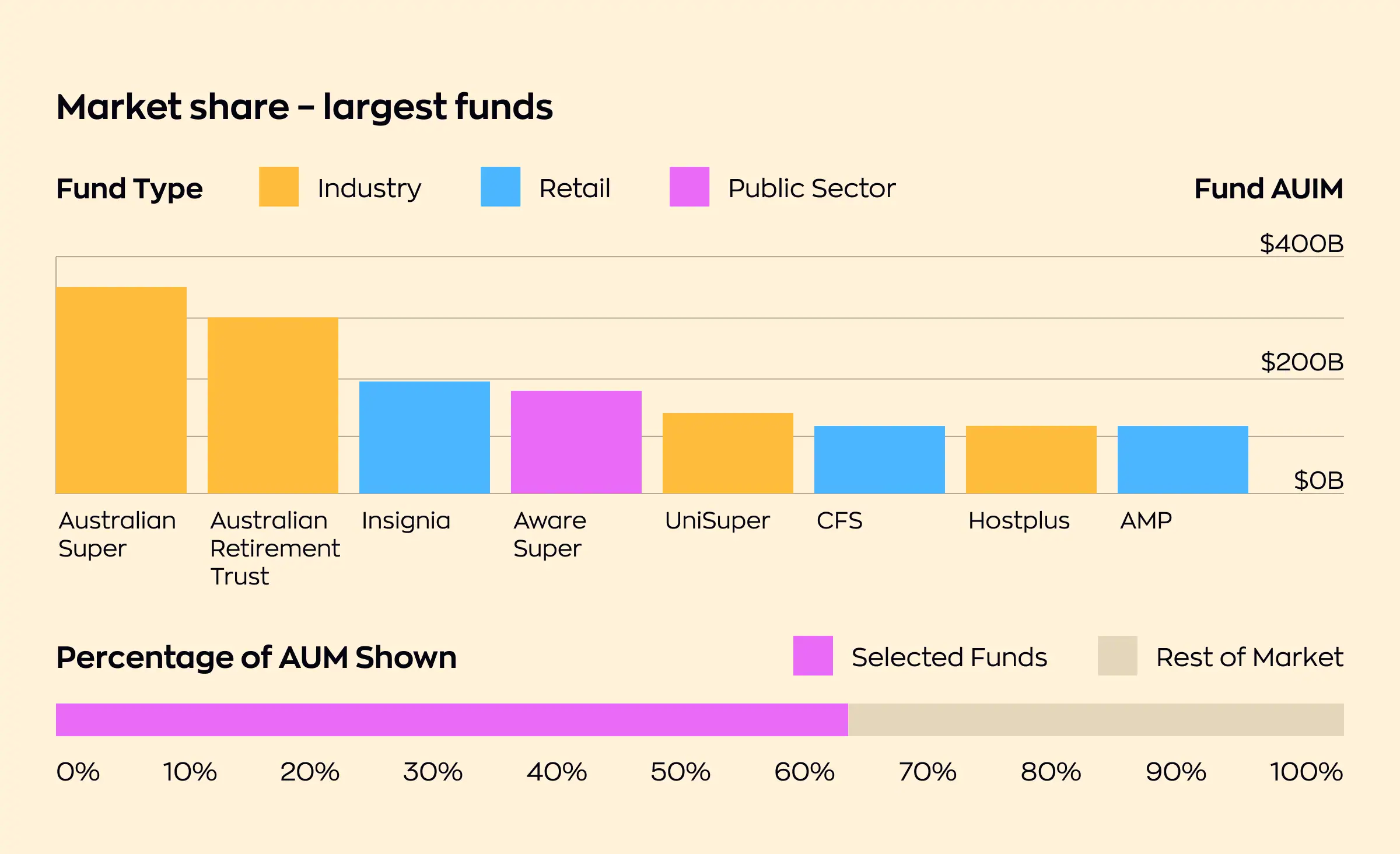
Funds have started to say so publicly. Trade reporting in early 2026 describes trustees using AI for pre-meeting investment briefings, real-time scenario analysis during volatile markets, and decision support inside investment committees. HESTA, for example, has described rethinking portfolio construction at the human-AI nexus. Operating costs averaged $250 per member in FY25, and with the median growth fund returning 10.5% that year (KPMG), funds want technology that lowers cost without touching returns.
Where AI actually moves the needle for super funds
Not every AI idea is worth building. In our experience with financial platforms, four use cases carry most of the return, and each maps to a specific problem the industry already has.
Member personalization
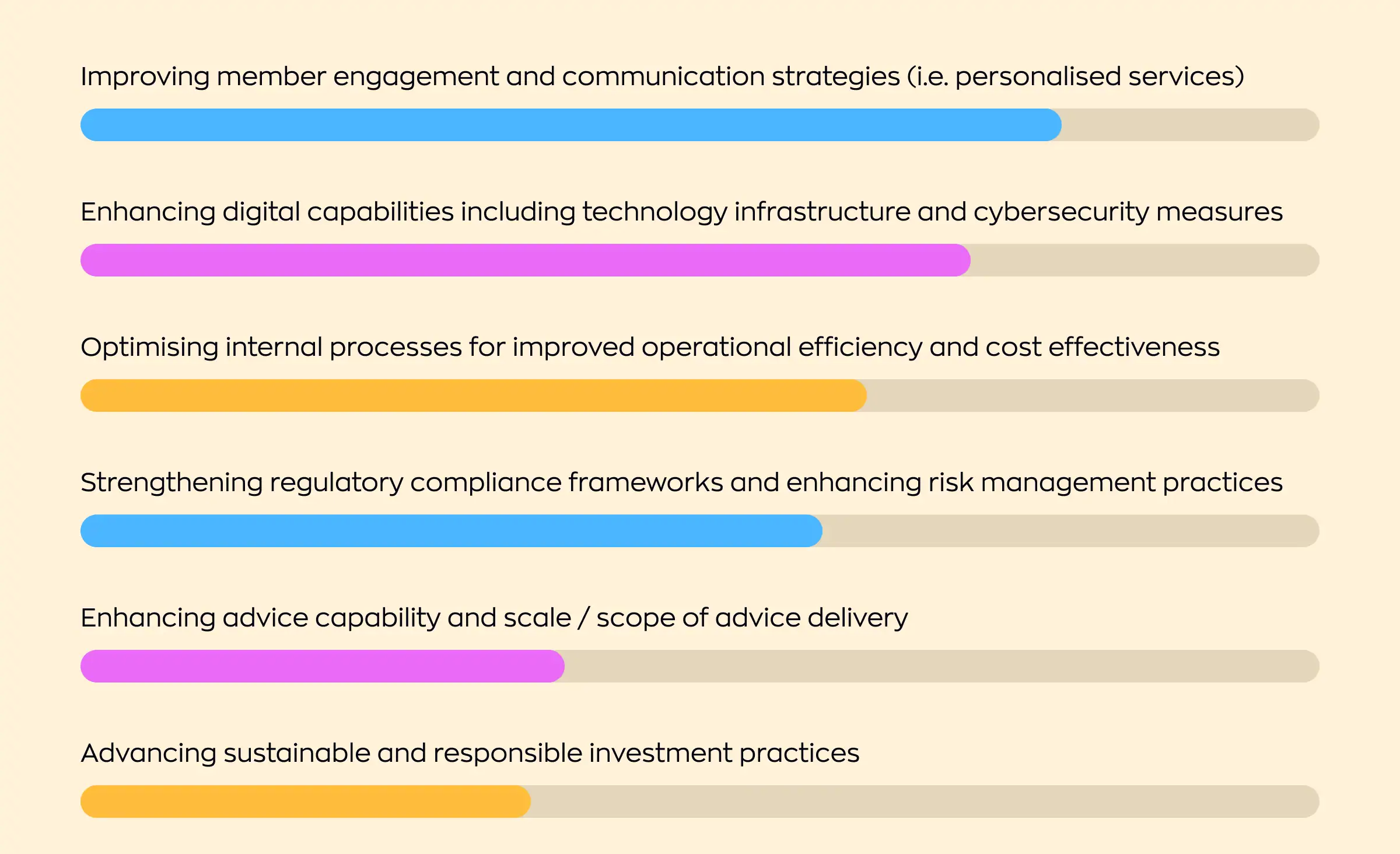
Personalization is the industry’s stated priority. In J.P. Morgan’s Future of Superannuation survey, improving member engagement through personalized services ranked as funds’ top strategic priority. Models analyze contribution patterns, transaction history, and life stage to tailor retirement projections and nudges, the kind of proactive advice funds want to deliver at scale through their member apps. With around 2.5 million Australians expected to retire over the next decade (KPMG), engagement is where funds win or lose members.
Investment scenario analysis
Machine learning helps investment teams model portfolios, forecast returns, and run scenario and sensitivity tests across asset classes, including private markets. During a market shock, that turns a multi-day modelling exercise into a same-session one. The output supports human decisions; it does not replace the trustee’s judgment, which the regulator still holds accountable.
Fraud and AML monitoring
After the March and April 2025 cyber incidents that targeted individual members, fraud detection moved up the list. AI flags unusual transaction and access patterns in real time, strengthening Anti-Money Laundering (AML) checks. Our dedicated AI fraud detection work shows the same pattern across finance: the model raises the signal, and a human team confirms the action.
Operational automation
AI handles high-volume admin such as claims, account changes, and onboarding, and generative assistants answer routine member questions around the clock. This is designed to reduce the cost per member that keeps rising, and it frees specialists for the cases that need judgment. Automation lowers the volume of routine contacts, but it does not empty the call centre. Members still pick up the phone for hardship claims and major life events, so the win is deflecting the simple queries, not replacing human support.
Most funds today run the assistive, chatbot-style AI that has been common since 2023. The newer step is agentic AI, which can carry out multi-step tasks such as adjusting contributions or investment settings on a member’s behalf. A few large funds are experimenting with it, but for most it is still on the horizon. CPS 234’s information-security requirements apply to the information assets of both assistive and agentic AI systems, whether a model suggests an action or executes it. Separately, we recommend defining human approval and escalation points before allowing AI to take actions that affect members.



The compliance reality: CPS 234, CPS 230, and APRA’s 2026 AI expectations
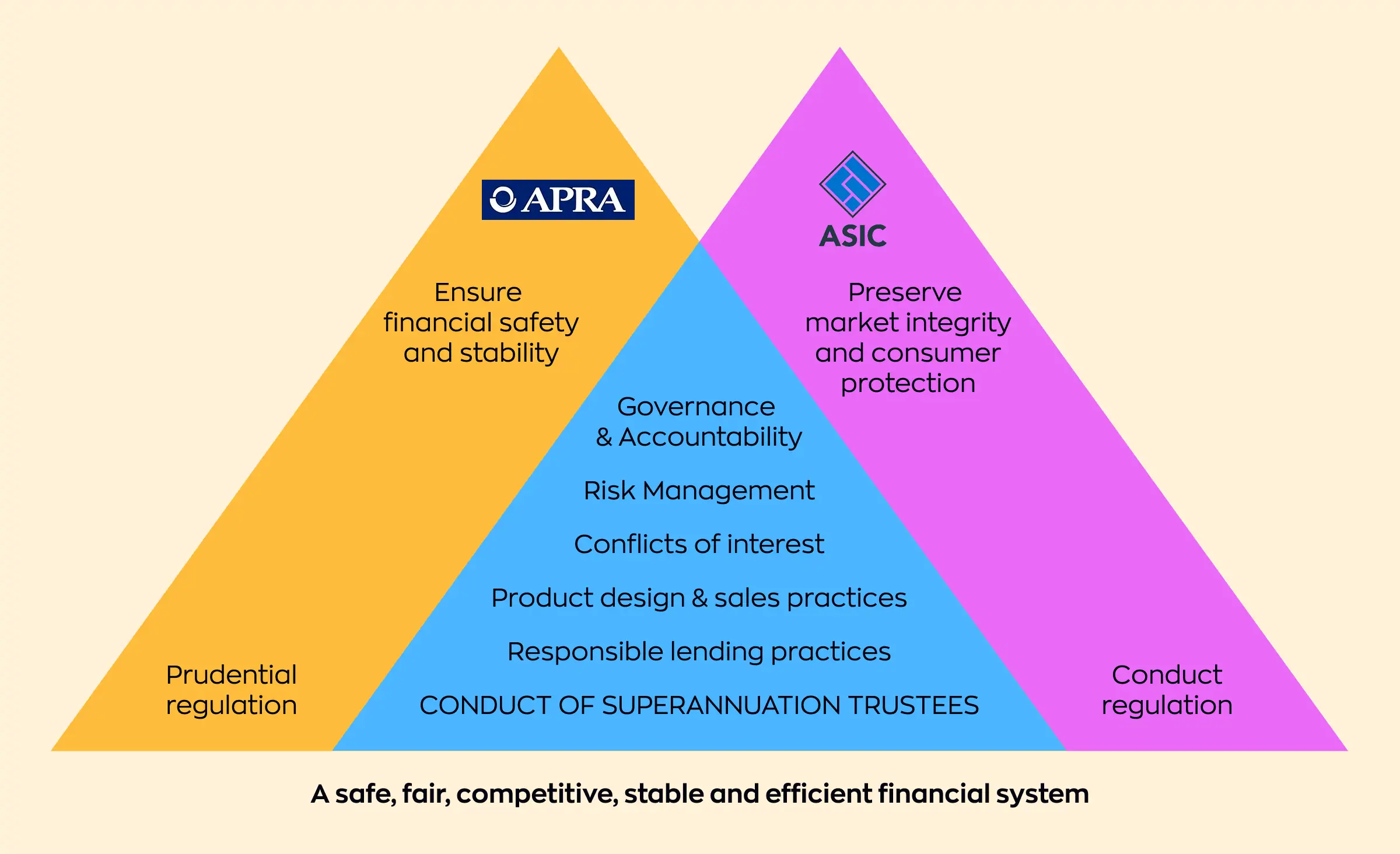
This is where most superannuation AI projects either earn trust or stall. APRA takes a technology-neutral view: existing obligations apply to AI in full, whether or not you call the system “AI.” On 30 April 2026, APRA wrote to all regulated entities, including super trustees, warning that many boards are still developing the technical literacy to challenge AI risk and are relying on vendor presentations without examining key risks such as unpredictable model behaviour.
Two prudential standards do the heavy lifting:
- CPS 234 (Information Security). Because APRA is technology-neutral, CPS 234 already treats an AI system’s information assets (its models, training data, and outputs) as assets to secure. In practice that means access controls on the model, protection against model poisoning, and encryption in transit and at rest.
- CPS 230 (Operational Risk Management). Funds have to bring contracts with material service providers, including AI vendors that qualify, under operational-resilience controls. For pre-existing contracts, the transition deadline was the earlier of renewal or 1 July 2026. That deadline has passed. Funds should now verify affected contracts against the applicable CPS 230 requirements and remediate any gaps; the fund remains responsible for managing service-provider risk.
A separate change comes from privacy law, not APRA. Under the Privacy Act reform, from 10 December 2026 covered entities must disclose in their privacy policies the kinds of personal information used and the kinds of decisions made solely by computer programs or with their substantial and direct involvement, where those decisions could reasonably be expected to significantly affect an individual’s rights or interests. AI governance in superannuation is no longer an emerging expectation. It is a current obligation, and it shapes the architecture from day one.
The technical foundation AI in superannuation needs
The features above only work on a solid base. When we scope an AI build for a financial platform, three things decide whether it ships and survives audit.
Governed, high-quality data
A model trained on siloed or dirty data produces inconsistent answers and fails security review. Funds consolidate member and investment data into cloud storage or data lakes, then apply encryption, access controls, and audit trails aligned with the Australian Privacy Principles and CPS 234. Data governance is not a prerequisite you can skip; it is most of the work.
Integration without a rebuild
Most funds run legacy portals and outsourced administration, so AI has to fit alongside them. A cloud-native, microservice layer lets new capabilities plug in through APIs and scale independently. This modularity also means a fund can update a model or respond to new APRA guidance without disrupting core member operations. We build this kind of scalable software so features can be added over time rather than in one risky release.
Security and responsible AI by design
Given the sensitivity of superannuation data, security is built in, not added later: strong encryption, least-privilege access, and monitoring. Responsible AI adds transparent model design, ongoing bias monitoring, and a human in the loop for decisions that affect members. These are the controls that make an AI feature explainable to a board and a regulator.
How we approach AI builds for financial platforms
We are a software team with 50+ specialists and a fintech track record, from analytics platforms to microservice neobank apps built to run under real financial-security requirements. We do not position ourselves as an AI vendor selling a black box. We build the platform and integrate AI where it earns its place.
“In superannuation, the model is the easy part. What earns a fund’s trust is the engineering around it: governed data, access controls, audit trails, and a person who signs off on decisions that affect members. We build for CPS 234 from day one, because bolting security onto an AI pipeline later is how these projects fail their review.”
Roman Surikov, CEO at Ronas IT
Among our financial platform projects:
Analytical platform for traders
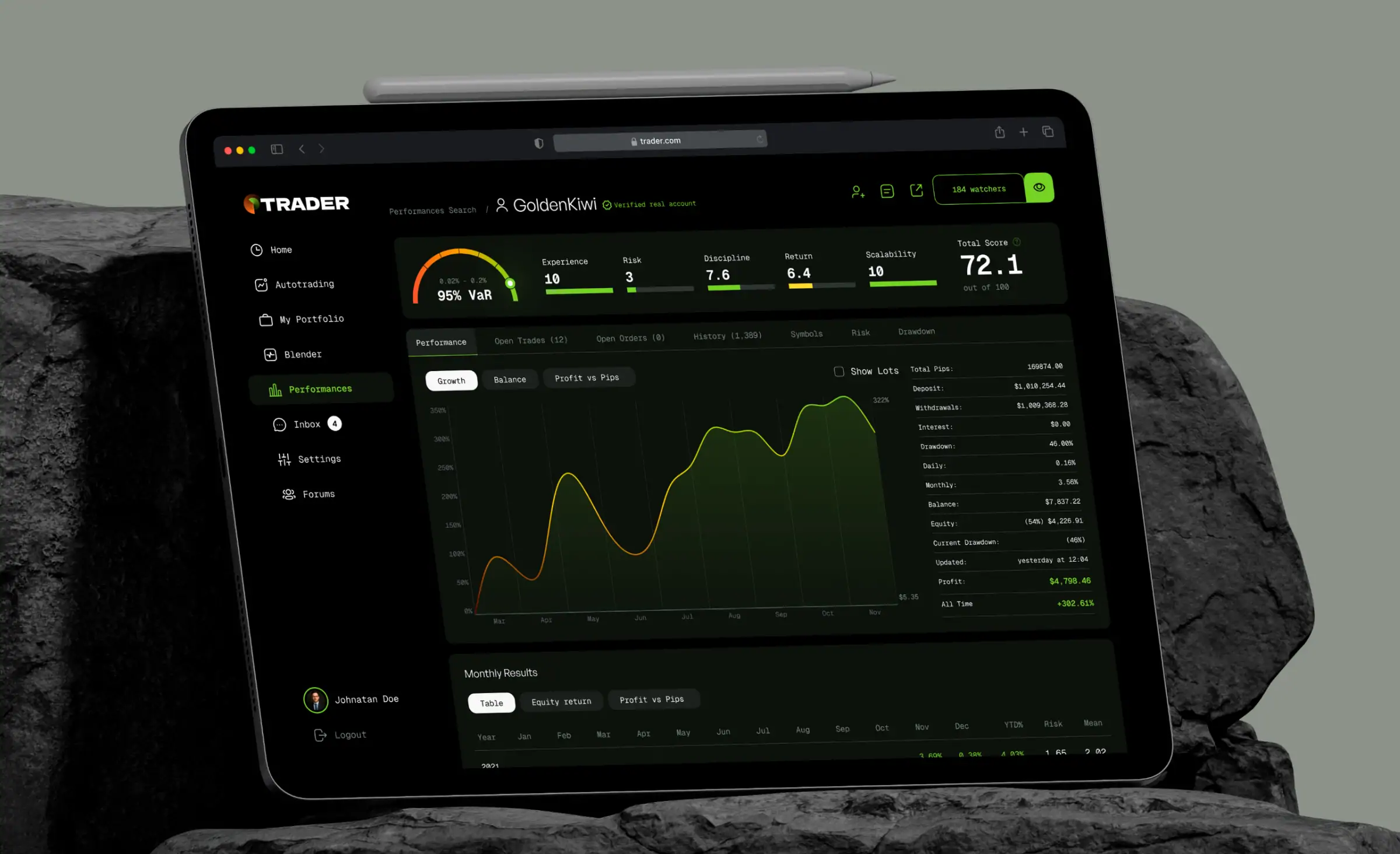
We built a web platform with automatic performance tracking, detailed analytics, backtesting, performance comparison, and social trading. It supported English, Arabic, Hebrew, and Persian to serve users in the UK market and beyond. See the full trader analytics case.
Neobank app for freelancers and gig workers
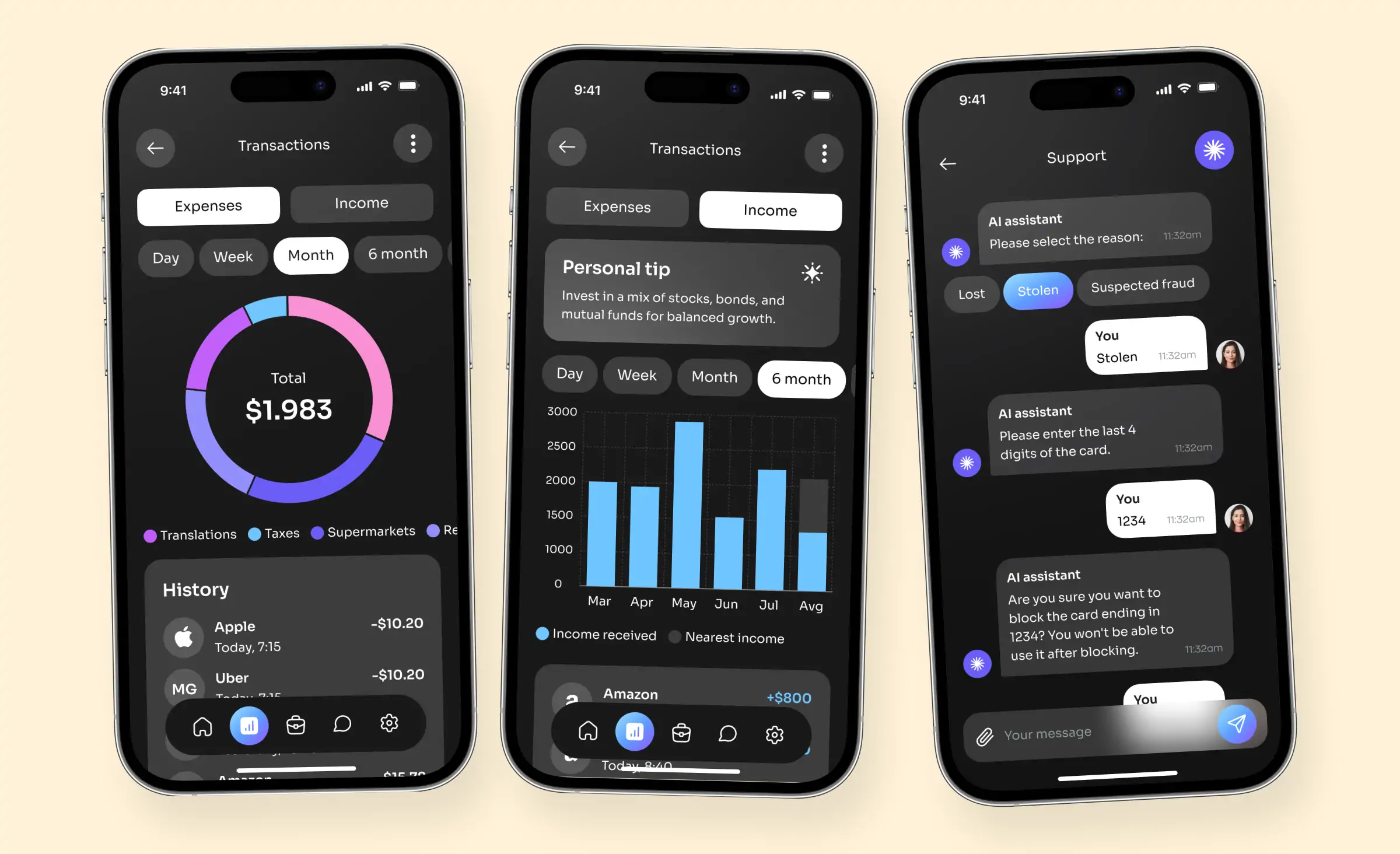
This neobank app used predictive cash-flow analytics and personalized budgeting, alongside core banking functionality on Android and iOS, with security and regulatory compliance handled from the start. See the full neobank case.
Neobank app for building credit
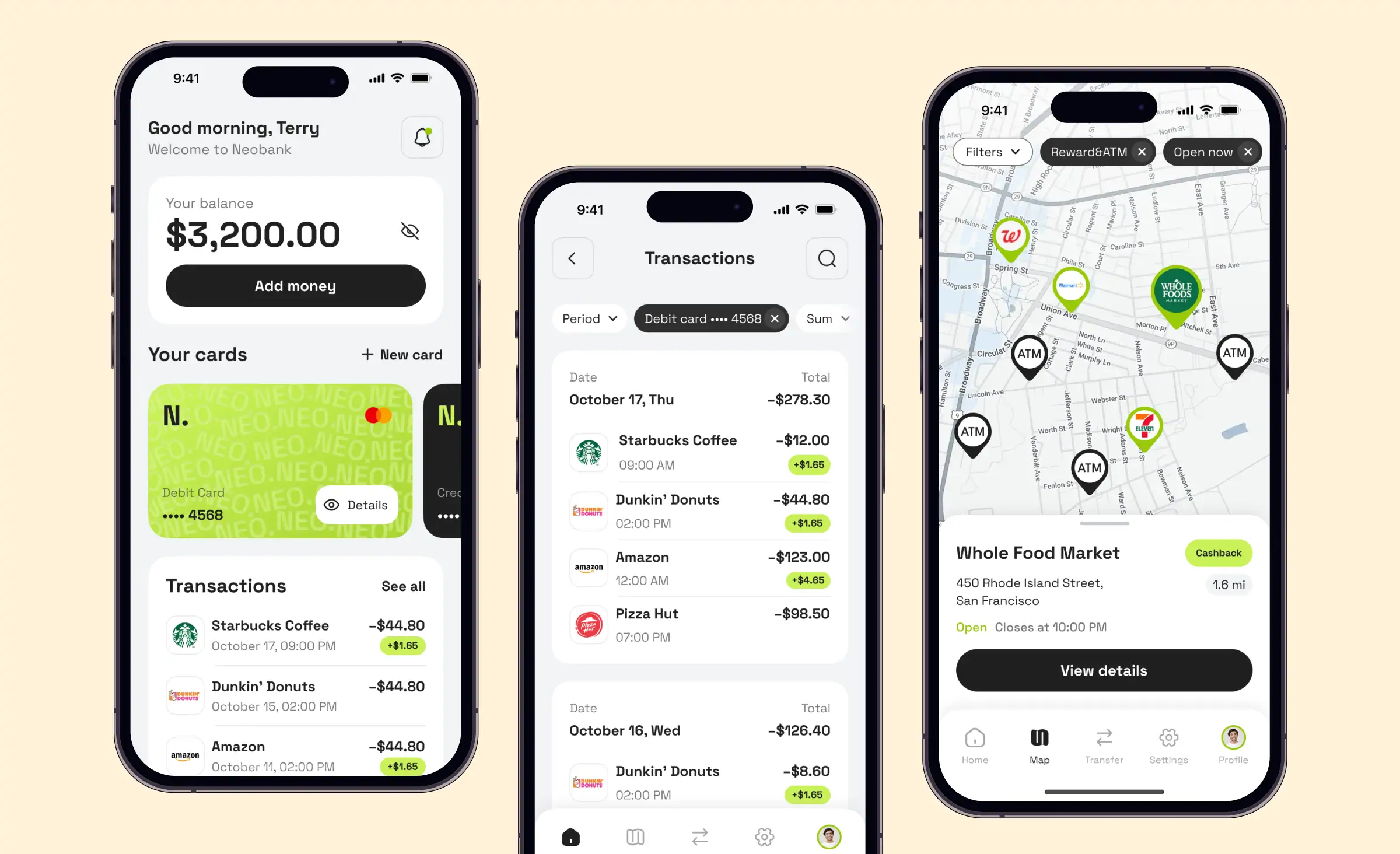
This service helps US users improve their credit rating and access credit cards, with a simple interface and strong protection for financial data. We built it on a microservice architecture that keeps business processes isolated, which gives the system operational flexibility and stability. A super fund needs the same qualities when its platform holds member money. See the full credit-building neobank case.
Our fintech software development covers the full path, from an analysis phase and UI/UX design to build and AI integration, so a fund gets one team accountable for both the product and the AI inside it.
What to do next if you run a super fund
Before you commission an AI feature, work through this order:
- Pick one use case with a clear metric (cost per member, fraud detection rate, or member engagement) rather than “add AI.”
- Audit your data first. If member and investment data is siloed, that is the project before the model.
- Map the build to CPS 234 and CPS 230 from the start. The 1 July 2026 transition deadline for pre-existing service-provider contracts has passed: verify affected material AI vendor contracts against the applicable requirements and remediate any gaps now.
- Start with a proof of concept on real data to validate the use case before a full integration.
- Keep a human in the loop for member-facing decisions. Prepare the privacy-policy disclosures required from 10 December 2026: the kinds of personal information used and the kinds of solely automated or substantially computer-assisted decisions covered by the obligation described above.
AI is becoming a practical tool for Australian super funds to lower cost, sharpen investment analysis, and protect members, but only when it sits on governed data and passes APRA review. The funds that get value from it will treat compliance as part of the architecture, not a checkbox at the end.
Frequently Asked Questions (FAQs)
Is AI in superannuation regulated in Australia?
What are the most useful AI use cases for super funds?
How does AI help super funds cut operating costs?
What data foundation does AI in superannuation need?
How do you keep AI models compliant with APRA CPS 234?
Can AI be added to a fund’s existing legacy systems?
How long does it take to add AI to a superannuation platform?
Related posts







Related Services
AI Software Development Services
We deliver custom AI solutions, including generative AI, chatbots, predictive analytics, and recommendation systems. From strategy to integration and ongoing support, our expert team ensures secure, scalable, and value-driven AI applications tailored to your needs, so you can innovate faster and stay ahead of the competition.
Fintech Software Development Services
We build secure, scalable fintech solutions like neobanks, trading, and investment platforms — tailored to your market and regulatory needs. Our team ensures robust KYC, compliance, and data privacy, delivering modern, user-friendly interfaces and flexible microservice architectures. From code audits to full-cycle development and ongoing support, we help you launch and manage high-performing fintech apps with confidence.
Custom Web App Development Services
Build secure, scalable web applications with Ronas IT’s custom web app development services. Our team covers the full cycle — from concept and UI/UX design to development, testing, and ongoing support — using leading tech like React and Laravel. With 200+ custom apps delivered across various industries, we ensure intuitive interfaces, smooth integration, and solutions tailored to your business goals.