Cybersecurity in US fintech: Protecting sensitive financial data beyond basic compliance

In US fintech, security is not a feature you add before launch. It decides whether your banking partner connects, whether enterprise clients sign, and whether one incident wipes out the trust you spent years building. Compliance gets you in the door; real security keeps you there. This is how we approach both when we build regulated financial products, and what we learned shipping a US neobank app to real users.
We'll cover the 2026 threat picture, the US rules that changed recently, and the practical controls we put into every fintech software build. If you need the regulatory side in depth, read our companion guide on US fintech regulations compliance.
The fintech threat picture in 2026
Financial services stay one of the most attacked and most expensive sectors to breach. The average data breach in the industry cost $5.56 million in 2025, about $1.12 million above the cross-industry average, per the IBM Cost of a Data Breach Report 2025. For a fintech, the direct cost is only part of the damage: a single incident can cost you a banking license, trigger regulatory fines, and push customers to move their money elsewhere.
Three shifts matter most right now:
- Third-party risk is now the main story. The share of breaches involving a third party doubled to 30% across all industries in 2025 (Verizon 2025 DBIR). That matters more for fintech than most, because you depend on payment processors, BaaS providers, KYC vendors, and cloud partners. Every integration is a potential entry point.
- Ransomware stays common. Around 65% of financial services organizations were hit by ransomware in 2024 (Sophos State of Ransomware in Financial Services 2024), and downtime for a payment platform means lost money and lost trust.
- Attacks are getting automated. Phishing, deepfake KYC bypass, and synthetic identity fraud (fabricated identities that blend a real SSN with fake details to pass standard KYC checks, now increasingly assembled with AI) are all rising. Online payment and banking sites together drew roughly 31% of all phishing attacks in early 2025 (APWG Phishing Activity Trends Report, Q1 2025).
Compliance is the floor, not the finish line
Meeting PCI DSS or GLBA requirements does not make you secure. It makes you allowed to operate. Frameworks set a baseline, but they were mostly written before third-party breaches became the dominant pattern, and attackers evolve faster than any standard. You need compliance for market access and continuous security engineering to actually protect data.
The practical takeaway: treat every framework requirement as a starting checklist, then add monitoring, access control, and testing that assume something will eventually go wrong.
The US rules to build your architecture around
US fintech regulation is fragmented across federal and state bodies, and the security bar keeps rising. If you serve US customers, three rules are worth building around now. This is the architecture-level summary; for the full regulatory scope, including KYC, AML, licensing, and lending rules, see our companion guide on US fintech regulations compliance.
| Rule | Who it applies to | What it now requires |
|---|---|---|
| NYDFS Part 500 (23 NYCRR 500) | Entities holding a NYDFS license, charter, or registration, such as money transmitters, lenders, and BitLicense holders | MFA for any individual accessing information systems, a maintained asset inventory, and third-party risk controls; actively enforced, with multimillion-dollar settlements on record |
| GLBA Safeguards Rule (FTC) | Non-bank financial institutions such as lenders, brokers, and many fintechs | Written security program, encryption, access controls, and MFA for anyone accessing customer data |
| Federal incident notification | US banks and their service providers | A bank must notify its primary federal regulator within 36 hours of determining a significant cybersecurity incident; service providers must promptly alert affected bank clients |
A note on timing: NYDFS Part 500 tightened most recently, with its Second Amendment requirements now in full effect and actively enforced, while the federal 36-hour notification rule has applied since 2022 and is still often missed. Two things follow. MFA and access control are no longer optional add-ons; they belong in the architecture. And because banking regulators moved off the FFIEC Cybersecurity Assessment Tool (retired in August 2025) toward NIST CSF 2.0 and the CRI Profile, mapping your controls to a recognized framework early makes future audits far smoother.



Common attack types on fintech platforms
Most fintech incidents come down to a handful of recurring attack patterns, and knowing them tells you where to spend defensive effort first.
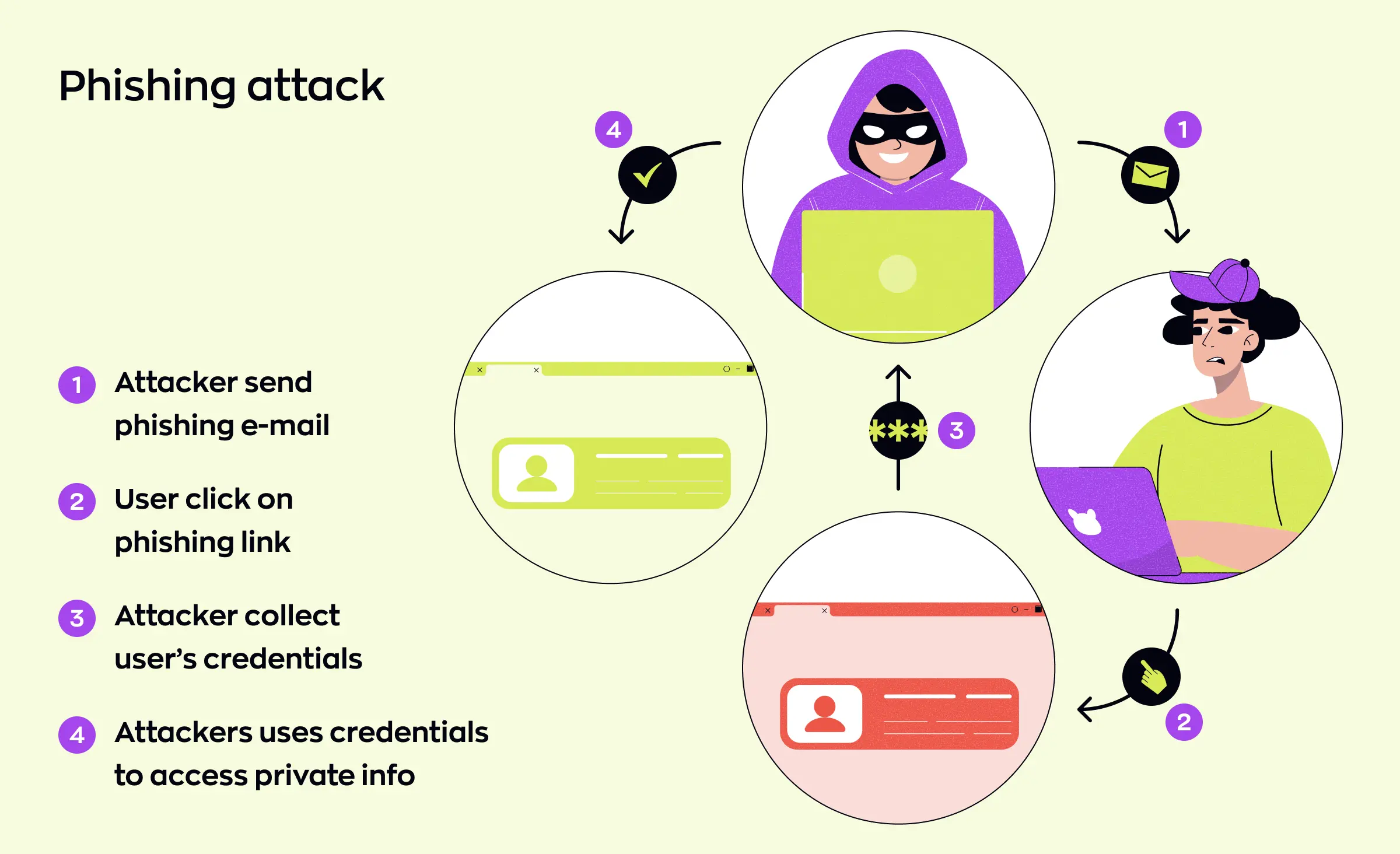
Phishing and social engineering
Attackers use fake emails or messages to trick employees and customers into handing over passwords or financial details. Fintech workflows run on speed and trust, which is exactly what social engineering exploits. Staff training and MFA are the two cheapest, highest-impact defenses here.
Ransomware
Criminals lock a company's files or systems and demand payment to unlock them. For a payment platform any downtime means lost transactions and shaken trust, so reliable, tested backups and fast recovery matter as much as prevention.
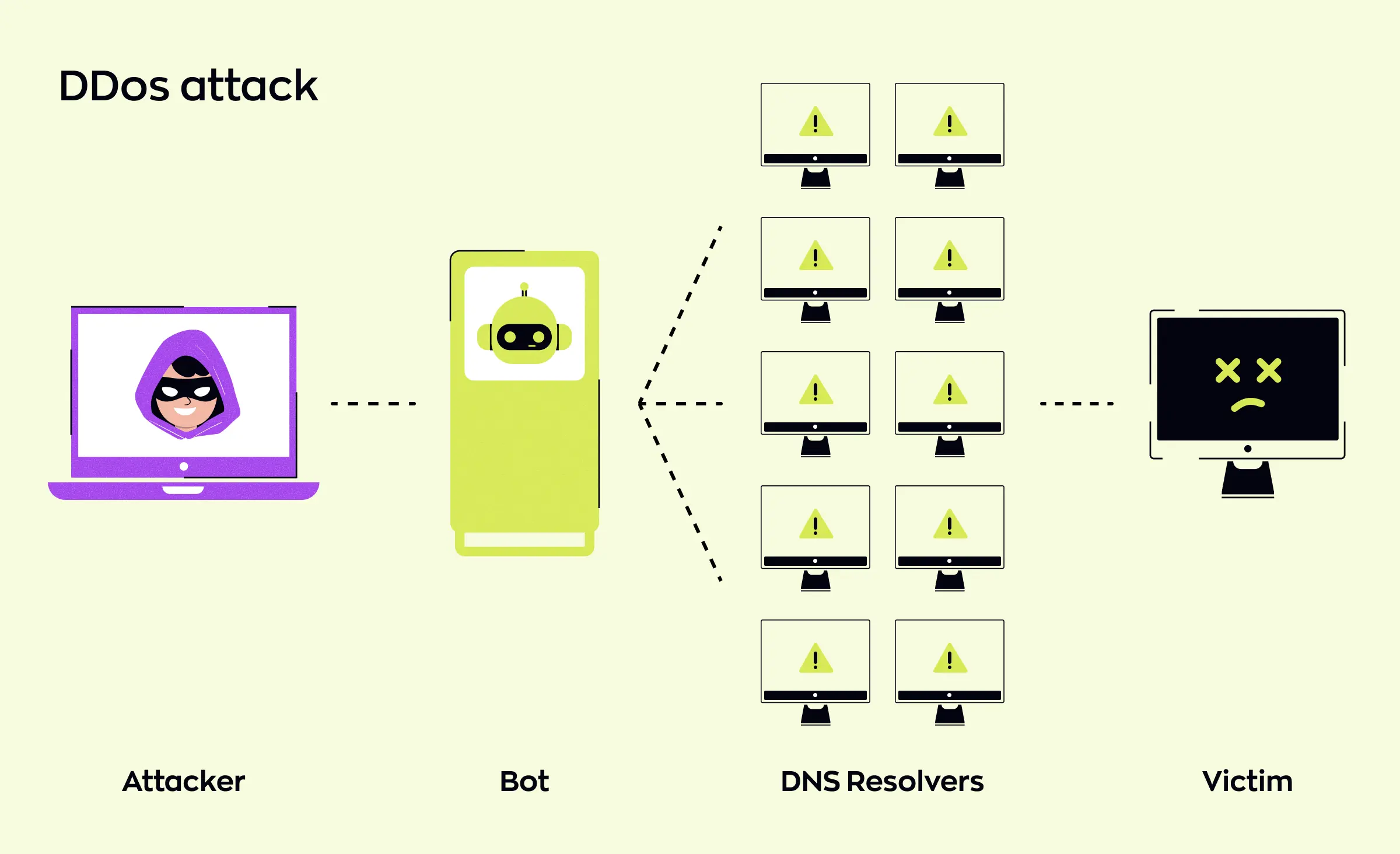
DDoS attacks
Distributed Denial-of-Service attacks flood servers with traffic to slow or knock out a platform, sometimes as a smokescreen for another attack. Financial services absorb a large share of these, so edge protection and rate limiting are baseline, not extras.
API and integration vulnerabilities
APIs connect fintech platforms to partners and other apps, and poorly protected ones open a path to critical data. Broken object-level authorization, weak rate limiting, and missing input validation are the usual gaps attackers probe first.
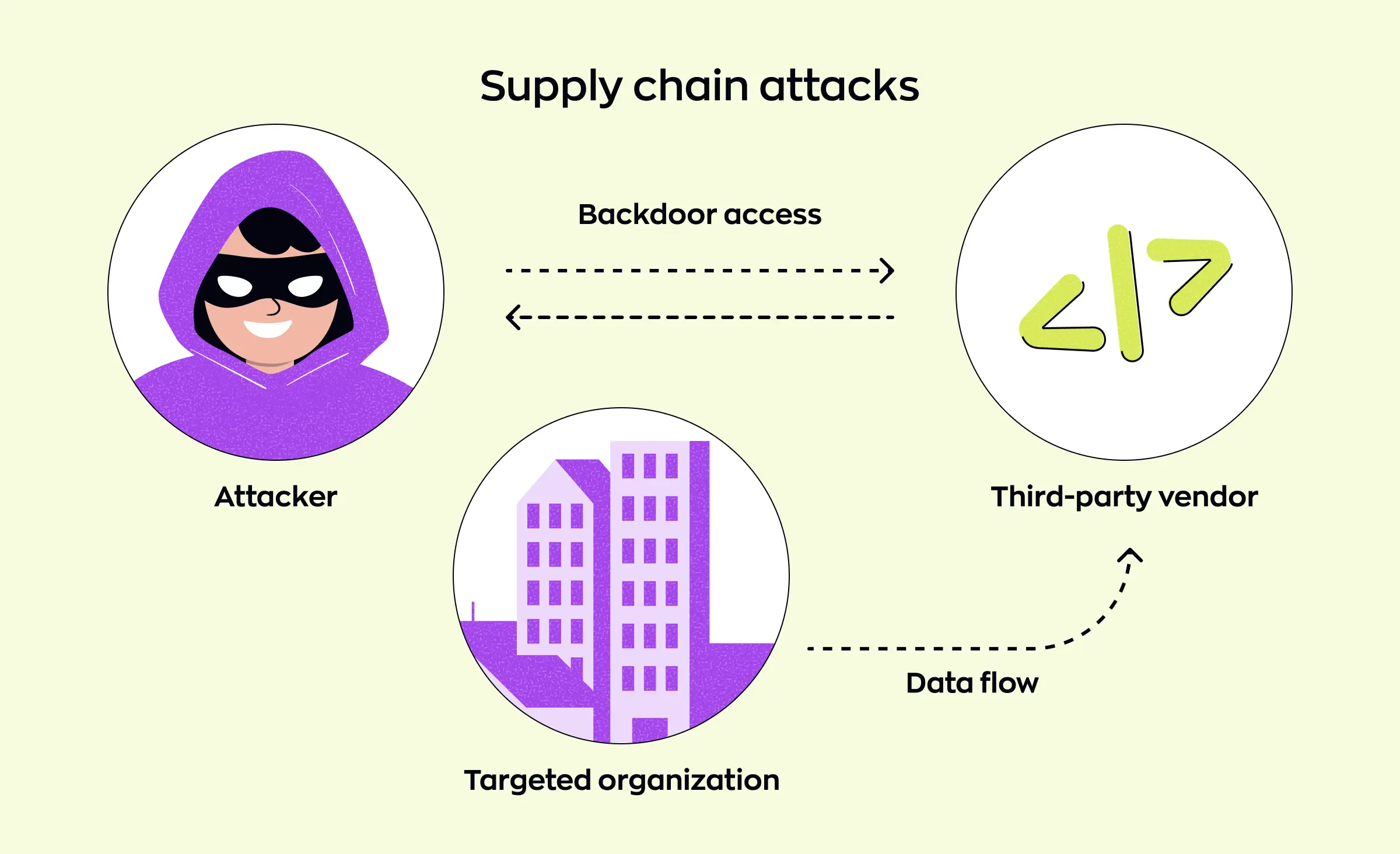
Insider and supply chain risk
Not every threat comes from outside. Employees, ex-workers, or contractors can misuse the access they already have, and every third-party vendor or SDK you add extends your attack surface. Because third-party breaches are now a leading cause of incidents, vendor vetting and least-privilege access are as important as your own code.
How we build a secure fintech product
We use the same high security bar for every application, banking or not, and lean on proven, enterprise-ready building blocks so speed and safety don't compete.
Start with a secure cloud baseline
The base security of server applications comes from the platform they run on. We deploy on AWS or Google Cloud, both certified PCI DSS Level 1, and add Cloudflare at the edge for DDoS mitigation and rate limiting. This gives strong defaults without hand-rolling infrastructure security that a hyperscaler already maintains at scale.
Separate data with microservices
We build on a microservice architecture so sensitive data stays isolated. On our neobank build, the support team could not see any user financial information, and the service handling transactions saw payment details without personal user data. If one service fails, the rest keep running, and compliance changes can be made to one service without touching the whole platform.
Lock down access and secrets
This is where a zero trust mindset (never trust by default, verify every request) becomes concrete. Our approach follows least-privilege and fine-grained access, so even our own team members only reach the parts of a project they need. Access keys and credentials live in access-controlled environment variables, and admin tools like dashboards, deployment consoles, and API documentation sit behind a project VPN. For authentication we use trusted services such as Auth0 rather than building our own.
Bake in reliable recovery
We define infrastructure as code and keep automated backups, so after a breach or outage we can revert the system to a known-good state, or even rebuild it from the ground up, without losing client data.
Test continuously and audit
We integrate testing throughout development and cover key modules with automated tests, which adds a reliability layer that catches regressions early. For security specifically, we run manual code reviews alongside automated tools like SonarQube and IntelliJ IDEA code inspection, and we can run the same audit on an existing product before deciding what to refactor or rebuild.
Train the people
Tools only work with good habits. We help clients set up onboarding and clear manuals so everyone knows how to handle sensitive data and follow security procedures, which matters because so much fintech risk starts with phishing.
Two real fintech security builds
Listing controls is easy; shipping them in production under real regulatory pressure is what makes them credible. Here are two builds where security was the point: a US neobank and a cross-border payment platform.
A US neobank built for a SOC 2 audit
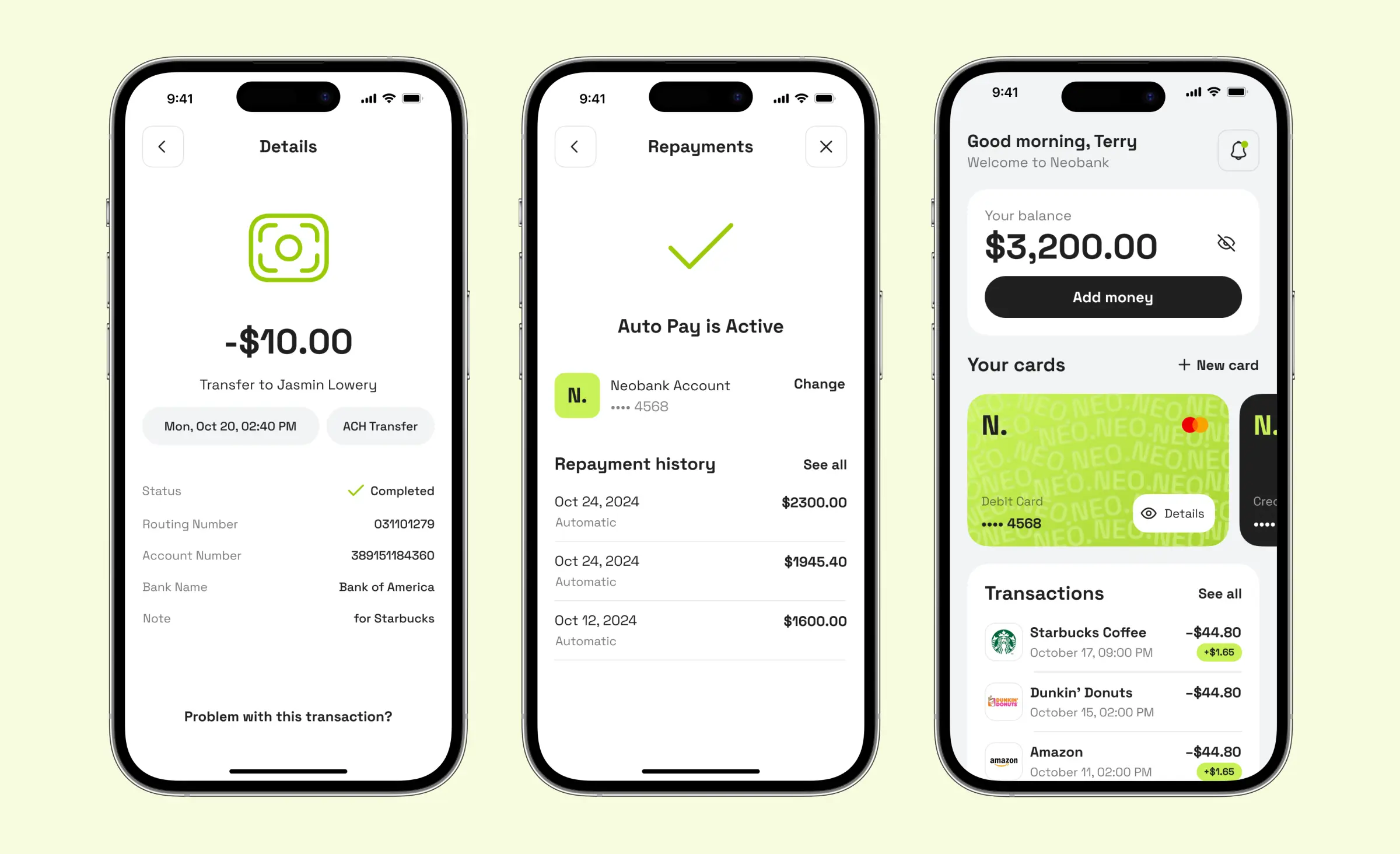
A US entrepreneur asked us to build a neobank that helps people raise their credit rating and access a credit card. Because it handles US financial data, a SOC 2 report was the gate the banking partner required, with PCI DSS and ISO 27001 as the standards we designed to. Our team passed the SOC 2 audit the engagement required; the app did not hold separate certifications for those two standards. If you want the product side of this story, we also wrote a full guide on launching a neobank app.
We built it in React Native and Laravel on a microservice architecture with strict data separation. Bond acted as the Banking-as-a-Service gateway to US banks such as Evolve Bank & Trust; Persona ran KYC against SSN and ID; Sardine ran real-time fraud checks and risk profiling; and Auth0 handled authentication across services. The app went into production, ran a closed beta with live cards and transactions, and was approved on the App Store. During its beta and store-launch period, 1,285 accounts were opened by verified users. The product was later removed from both app stores.
Fraud prevention for a payment platform
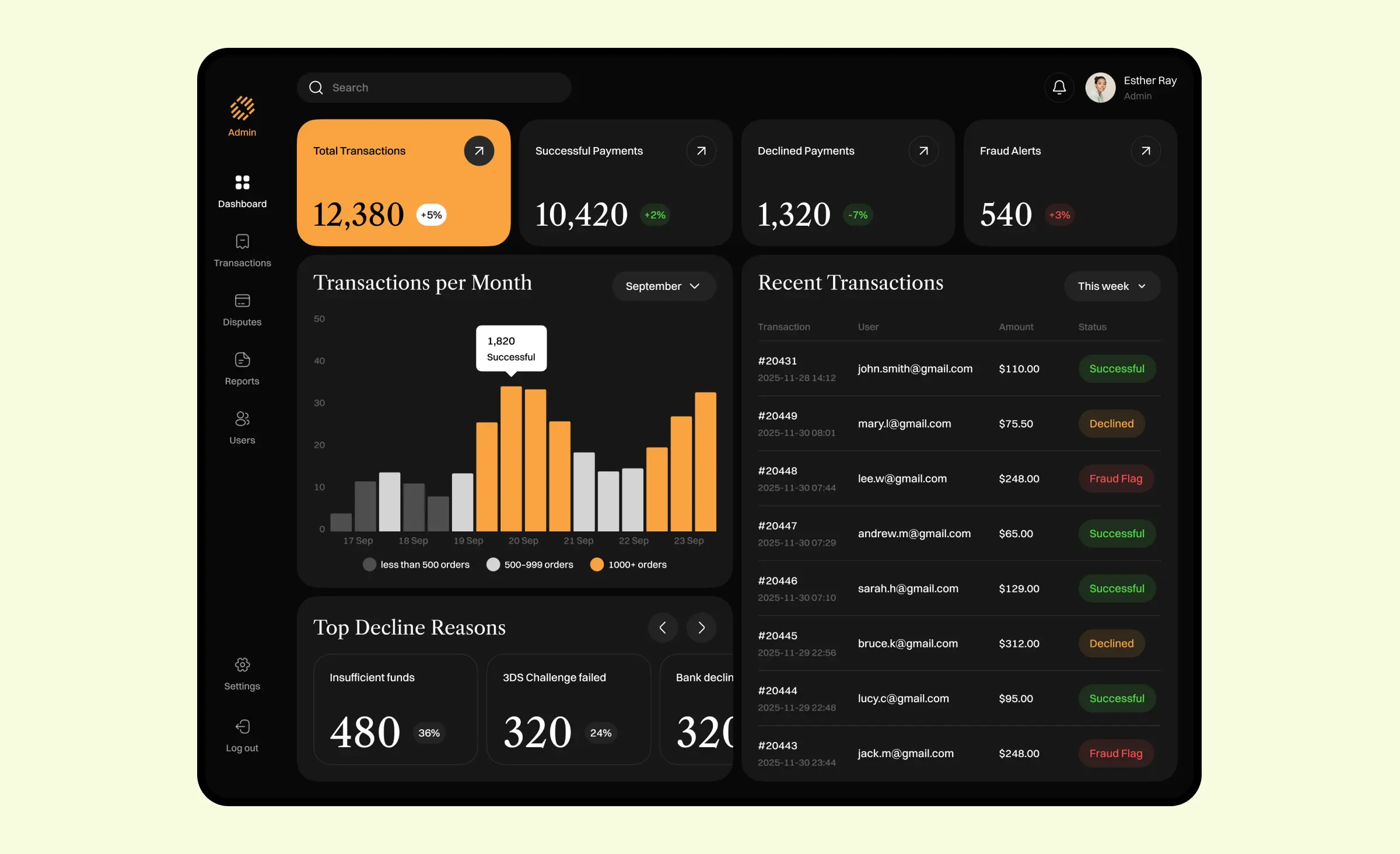
A travel platform selling tickets online needed a smarter, safer checkout without taking on heavy card data risk. We combined adaptive 3D Secure 2 verification through Stripe, device fingerprinting with FingerprintJS Pro, and anti-fraud rules that score each payment by amount, location, device risk, and repeat attempts. PayTo and PayID served as fallbacks when cards failed. All sensitive card data stayed with the payment provider to keep PCI exposure low. We delivered the new checkout in about 10 weeks. After a gradual rollout, more card payments went through on the first try, checkout got faster, and fraud dropped, while the platform stayed compliant with local payment and privacy laws.
What to do next
Turn the above into an action list for your own build:
- Map which rules apply to you (PCI DSS, GLBA, and NYDFS if you hold a New York license) and treat them as your baseline, not your goal.
- Put MFA and least-privilege access into the architecture now, not in a later compliance sprint.
- Vet every third-party integration and give each one the minimum access it needs.
- Choose a PCI-compliant cloud and keep regulated data with providers built to hold it (BaaS, payment processors).
- Set up tested backups and infrastructure as code so you can recover fast.
- Write and rehearse an incident response plan, including who notifies which regulator and within what window, before you need it.
- Run a security audit, manual review plus automated scanning, before an incident forces one on you.
Security is not a box you check before launch. It is what keeps your banking partner connected, your enterprise clients signed, and your customers' trust intact. Build it in from day one and it becomes a reason people choose you, not a cost you carry later.
Frequently Asked Questions (FAQs)
Does a US fintech app need SOC 2 and PCI DSS?
What does NYDFS Part 500 require in 2026?
Is passing compliance the same as being secure?
How expensive is a fintech data breach?
Is a Banking-as-a-Service (BaaS) integration safe?
How do you build security in from the start?
Can you audit the security of an existing fintech app?
Related posts





Related Services
React Native App Development Services
Save time and costs with Ronas IT's React Native app development, allowing cross-platform capabilities for iOS and Android. Our team has built 20+ React Native apps since 2020, ensuring rapid development, flexible maintenance, and cost-effective solutions.
DevOps Services
Accelerate your software delivery with Ronas IT's DevOps services. We streamline development and deployment through CI/CD automation, proactive monitoring, and secure cloud infrastructure. Enjoy faster releases, minimal downtime, and scalable solutions — letting you focus on growth while we handle seamless operations.
Fintech Software Development Services
We build secure, scalable fintech solutions like neobanks, trading, and investment platforms — tailored to your market and regulatory needs. Our team ensures robust KYC, compliance, and data privacy, delivering modern, user-friendly interfaces and flexible microservice architectures. From code audits to full-cycle development and ongoing support, we help you launch and manage high-performing fintech apps with confidence.