FinTech startup ideas for 2026: what to build and what it costs


Thirteen FinTech startup ideas are worth building in 2026, and what the first build costs depends on which one you pick: a proof of concept starts at $8,000, a basic MVP at $15,000, and a compliance-ready FinTech platform at $75,000. Which of those you land on depends less on the feature list than on who pays you and how much compliance the idea drags in. We have built neobanks and other financial products at Ronas IT, so this list is not a generic scan of the market: below we group the ideas by the problem they solve, show how a real product in each category looks, point out where we have already built something similar, and give you build-cost benchmarks from our pricing page.
The FinTech opportunity in 2026
Money is moving to software faster every year. Statista projects the total transaction value in the digital payments market to reach US$37.45 trillion in 2026, and financial services are increasingly embedded into non-financial apps like e-commerce, payroll, and logistics.
The pattern we see in 2026 is that the winning ideas are narrow, not broad. General-purpose neobanks are crowded at the top, so the room to grow is in sharper tools: earned-wage access for a specific industry, AI-driven credit scoring, embedded finance inside another platform, and RegTech that automates compliance. In FinTech, trust and compliance matter as much as product-market fit, so the strongest ideas solve a painful workflow for a buyer who already has a budget for it.
Three things changed since the last generation of FinTech ideas. Stablecoins got a statutory home in the US: the GENIUS Act, signed on 18 July 2025, created the first US federal framework for payment stablecoins. It will require 100% reserve backing with liquid assets such as US dollars or short-term Treasuries, and a public monthly disclosure of what those reserves hold. Those duties are not live yet: as of September 2026 every implementing rule in the Federal Register is still a proposal, so the framework binds issuers from January 2027 at the latest, and sooner if the regulators finalise their rules first. AI stopped being a feature bolted onto a finance product and became the thing the product does, which raises the bar on the data behind it. Banking-as-a-service also got stricter: after the 2024 collapse of Synapse left tens of thousands of US businesses and consumers without access to its services, partner banks now want far more visibility into your program before they sign.
FinTech startup ideas to watch out for in 2026, grouped by the problem they solve
“Founders usually arrive with the idea and leave the compliance question for later. In our neobank work the order that saves the most money is the opposite one: decide who your buyer is, then work out what regulatory weight that buyer drags in, and only then design the screens. The ideas on this list differ far more in that second answer than in how hard they are to build.”
Roman Surikov, CEO at Ronas IT
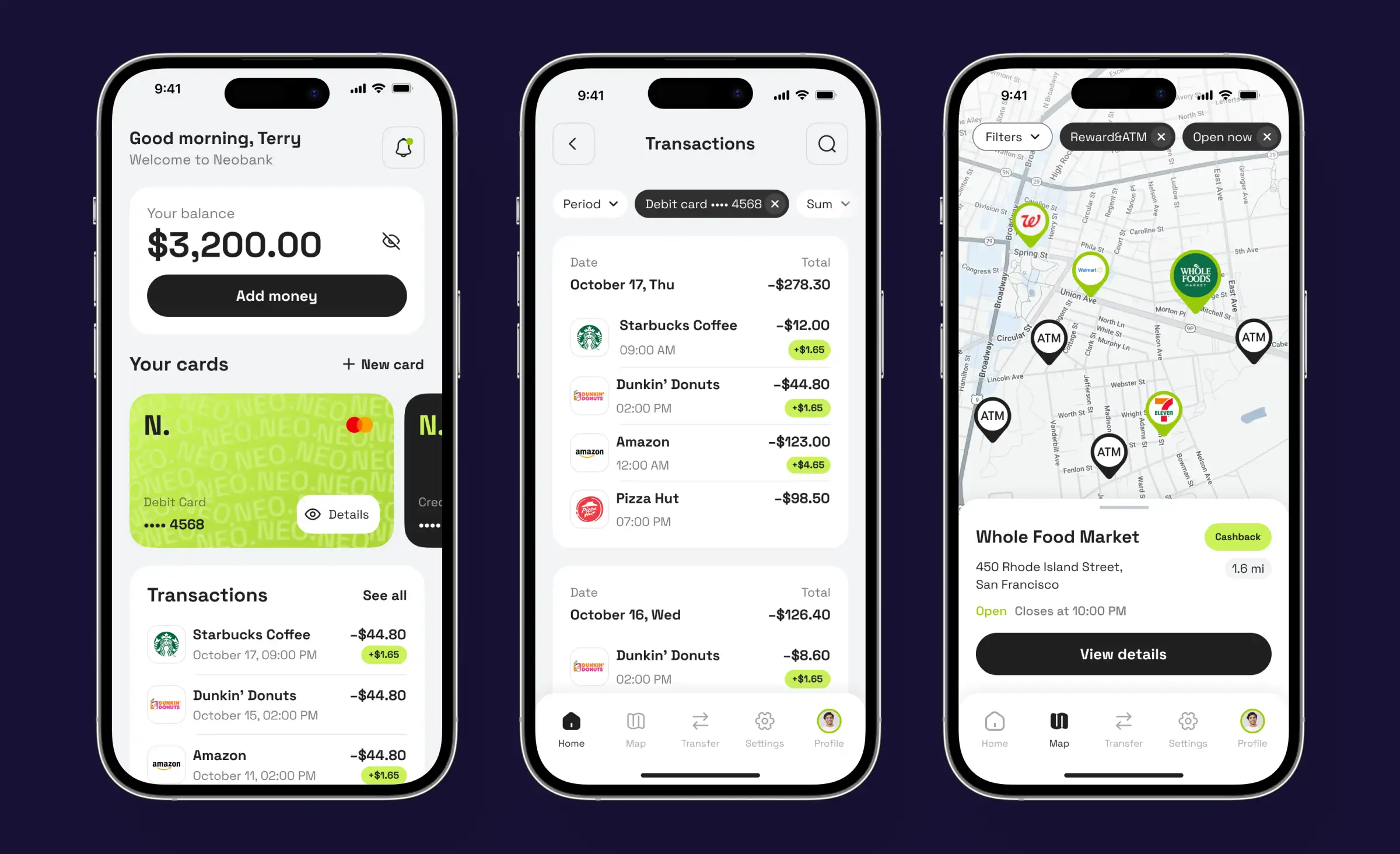
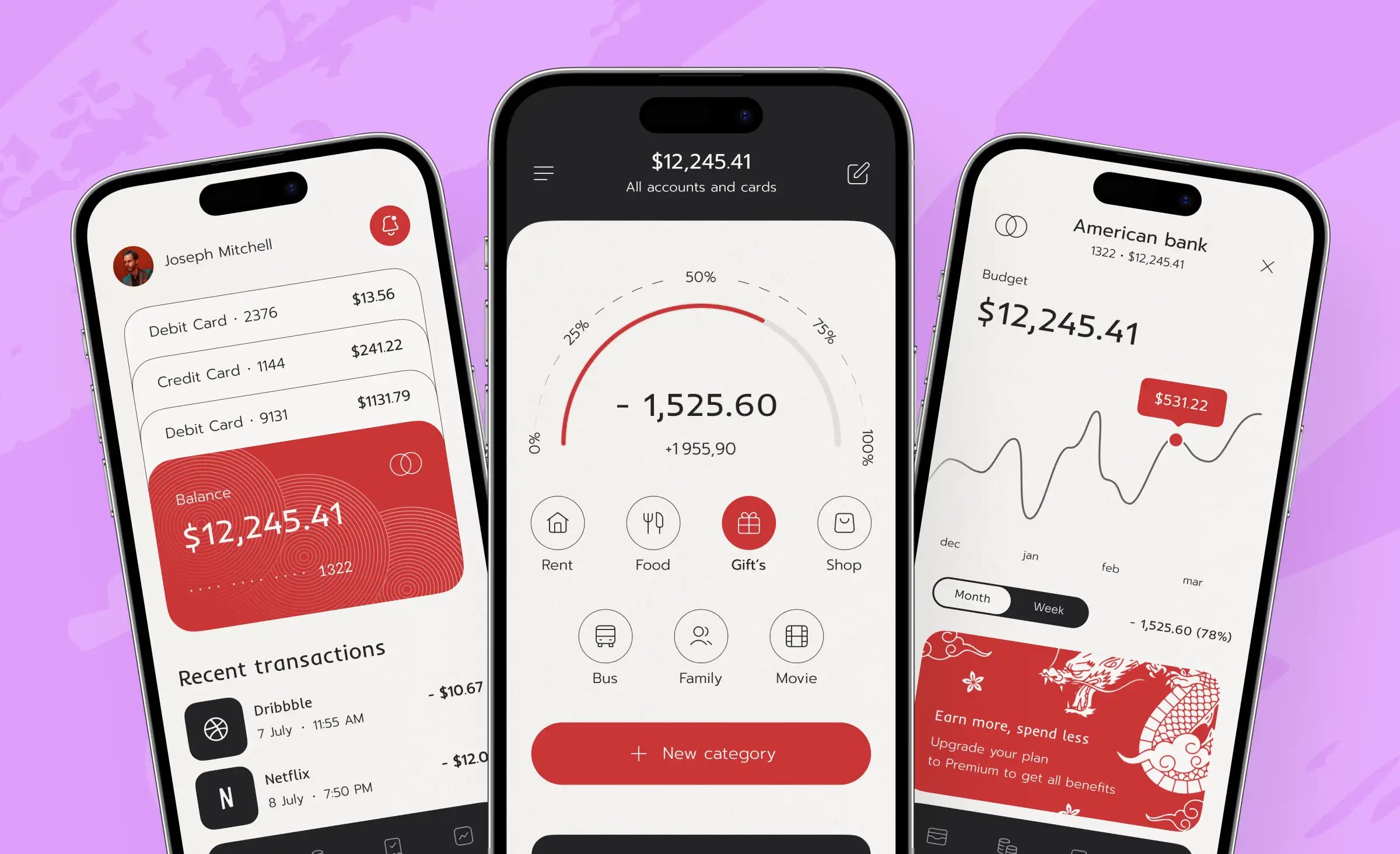
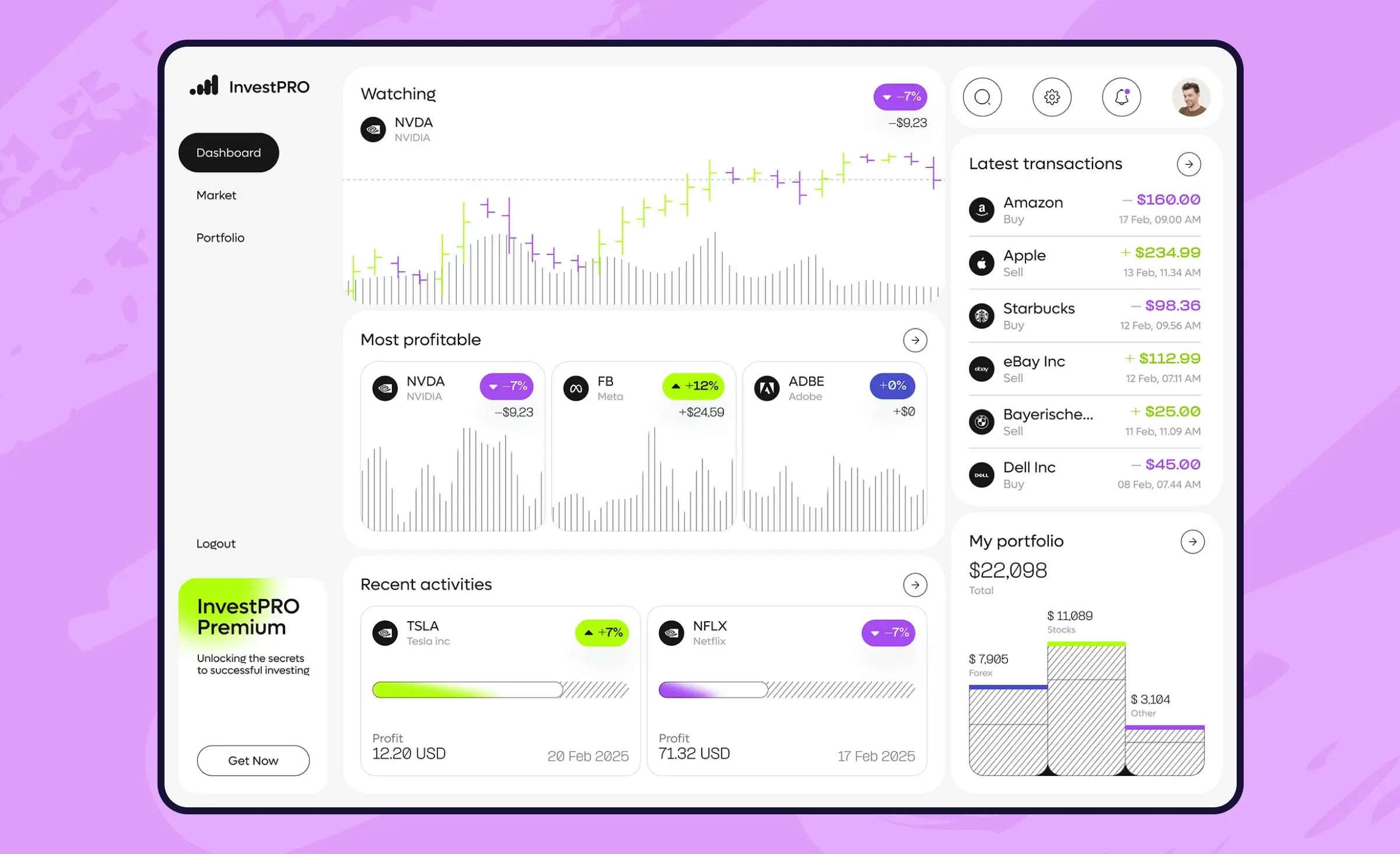
Use the table to rule most of them out before you read the detail. Some sections show a mockup our designers made, others show the app of the product under discussion, and the caption says which.
| Idea | Who pays | Compliance load | Sensible first build |
|---|---|---|---|
| Neobank for a niche | Consumers | High: BaaS partner, KYC, card issuing | Compliant FinTech platform, from $75,000 |
| Personal finance and budgeting | Consumers | Low: read-only bank data | Basic MVP, from $15,000 |
| Investment and robo-advisor | Consumers | High: depends on who gives the advice and who holds the assets | Proof of concept, from $8,000 |
| P2P lending | Both sides of the loan | High: lending rules per market | Full-featured MVP, from $25,000 |
| AI credit scoring | Lenders (B2B) | Medium to high: depends on whether you only score or also decide | Proof of concept, from $8,000 |
| Crypto wallet and blockchain app | Consumers or businesses | High: custody and licensing, plus the stablecoin rules if you issue | Proof of concept, from $8,000 |
| Insurtech | Insurers or consumers | Medium: depends on whether you sell insurance or only supply software | Basic MVP, from $15,000 |
| Earned-wage access | Employers (B2B) | Medium: depends on whether the advance counts as a loan where you operate | Full-featured MVP, from $25,000 |
| Embedded finance | Platforms (B2B) | Medium: mostly inherited from your BaaS partner, but KYC, fraud, and disputes stay yours | Full-featured MVP, from $25,000 |
| RegTech | Compliance teams (B2B) | Low: you automate rules, you do not hold funds | Basic MVP, from $15,000 |
| Money app for kids | Parents | High: COPPA from day one | Full-featured MVP, from $25,000 |
| Sustainable finance | Consumers | Low while you only analyse spending; investing or holding a balance raises it | Basic MVP, from $15,000 |
| White-label robo-advisor | Enterprises (B2B) | High: inherited from each client | Proof of concept, from $8,000 |
Read the compliance column as a screening hint, not as legal advice. What actually applies to you turns on who issues, lends, advises, or holds the money in your setup, and only a lawyer in your market can settle that. Use it to drop the ideas whose load you do not want, then verify the ones you keep.
Neobank for an underserved niche
A neobank is a mobile-first bank without physical branches. Revolut, Chime, N26, and Monzo proved the model, but the general category is saturated. The opportunity now is a niche the big players ignore, such as freelancers, immigrants, or people rebuilding their credit. If you want the feature list first, our guide to mobile banking app development covers it.
We built exactly this kind of niche neobank for a US client. In the US, people with a low credit rating struggle to get a credit card, so the product was designed to help users raise their credit score and get a secured charge card. We built account opening by phone number, Face ID and Touch ID sign-in, KYC with SSN and ID verification, card issuing, transaction analytics, and a cashback system. The client evaluated several banking-as-a-service providers and chose Bond, since acquired by FIS, as the gateway to major US banks, which removed the need for a banking license of its own. If you target a niche neobank, the license question usually resolves through a BaaS partner rather than a bank charter. Our guide on launching a neobank app walks through the build in more detail.



Personal finance and budgeting app
Budgeting apps help people track spending, plan a budget, and hit savings goals in one place. The way to stand out is a method that fits a specific user, like the envelope system that Goodbudget digitized for shared household budgets.
Our own build in this category is a neobank for freelancers and gig-economy workers in Europe, a group traditional banks serve poorly because their income is irregular. What defines it is a personal-finance feature rather than a banking one: a predictive cash-flow screen that shows income projections in charts and lets users adjust forecasts for hypothetical changes in income or expenses. We trained a machine-learning model with TensorFlow to predict income fluctuations, which is what makes the forecast useful rather than a static budget table. The app runs on React Native with a Laravel backend, the same pairing we use for most of our FinTech builds.
Investment and robo-advisor app
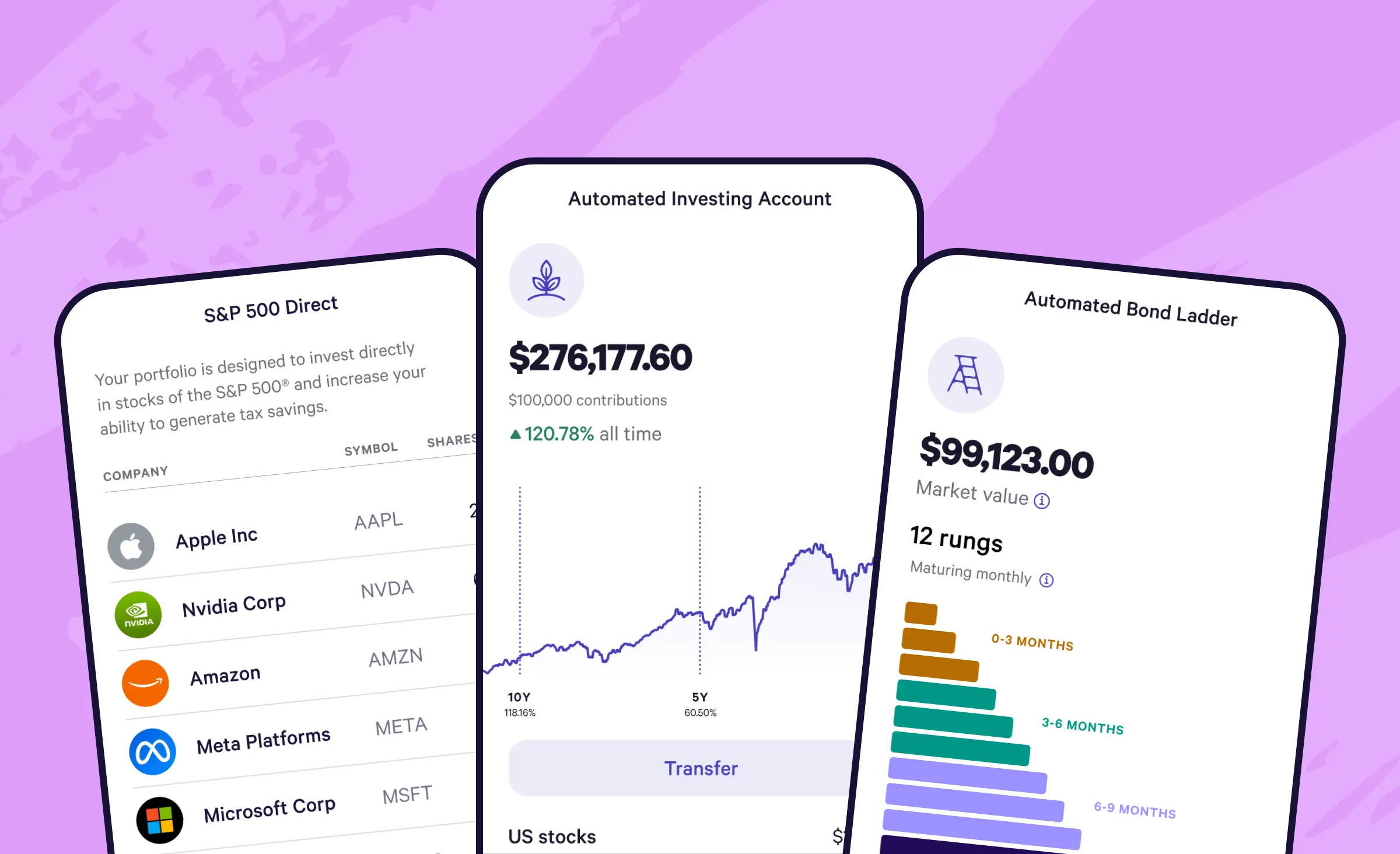
Investment apps let people build wealth from their phone, and robo-advisors automate portfolio management. Betterment, Wealthfront, and Acorns show the model works. If what you have in mind is order execution rather than automated advice, our guide to building a stock trading platform covers that build instead. To compete, keep onboarding simple, keep fees transparent, and use AI to give recommendations tied to each user's goals rather than generic tips.
A word of caution on the AI part: connecting your app to a general model like OpenAI is not enough on its own. The value comes from feeding it relevant, domain-specific financial data so it produces informed advice instead of surface-level answers. Plan the data pipeline before you plan the chat interface.
This is also where the licensing question gets expensive, and it is the part of the plan you should not settle from an article. What applies depends on who gives the recommendation and who holds the client money, and bringing in a licensed partner does not automatically move either duty off your side. Map it with a lawyer in your jurisdiction before you commit to a release date, because the answer decides whether you ship a proof of concept this quarter or wait on a regulator.
P2P lending platform
Peer-to-peer lending platforms match borrowers with investors who fund the loans, so the capital comes from the crowd instead of a bank balance sheet. A bank is still in the chain, and founders who plan around that late lose months. Prosper is the US survivor, and its annual report for 2025 says every personal loan on the platform is originated by WebBank, a Utah-chartered industrial bank, with investors holding borrower payment dependent notes tied to those loans. The other pioneers moved on. LendingClub closed its retail notes platform, became a bank, and since June 2026 has traded as Happen (Nasdaq: HAPN), with Happen Bank as its banking subsidiary. Funding Circle sold its US business in 2024 and now funds its UK term loans through forward-flow agreements with institutional investors rather than a retail crowd. A new platform gets in where they will not: micro-loans in one market, or lending inside a community whose members already know each other.
Lending rules are local, which is what makes this idea heavy. In the US you deal with state-by-state interest-rate caps and federal disclosure law, and platforms that let the public fund loans can also fall under securities rules. Pick one jurisdiction and one loan type for the first version; the second market is usually a bigger project than the first product.
AI credit scoring for thin-file borrowers
Traditional scoring rejects people who have no borrowing history rather than people who cannot repay: recent immigrants, young earners, gig workers, small businesses with no filed accounts. An alternative scoring model reads cash-flow data instead, such as bank-transaction history, rent and utility payments, or payroll records, and returns a decision the lender can act on.
Upstart built a lender-facing business on this idea, and Nova Credit did it by porting credit history across borders. Sell it as an API to lenders who already carry the credit risk, and you skip consumer acquisition entirely. Two things decide whether it ships. Lenders have to be able to explain a decline to the applicant, so a model that cannot show its reasons is unusable to them however accurate it is. It also needs a permissioned route to the data, usually open banking in the EU and UK or a bank-data aggregator in the US. Settle both in the first architecture conversation, while the data model is still cheap to change. Whether handing scores to lenders also puts you in a regulated role of your own is a question for counsel, and the answer turns on the arrangement rather than on the technology.
Crypto wallet and blockchain app
Crypto apps enable borderless transactions outside traditional banking. A practical starting point is a crypto wallet where users securely store digital assets, integrated with decentralized exchanges like Uniswap, PancakeSwap, or Curve. You can monetize through transaction commissions, brokerage fees, and premium features.
In 2026 the money in this category sits in payment rails rather than in speculation. MiCA has governed how stablecoins are issued and disclosed in the EU since June 2024, and the GENIUS Act sets the US rules that issuers will have to meet, so the buildable products are the unglamorous ones around them: cross-border payouts for contractors, treasury tools that hold and convert stablecoin balances, and compliance tooling for the issuers themselves. Regulated rails also mean regulated obligations, so treat licensing as a first-week question rather than a launch-week one.
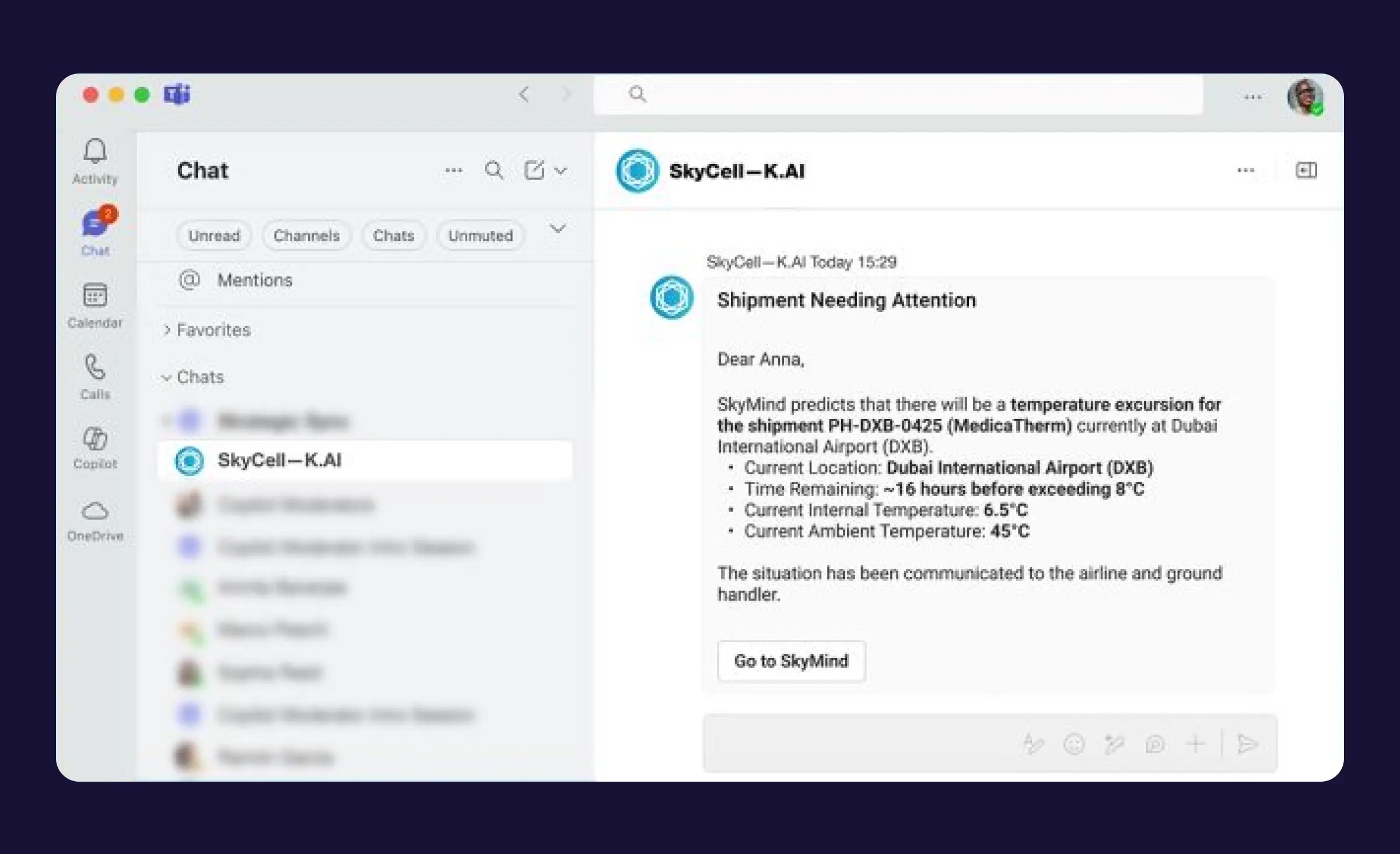
If the licensing burden of a money product puts you off, the same technology solves problems that move no money at all. Supply chains are the clearest case. SkyCell, a logistics company rather than a FinTech one, puts IoT sensors in the temperature-controlled containers that carry medicine and tracks their geolocation, temperature, and humidity in transit. A stream of readings like that, which a manufacturer, a carrier, an insurer, and a regulator all have to trust, is exactly the kind of record a shared ledger is good at making tamper-proof. Look for a supply-chain or provenance problem of that shape, and you get the engineering without the financial regulator.
Insurtech app
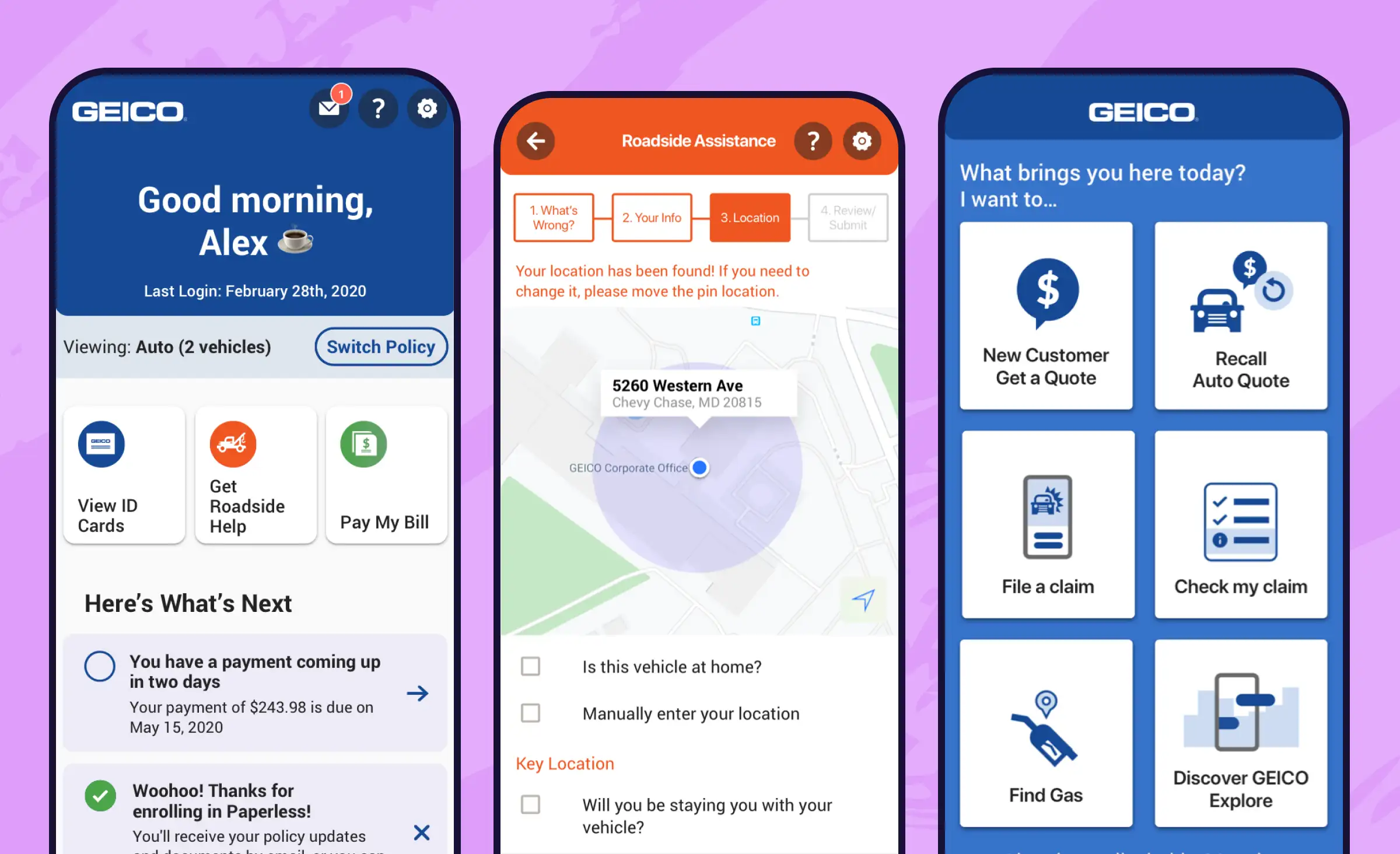
Insurtech applies software to a slow, paperwork-heavy industry. The strongest ideas here automate claims processing with AI, use IoT for risk prevention (like home monitoring that prevents damage), or simplify how people manage their policies. Geico Mobile is a clear reference: digital ID cards, quick claims, a virtual assistant, and a DriveEasy feature that tracks driving to offer premium discounts.
Selling insurance is licensed state by state in the US, so most software startups here sell tooling to carriers and brokers rather than becoming one. That choice decides your compliance load more than any feature does. Focus on one narrow problem rather than trying to cover the whole insurance journey, and see our insurance app development guide for how those builds are usually scoped.
Earned-wage access and embedded finance
Two ideas gaining momentum in 2026 fit here. Earned-wage access (EWA) lets employees draw wages they have already earned before payday, monetized through per-transaction fees usually paid by the employer. Embedded finance puts payments, lending, or insurance directly inside a non-financial app, the way Shopify, Uber, and Amazon offer financial products without sending users elsewhere.
Both work best as B2B products: you sell to a platform or employer that already has the users, so you avoid the cost of acquiring consumers one by one. The build usually centers on clean APIs and a banking-as-a-service backend rather than a full consumer app, and infrastructure providers like Unit and Synctera exist precisely to be that backend.
Compliance here is partly inherited, and founders tend to overestimate how much. Earned-wage access needs a payroll or time-tracking integration to know what a worker has actually earned, and regulators in several US states treat an advance against wages as a loan, which pulls in lending rules. Embedded finance sits under whatever obligations your BaaS partner and its sponsor bank carry, so read their programme requirements before you promise a launch date. The rest stays with you: you own the onboarding, so you run the KYC and AML checks the programme sets, and you own the customer relationship, so fraud monitoring, disputes, complaints, and consumer protection duties sit on your side. Depending on what you sell, a state licence can be yours rather than theirs.
RegTech: automating a compliance chore
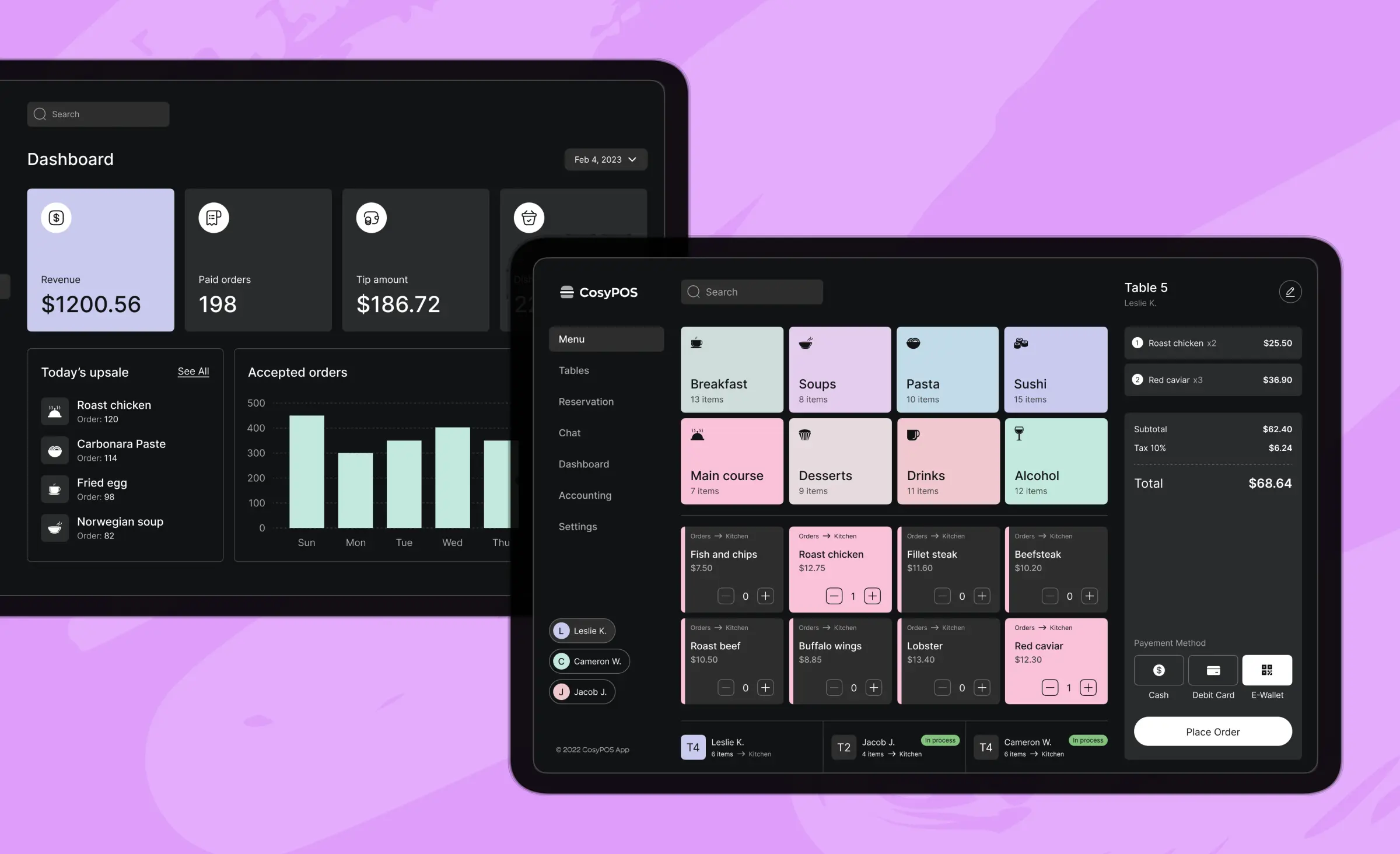
RegTech sells to a buyer who already has a budget and a deadline, which makes it one of the easier categories to validate. ComplyAdvantage, Alloy, and Persona all grew by taking one such chore off a compliance team. Pick one obligation a team currently handles by hand: transaction monitoring and suspicious-activity reporting, sanctions and PEP screening, KYB checks on business customers, or the evidence-gathering that a SOC 2 or ISO/IEC 27001 audit demands.
The advantage over consumer FinTech is that your customer can name the cost of the current process in hours and headcount, so the pitch is arithmetic rather than persuasion. The catch is that you inherit their audit trail: every automated decision has to be reproducible months later, which usually means versioned rules and immutable logs from day one. We hold our own infrastructure to the same rule. We define environments as code and change them through review, so we can reconstruct what any environment looked like on a given day.
Money app for kids
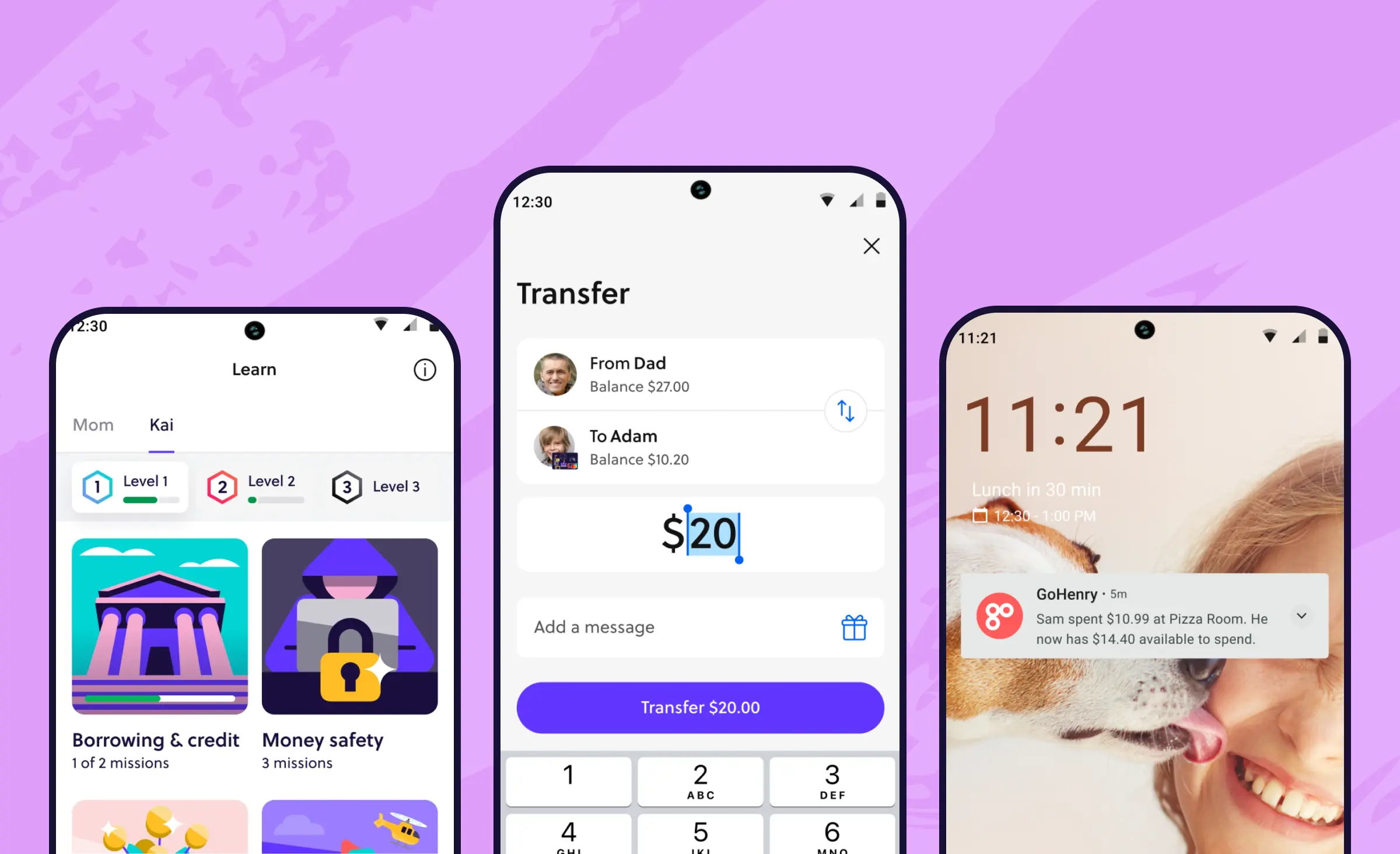
Apps like GoHenry teach children financial literacy through debit cards, chores, and savings goals, with parents in control. The market is real, but this idea carries one of the heaviest compliance loads here, and the earliest: in the US you must comply with COPPA for users under 13, which shapes onboarding and data handling from the first screen you design.
Sustainable finance app
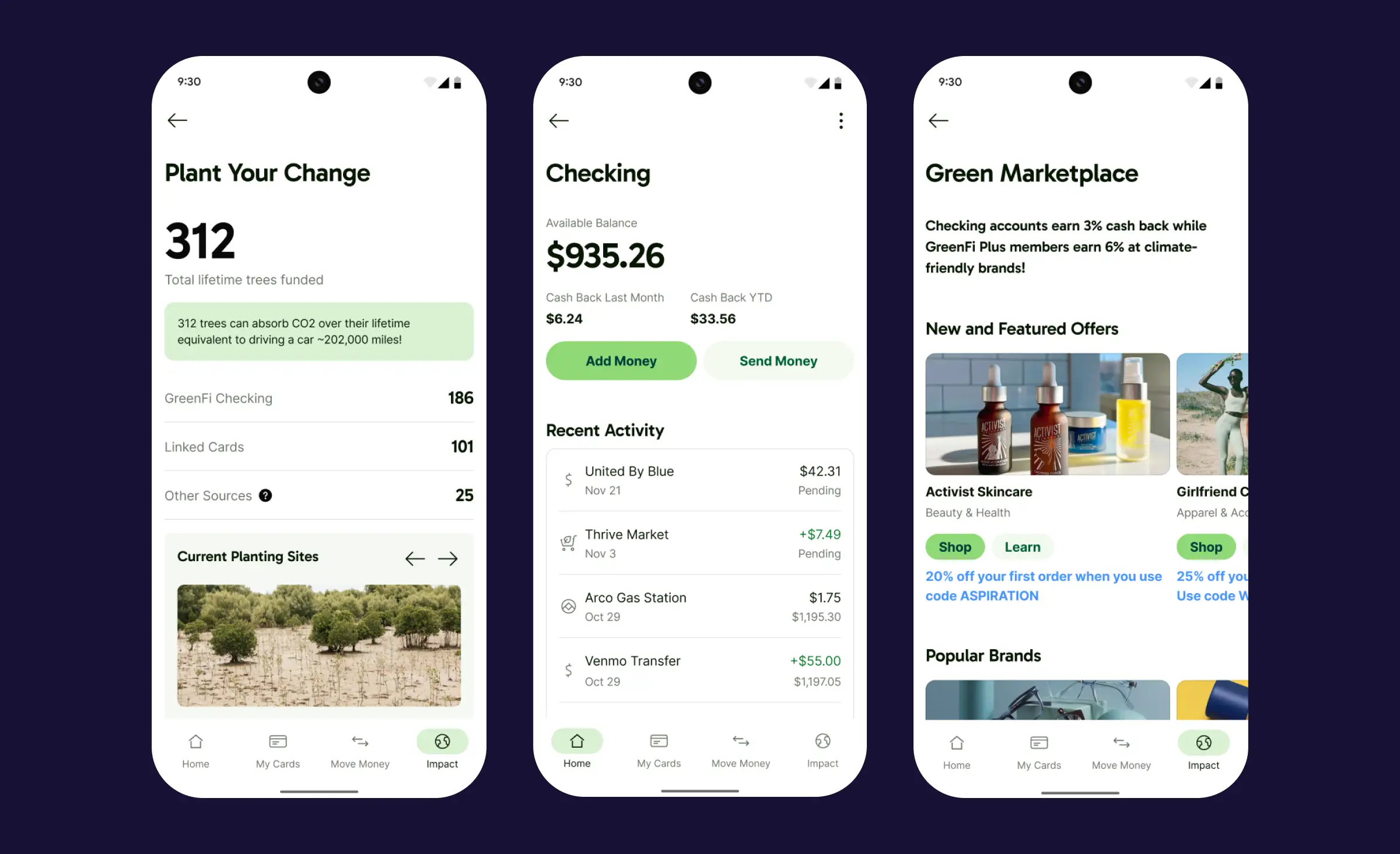
Sustainable finance apps help people invest in and spend on climate- and socially-responsible options. GreenFi is one live example: banking that keeps deposits out of fossil fuels, fossil-fuel-free investing, a carbon-offset programme that covers driving emissions, round-ups that fund tree planting, and cash back at a marketplace of climate-friendly brands. The audience skews younger, so the app has to earn trust with transparent data about where money actually goes, not just green branding. If you build for the EU market, our guide to green FinTech in Europe covers the regulations that apply there. The compliance load stays light while you only analyse spending someone else already processed. The moment you let users invest or hold a balance, you inherit the rules of whichever category you just entered.
White-label robo-advisor for other businesses
Unlike the consumer investment app above, this idea sells the advice engine itself. It can run as a web platform, an API other businesses plug into, or a white-label tool an enterprise rebrands, so you reach a market without acquiring individual consumers. Wealthfront shows what the engine has to do on the consumer side, with tax-loss harvesting, tax-advantaged retirement accounts, and net-worth tracking across linked accounts.
Which distribution model you pick shapes the whole build, so decide it before you design the first screen. It also decides your compliance work: white-label buyers pass their own regulatory obligations down to you, so each new enterprise client can arrive with a different audit, a different data-residency rule, and a different approval cycle.
What it costs to build a FinTech product
Before you spend on a full build, validate the idea. We usually start with a proof of concept from $8,000 or a clickable prototype to test whether users will pay, then move to an MVP. Here are our current build-cost benchmarks from the Ronas IT pricing page:
| Build stage | Starting price | Timeline |
|---|---|---|
| Proof of concept | from $8,000 | from 2 weeks |
| Basic MVP | from $15,000 | from 4 weeks |
| Full-featured MVP | from $25,000 | from 6 weeks |
| Urgent MVP | from $45,000 | from 6 weeks |
| Compliant FinTech platform | from $75,000 | from 3 months |
The MVP tiers above get a lean product to market, and our MVP development service page explains how we run those builds. A full, compliance-ready FinTech platform, such as a neobank or trading app, is the dedicated tier we describe on our FinTech software development page. FinTech projects commonly run longer than a comparable non-financial app for two reasons. First, compliance and security work, such as KYC, secure data handling, and certifications, adds scope you should budget for from the start. Second, a banking-as-a-service partnership takes 3 to 6 months to negotiate and then bills you per account and per transaction for the life of the product, not once at launch. Plan for both early; they are the most common reason FinTech budgets slip. The urgent MVP tier makes sense when a funding round or a partner deadline forces you to compress that timeline with a larger team.
Compliance you cannot skip
A working interface is only half the job. Some of the items below are law, some are contracts with the card networks, and some are voluntary audits that partners and buyers ask for. All of them shape the build:
- AML and KYC: identity checks, sanctions screening, and suspicious-activity reporting. If you run on a partner bank, its program sets your rules.
- GDPR: protects the personal data of people in the EU and EEA. It applies to your company even if it sits outside the EU, as soon as you offer your service to people there.
- PCI DSS: a card industry standard, required by contract for apps that handle card data.
- SCA: the EU rule for electronic payments. It requires two or more independent authentication elements from different categories: something you know, something you have, and something you are.
- COPPA: protects US users under 13, so it applies to money apps for kids.
- SOC 2: not a law but a voluntary audit of security, availability, and privacy controls, expected by US financial partners and enterprise buyers.
- ISO/IEC 27001: the international standard for information security management, also voluntary and also routinely asked for.
- Money transmitter licences: state licences that can apply in the US if you hold or move customer funds yourself instead of through a licensed partner. Which states and which activities is a legal question, not an engineering one.
On our US neobank project, SOC 2 set the bar for how we handled data, access, and audit trails, and PCI DSS and ISO/IEC 27001 were in scope alongside it. A technical partner like us handles the engineering side: multi-factor authentication, encrypted data handling, reliable backups, and secure payment flows. We also default to certified managed cloud services rather than self-hosted equivalents, because they shorten the preparation work an audit demands. But a contractor cannot cover everything. The certification itself, along with legal and organizational compliance, stays with your company. Both app stores gate financial apps as well, and both rewrite their rules more often than the law changes, so read them at the source instead of through anyone's summary: Apple sets its terms out in App Review Guideline 3.2.1 and Google Play in its Financial Services policy. Check both against your own entity and licences before you plan a release date. Read our US FinTech compliance guide for the full picture.
What to do next
Use the table above to cut the list down: rule out anything whose buyer you cannot name and anything whose compliance load you are not ready to carry. Of what is left, pick the one problem you understand best. Talk to 20-30 people in that segment, then test a clickable prototype or a proof of concept before committing to a full MVP. Scope compliance and your banking-as-a-service partner from the start, not after the design is done, and ask any BaaS candidate which bank holds the funds. If your idea sits inside someone else's platform, our guide to embedded finance in the USA covers that route in more depth.
For a sense of what these builds look like in practice, read how we built a credit-building neobank and a banking app for freelancers.
Frequently Asked Questions (FAQs)
Which FinTech startup idea is easiest to validate first?
How much does it cost to build a FinTech MVP?
Do I need a banking license to launch a FinTech app?
What compliance standards apply to a FinTech startup?
What tech stack does Ronas IT use for FinTech apps?
How long does it take to build a FinTech app?
Should a new FinTech product support stablecoins in 2026?
How do FinTech apps make money?
Related posts






Related Services
MVP Development Services
Need to launch your startup quickly? Ronas IT offers urgent MVP development services, allowing you to get a fully-functional app in 4 to 12 weeks, depending on scope. Ideal for testing business ideas, presenting to investors, or entering the market swiftly. Benefit from our extensive experience and accelerated development process.
Fintech Software Development Services
We build secure, scalable fintech solutions like neobanks, trading, and investment platforms — tailored to your market and regulatory needs. Our team ensures robust KYC, compliance, and data privacy, delivering modern, user-friendly interfaces and flexible microservice architectures. From code audits to full-cycle development and ongoing support, we help you launch and manage high-performing fintech apps with confidence.
CTO as a Service for Startups
Accelerate your startup’s growth with Ronas IT’s CTO as a Service. Get expert tech guidance, architecture design, comprehensive audits, and ongoing strategic support — without hiring a full-time CTO. We help align technology with your business goals, ensure secure and scalable systems, and optimize your development processes so you can focus on launching your product and gaining market traction.