Green fintech in Europe: Navigating regulations and technologies for sustainable finance

Green fintech is financial technology built to move money toward environmental goals and to measure the impact of that money in plain numbers. In Europe, it sits at the meeting point of two forces: strict EU rules on sustainability disclosure and a customer base that increasingly checks whether a financial product is genuinely green. For anyone planning to launch a fintech company or build a financial product with a software development partner in the European Union, both forces shape what you have to build.
This article explains what green fintech means in 2026, which EU regulations actually apply to your product after the recent reforms, and how we at Ronas IT build these products, including the concrete engineering behind carbon-footprint tracking, ESG data, and compliance reporting.
What is green fintech, and why does it matter in Europe?
Green fintech combines finance and technology to build products that direct capital toward environmental and social goals and that make the environmental cost of financial activity visible. The global green fintech market is projected to grow at a 22.4% CAGR from 2024 to 2029 (Global Market Estimates, 2024), and Europe is one of the most active regions because of its regulatory push.
Software does the heavy lifting. In green fintech, code tracks environmental impact, powers sustainable finance transactions, feeds data-driven decisions for green investment, automates back-office reporting, and turns a company’s or a person’s footprint into a number a user can read.
With AI, data analytics, open banking connections, and, in specific cases, blockchain, green fintech platforms help organizations manage emissions, offer eco-friendly products, and build a more resilient set of financial services.
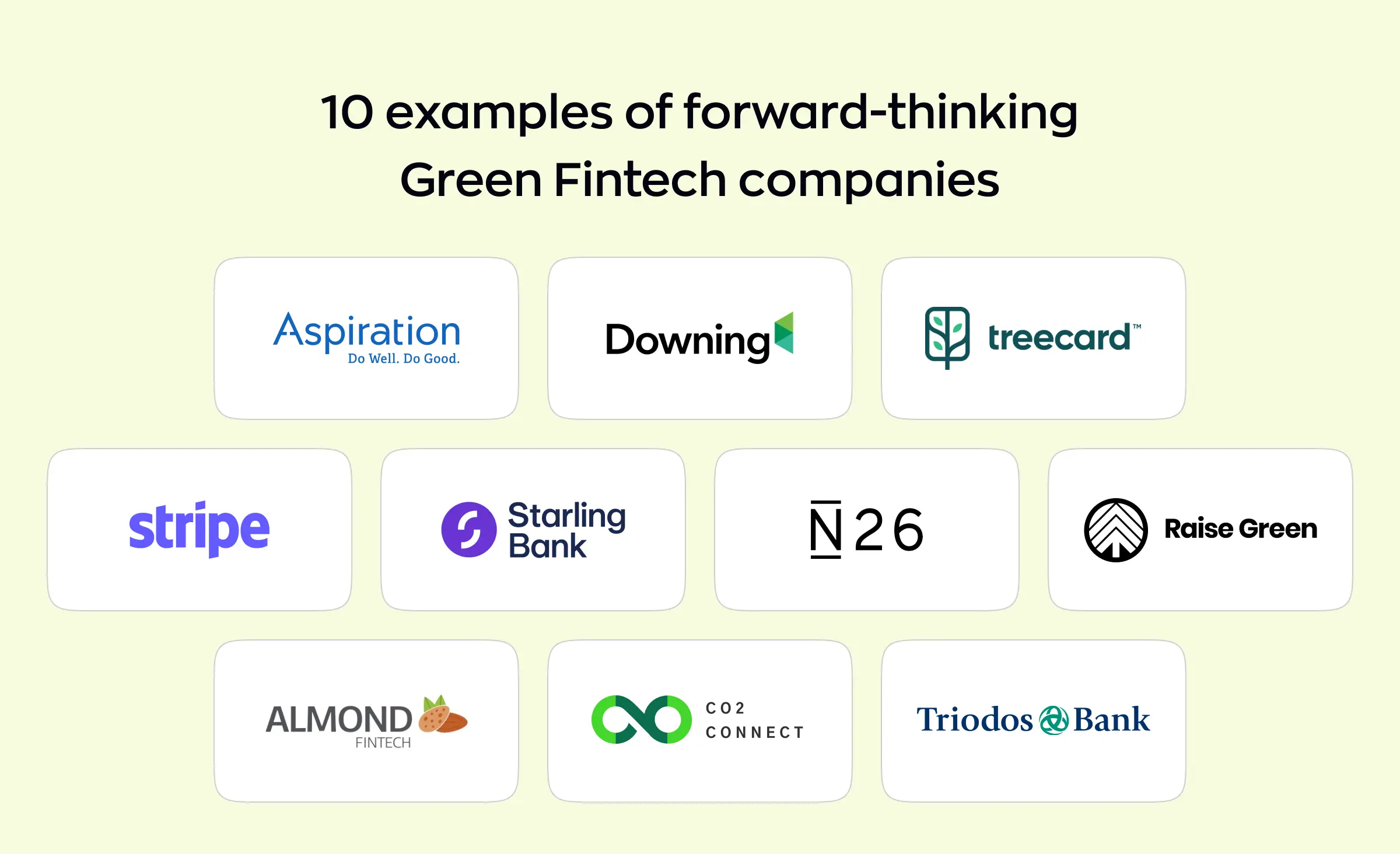
Green fintech in Europe is built on a few core practices:
- Capital allocation: platforms direct money to environmentally friendly companies and projects such as renewable energy.
- Data and transparency: products record emissions and transactions in auditable form so green claims can be verified.
- Sustainable products: teams build simple tools, from digital wallets to apps that track personal footprints, to bring green finance into everyday life.
- Climate risk management: tools help financial institutions assess their exposure to climate-related risks.
- Regulatory alignment: clear, verifiable data helps meet disclosure requirements and audits, which is the practical defence against greenwashing.
Two related concepts sit close to green fintech. The first is sustainable finance, which folds environmental, social, and governance factors into mainstream finance so capital flows to long-term value. The second is ESG (Environmental, Social, and Governance), the framework investors, banks, and regulators use to score how a company treats the planet, its people, and its own governance.
The EU regulatory landscape in 2026: what actually applies
The SFDR, EU Taxonomy, and CSRD are relevant frameworks for green fintech in Europe. Which requirements apply depends on the company’s activities, financial products, and reporting obligations. A software provider may need to support a regulated customer’s disclosures without being directly subject to the same rules.
Sustainable Finance Disclosure Regulation (SFDR)
SFDR sets sustainability disclosure requirements for defined financial market participants and financial advisers, including asset managers and investment firms providing portfolio management or investment advice. A fintech company performing a covered role may be subject to SFDR, depending on applicable exemptions and national rules. Supplying software or carbon-footprint tools alone is not enough. See Articles 2 and 17 of SFDR. Article 17 exempts investment firms providing investment advice and insurance intermediaries advising on insurance-based investment products when they employ fewer than three people, unless their Member State opts to apply SFDR to them. In November 2025 the Commission proposed a major revision, often called SFDR 2.0, which streamlines disclosures and adds product labels such as transition, ESG basics, and sustainable. As of mid-2026, this revision is still moving through the EU legislative process, so a product built today needs a flexible disclosure layer rather than one hard-coded rule set.
EU Taxonomy
The EU Taxonomy classifies environmentally sustainable economic activities. Under the 2026 reporting simplification, non-financial undertakings may omit eligibility and alignment assessments for activities whose cumulative amount is below 10% of the denominator of the relevant turnover, capital expenditure (CapEx), or operating expenditure (OpEx) KPI. Calculate the threshold separately for each KPI across all activities proposed for omission, not for each activity individually. Report the omitted amounts separately as non-material. OpEx also has a separate exemption when it is immaterial to the business model, with the denominator and an explanation still disclosed. Store the source data so alignment can be recalculated when criteria change.
Corporate Sustainability Reporting Directive (CSRD)
The CSRD governs corporate sustainability reporting. The 2026 Omnibus amendment narrows the main EU reporting scope to companies with more than 1,000 employees and over €450 million in net turnover. The 2025 Stop-the-Clock directive moved the second wave from financial year 2025 to 2027 (reports normally published in 2028 instead of 2026), and the third wave from financial year 2026 to 2028 (reports normally published in 2029 instead of 2027). These are the two historical deferrals, not a single 2028 deadline. The later scope changes remove listed SMEs from mandatory reporting, so check the current scope and national implementation before assigning a deadline. If customers remain in scope, provide clean, exportable ESG data.
Consumer demand and the greenwashing gap
Demand is the other half of the story. In a 2022 Mambu survey of over 6,000 consumers, 49% said they would consider switching to a provider with a stronger commitment to sustainability. Yet in the same survey, 67% believed their current financial institution was guilty of greenwashing. These figures describe respondents’ views in 2022; they do not establish current demand.
The European Green Deal
The European Green Deal is the EU’s plan to make Europe the first climate-neutral continent by 2050. It has unlocked significant public funding for clean technology and green projects, which in turn encourages both established businesses and startups to build new green fintech solutions.
How teams calculate a carbon footprint: the real integration
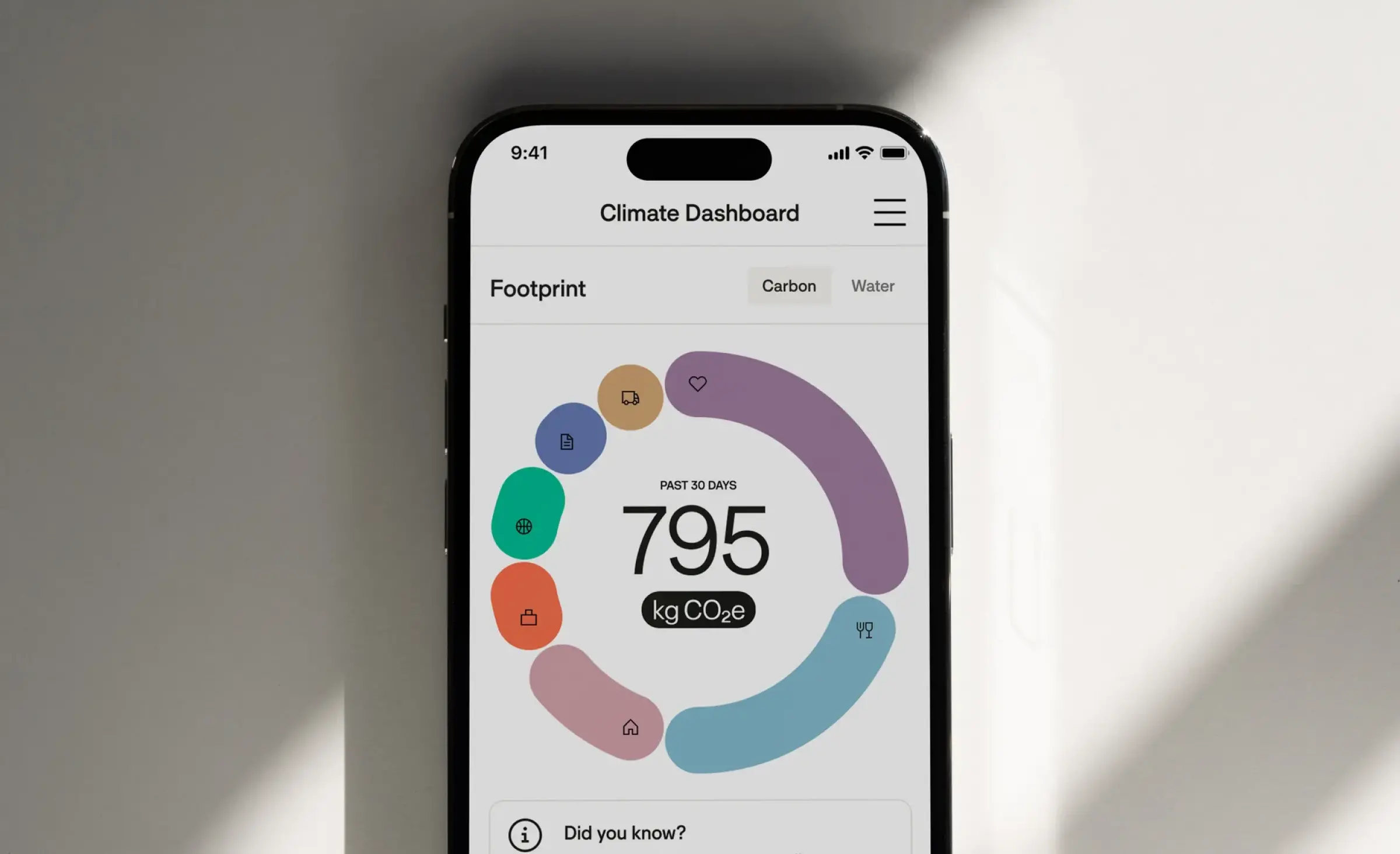
Carbon-footprint tracking is the feature most people picture when they think of green fintech. You do not build a climate model from scratch. You integrate a carbon-data API and map your transaction data to it.
The mechanic looks like this:
- When the transaction feed supplies a merchant category code (MCC), use it to identify the merchant’s business category. Open-banking records may omit this field.
- If the MCC is missing, use reliable merchant or transaction enrichment when available. Otherwise, keep the transaction uncategorized and show that no estimate is available, rather than treating missing data as zero emissions.
- A carbon-data provider maps that code to an emissions estimate. Examples include the Doconomy Åland Index offered through Mastercard and an API such as Connect Earth.
- For purchases with sufficient category data, the provider applies its model and relevant local factors to return an emissions estimate. The app aggregates available estimates and makes gaps in coverage visible.
This is an integration and data-mapping task, not proprietary climate science. The engineering effort goes into connecting to the API, handling rate limits and failures gracefully, storing the estimates for reporting, and presenting them so users trust the number.
Digital technology use cases in green fintech
Beyond footprint tracking, a few technologies do specific jobs across the sector. If you are deciding what to build, this maps the main product categories to the technology behind them: AI for ESG scoring, blockchain for carbon-credit tracing, mobile apps for consumer footprint tracking, and web platforms for sustainable investing. The named products below are there to show what each category looks like in the market, not as a checklist you have to copy.
AI and machine learning
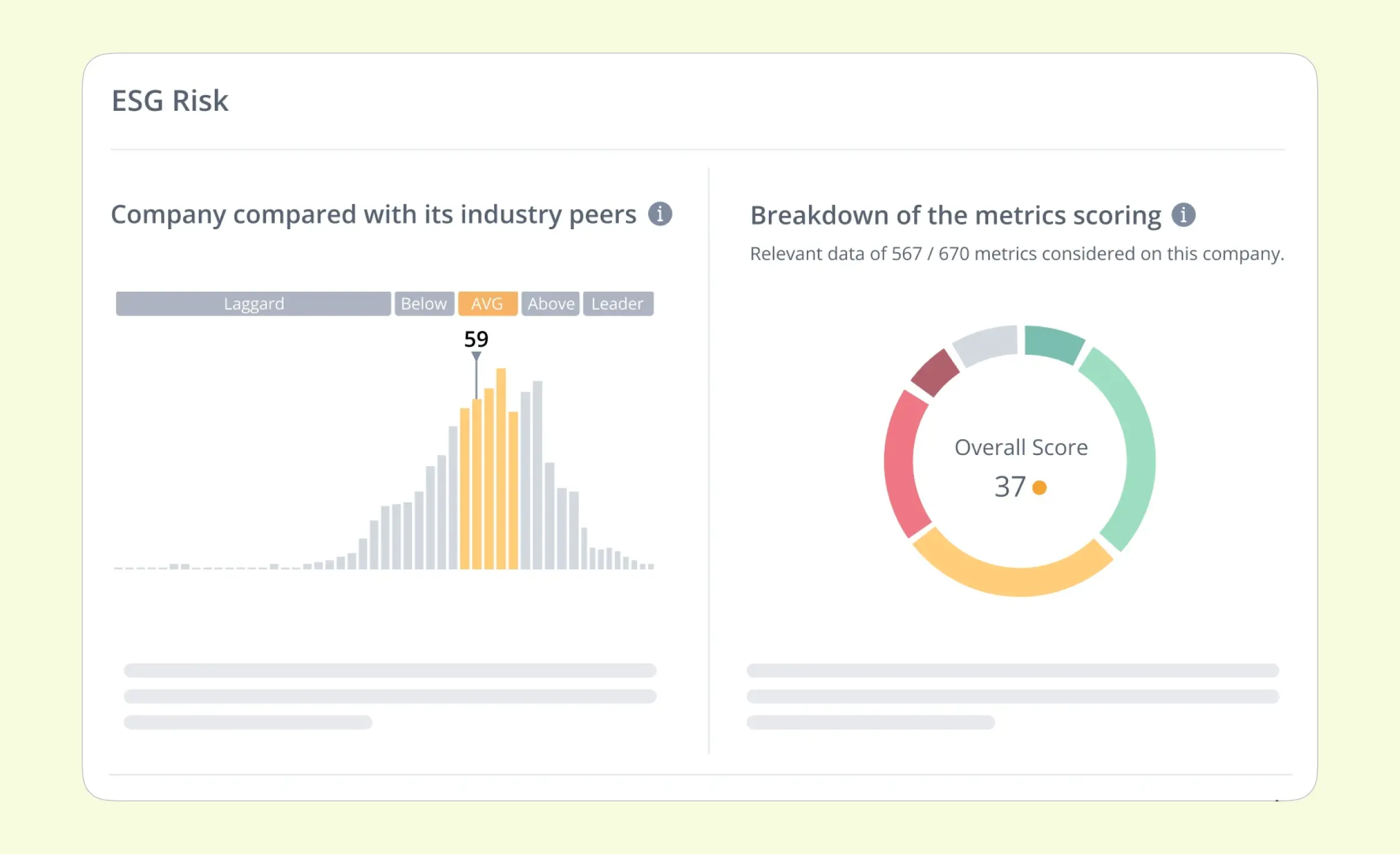
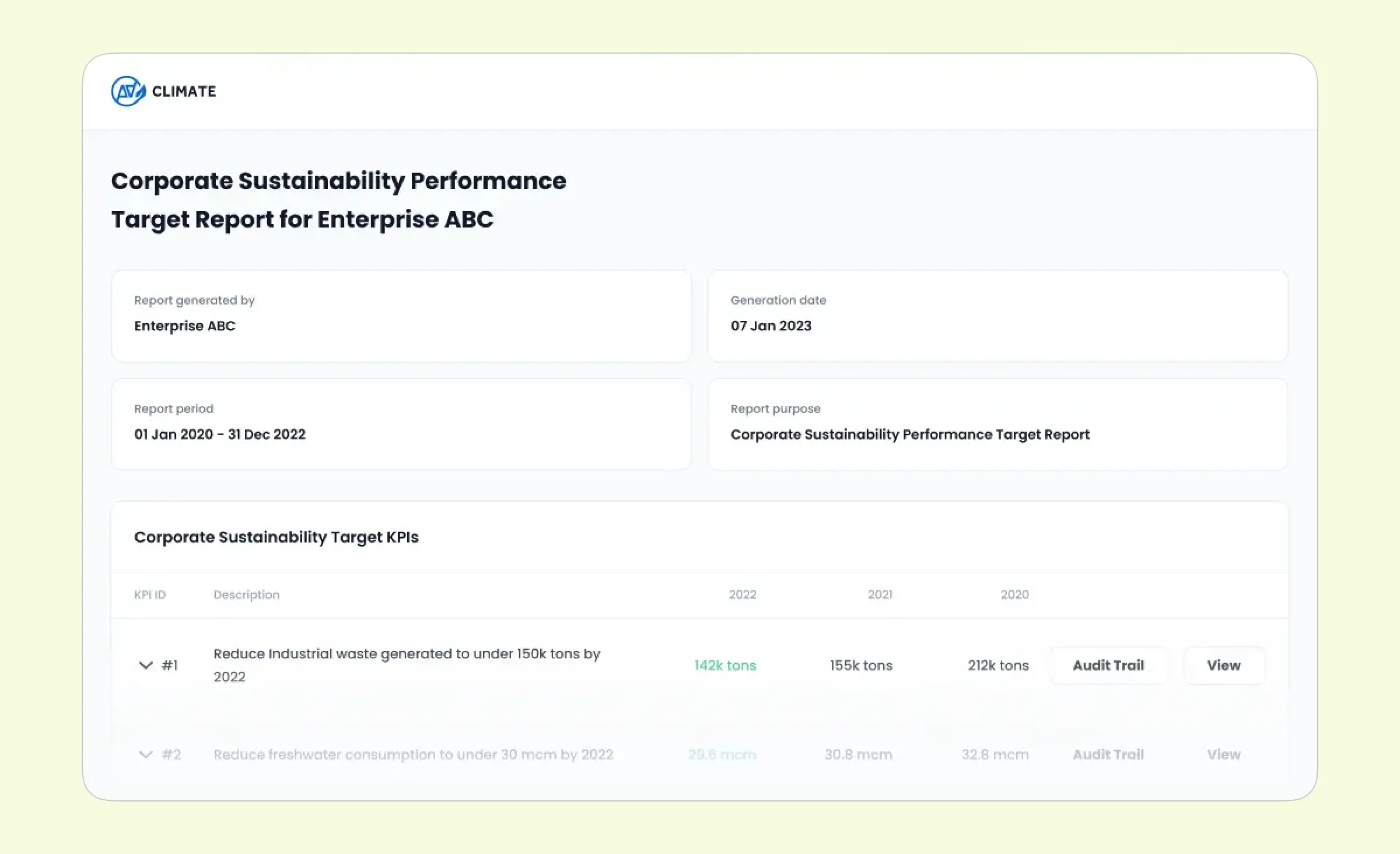
Green fintech products use AI integration to analyze ESG data, score the “greenness” of investment products, and give users personalized recommendations. AI also helps spot greenwashing by comparing a company’s claims against its actual results. As of 2026, tools such as Clarity AI let users calculate and compare ESG scores across companies.
Blockchain in narrow, high-value cases
Blockchain adds value where a tamper-proof audit trail matters, mainly in tracing carbon credits and green bond issuance. Platforms such as Allinfra use it to create verifiable records for carbon credits and to automate transactions that back real environmental outcomes. For most products, though, a well-designed database and reliable APIs do the same job at lower cost, so blockchain is a targeted tool, not a default.
Mobile applications
Green fintech companies that develop mobile apps help users track their carbon footprint, donate to environmental projects, and manage green personal budgets. These apps connect to open banking data to show the environmental impact of spending habits. Doconomy, Commons (formerly Joro), and Germany’s Tomorrow are well-known examples of consumer-facing green banking apps.
Platforms for sustainable investment
Some of the most popular green fintech services are platforms that aggregate green funds and socially responsible portfolios. By offering clear, comparable data, these web app development solutions let investors align portfolios with their values and support the goals of the European Green Deal.
Green loans and insurance
A green loan channels capital directly into projects with a clear positive environmental impact, much like a green bond. Teams use technology to automate climate risk assessments for lending and insurance, which helps financial institutions design products that meet the new rules. Automated environmental risk checks appear in products from banks such as Triodos.



Green fintech build challenges and how to solve them
As green fintech in Europe expands, teams keep running into the same three obstacles. Here is how we approach each one.
ESG data quality and standardization
ESG data is often incomplete, hard to compare across sources, or missing a standard format. That makes it difficult to measure impact accurately and prove compliance.
Solution: build automated data pipelines and connect to named, auditable ESG and carbon-data providers. Validate and standardize metrics on the way in, so every figure the product shows can be traced to its source.
Complex, changing regulations
The rules (SFDR, EU Taxonomy, CSRD) are detailed and, as the 2025 to 2026 Omnibus reforms show, they change quickly. That slows launches and raises compliance risk for teams trying to keep up.
Solution: keep the compliance layer flexible so a rule change is a configuration update, not a rewrite. Store the source data behind every metric so you can re-derive alignment when the criteria shift, and work with an experienced fintech development company that understands both the technology and the European rules.
Consumer education and trust
Even with rising demand, many users still need help understanding ESG, green finance, and their own footprint. Without clear explanation, good products struggle to earn trust, and, as the Mambu data shows, distrust of greenwashing is already high.
Solution: provide clear in-app education, readable dashboards, and transparent disclosures. When you make sustainability information simple and show users where each number comes from, you turn a compliance obligation into a trust advantage for your custom green fintech solution.
How Ronas IT builds green fintech products in Europe
We build fintech products for the European market, and green fintech uses the same foundations as any compliant EU fintech product, such as secure infrastructure, clean data pipelines, and real regulatory work, plus a sustainability data layer on top. A compliant green fintech build usually maps to our fintech tier, which starts from $75,000 and takes from 3 months (see our current pricing tiers), because of the extra integrations and regulatory work. Here is how we approach a build.
“The mistake we see most often in green fintech is treating sustainability as a marketing skin over a normal app. The value is in the data layer. If your carbon and ESG numbers come from named, auditable APIs and your pipeline is transparent, the product survives both an audit and a skeptical user. If they don’t, you’ve built a greenwashing risk with extra steps.”
Evgeny Leonov, CTO at Ronas IT
Clarify business goals and sustainability objectives
We work with you to define the app’s core purpose and set concrete sustainability goals, such as reducing users’ footprints, supporting green finance, or guiding responsible investment, so every later decision has a target to hit.
Analyze the market and the current regulations
We research your users and study the rules that apply: the EU Taxonomy, SFDR, and CSRD in their current, post-Omnibus form. This keeps the product aligned with the compliance landscape as it stands today, not as it read a year ago.
Choose the stack and the sustainability features
We help you pick the right technologies, commonly React Native, Laravel, and PostgreSQL, with open banking and carbon-data APIs, then prioritize the features that matter most:
- Carbon-footprint tracking
- Green investment recommendations
- ESG data dashboards
- Verification of green finance claims
- Tools for donations to environmental projects
Integrate ESG and carbon-data providers
We connect your product to reliable ESG and carbon-data sources, using standard formats so reporting and comparison are simple for both users and regulators. This is the data layer the whole product rests on.
Design a clear, user-centered interface
Our team creates an intuitive UI/UX design that guides users through sustainability concepts and shows their personal impact, keeping transparency front and center.
Build and test the MVP
We build a minimum viable product around your core green finance features and test it hard for accurate ESG data, banking-grade security, and stable performance.
Reach compliance and enable reporting
Working with your legal and compliance teams, we handle the technical side of sustainability reporting and regulatory disclosures, so meeting documentation standards becomes a straightforward export rather than a scramble.
Launch, measure, and iterate
We support the launch, gather feedback, track compliance and real environmental impact, and keep refining the product against data and user needs, then scale with cloud infrastructure as your user base grows.
We already build fintech products that comply with the rules of the European market. One example is a neobank app for freelancers and gig workers in Europe. We designed and built the mobile product with React Native and Laravel, integrated Trulioo for KYC with built-in AML and PEP checks (Trulioo complies with GDPR), and connected the app to Solaris, a Germany-based banking-as-a-service provider that supports SEPA and SWIFT payments. We isolated services behind a microservice architecture on Docker and Kubernetes, so the same discipline applies when a sustainability data layer is added on top.
Sustainability doesn’t have to start in banking, either. For Lainappi, a Finnish rental marketplace built on the idea that “not everything needs to be owned,” we built a React Native app with Stripe Connect payments and a clean, eco-focused design.
Wrapping up: what to do next
Green fintech in Europe is no longer a niche. Demand is rising, the European Green Deal keeps pushing capital toward it, and the rules, even after the Omnibus simplification, still set a high bar for transparency. The products that win are the ones that prove their value with verifiable data rather than a green label.
If you’re planning a green fintech product, three moves set you up well:
- Decide which of the SFDR, EU Taxonomy, and CSRD apply to your customers in their current, post-Omnibus form, then design a flexible compliance layer instead of a hard-coded one.
- Choose named, auditable carbon-data and ESG providers early, and treat that data layer as the core of the product.
- Start with a focused MVP that proves one sustainability feature well, then scale from there.
Frequently Asked Questions (FAQs)
What is green fintech?
Which EU regulations apply to a green fintech product in 2026?
How does a fintech app calculate a user’s carbon footprint?
How much does a green fintech MVP cost, and how long does it take?
What technology stack fits a green fintech product?
Do I need blockchain to build a green fintech app?
How do you avoid greenwashing in a fintech product?
Does Ronas IT build green fintech products for the European market?
Related posts






Related Services
React Native App Development Services
Save time and costs with Ronas IT's React Native app development, allowing cross-platform capabilities for iOS and Android. Our team has built 20+ React Native apps since 2020, ensuring rapid development, flexible maintenance, and cost-effective solutions.
MVP Development Services
Need to launch your startup quickly? Ronas IT offers urgent MVP development services, allowing you to get a fully-functional app in 4 to 12 weeks, depending on scope. Ideal for testing business ideas, presenting to investors, or entering the market swiftly. Benefit from our extensive experience and accelerated development process.
Fintech Software Development Services
We build secure, scalable fintech solutions like neobanks, trading, and investment platforms — tailored to your market and regulatory needs. Our team ensures robust KYC, compliance, and data privacy, delivering modern, user-friendly interfaces and flexible microservice architectures. From code audits to full-cycle development and ongoing support, we help you launch and manage high-performing fintech apps with confidence.