

A minimum lovable product (MLP) is the first version of a product built to be loved, not just tolerated. It still solves one core problem with a small feature set, but it adds enough design, polish, and delight that early users want to come back and tell others. The term was introduced by Aha! co-founder and CEO Brian de Haaff in 2013 as a counterpoint to the minimum viable product, and he later expanded the idea in his 2017 book, Lovability.
The two ideas share the same lean, iterative mindset. The difference is the bar you aim for. An MVP asks whether your solution works. An MLP asks whether people will love it enough to stay.
MLP vs MVP: what is the difference?
A minimum viable product is a basic version with only the features needed to test a hypothesis. The idea was popularized by Eric Ries in The Lean Startup: ship fast, watch how the first users react, and decide what to build next. A minimum lovable product starts from the same problem but invests early in usability and design, so the first release already feels good to use. Both stay minimal, but only the MLP is built to be loved on contact.
An MVP is a tool for uncertainty: when you launch something new and have few competitors to study, you learn cheaply. An MLP is a tool for crowded, predictable markets: when users already have alternatives a tap away, "good enough" is not enough to earn loyalty.
| Aspect | MVP (minimum viable product) | MLP (minimum lovable product) |
|---|---|---|
| Main goal | Validate that the solution works | Validate that users will love and return to it |
| Core question | Does it work? | Will they come back? |
| Design and UX | Minimal, functional | Polished, central to the release |
| Best market fit | New or unproven markets, few competitors | Existing markets with real alternatives |
| Emotional response | "It does the job." | "I love this." |
| Cost and time | Lower (smallest build) | Higher (extra design and polish) |
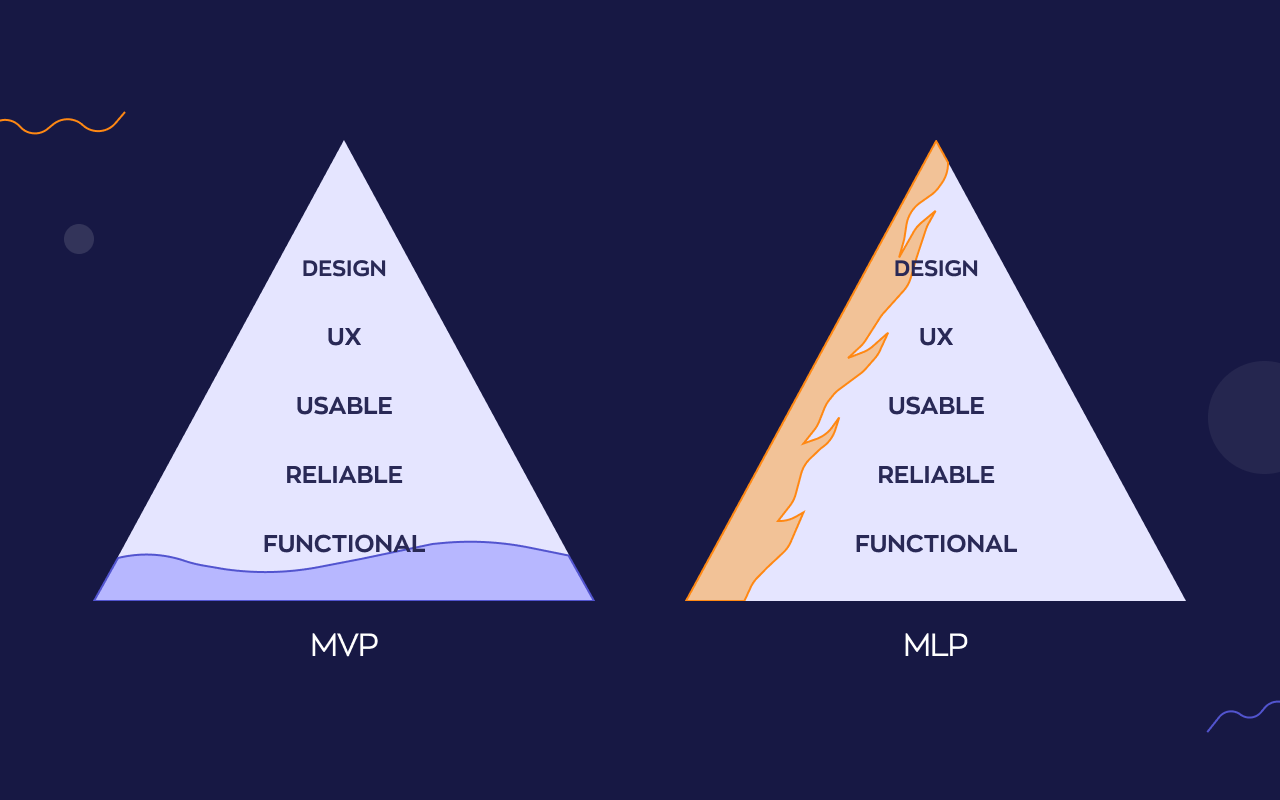
At Ronas IT, we do not set these approaches against each other. An MLP is a reinterpretation of an MVP, not its rival. "Lovable" simply means solving a customer's problem in a way they enjoy so much that they come back. If you are still weighing your first release, our MVP development page covers the fundamentals in depth.
Where does MMP fit in?
A minimum marketable product (MMP) is the leanest release that is polished enough to sell to your real audience rather than to early testers. It is the third acronym that shows up when you search for MVP versus MLP. Where an MVP tests whether an idea works and an MLP makes early users love it, an MMP is the point where the product is ready to market and earn revenue at scale, a stage a product usually reaches after its lovable core has proven itself.
Why lovable beats viable in 2026
For years, "viable" was a reasonable moat. Shipping working software was hard, so being first with a functional product often won. That advantage has thinned. AI-assisted coding and no-code tools, such as Cursor, Replit, and Bolt, have collapsed the cost of building a working app, so basic functionality is closer to a commodity. When anyone can ship something viable, the product people actually keep is the one they love.
An MLP concentrates on the connection between the user and the product: the small moments of delight that create loyalty, increase retention, and turn users into people who recommend you to friends. In a market where switching costs are a single tap, that connection is often the difference between growth and churn.
What makes a product lovable?
A lovable product combines three qualities: functionality, usability, and delight. Delight is not decoration; it is the part that earns a second visit.
Lovable products tend to share a few traits:
- They are opinionated. Instead of offering twelve ways to do one thing, they offer one clear path with strong defaults, so users never feel lost.
- They focus on one core loop. A tight, delightful main flow beats a wide, mediocre feature list.
- They invest in the details. Micro-interactions, smooth transitions, and thoughtful copy signal care and build trust.
- They evoke a positive emotion. Users should finish the core task feeling that the product respected their time.
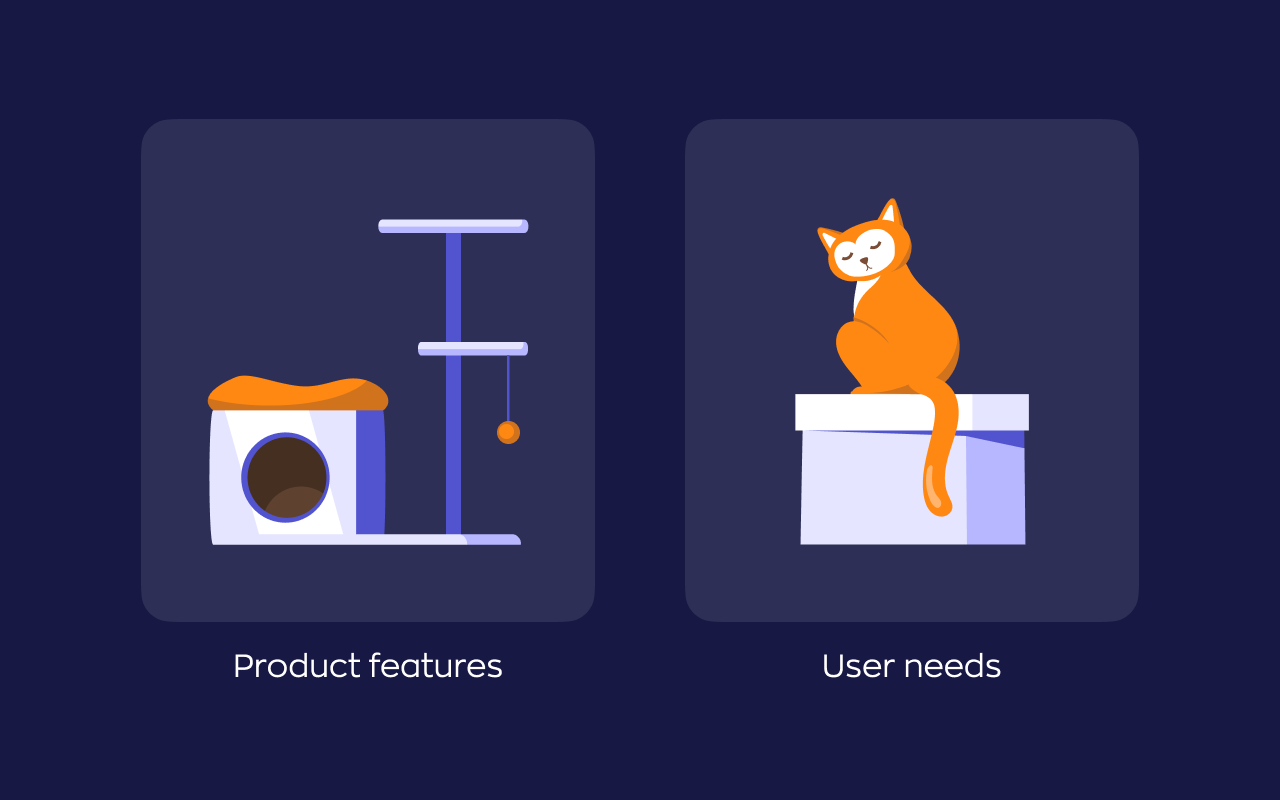
Design carries much of this weight, which is why an MLP treats UI/UX design as a first-class part of the first release rather than a later polish pass.
MVP vs MLP in the wild: Dropbox, Instagram, and Airbnb
Three familiar products show what viable and lovable look like in practice. Dropbox is the classic MVP story: before building the full sync engine, the team validated demand with a simple explainer video and a waitlist. The goal was to confirm the idea worked, not to delight anyone yet.
Instagram is the MLP counterpoint. Instead of shipping a broad photo-sharing tool, it launched on October 6, 2010, with one elegant loop: take a square photo, apply a filter, and share it to a feed. The experience felt polished and satisfying from the first tap. According to Wikipedia's Instagram timeline, more than 25,000 people signed up on launch day, and the app passed one million registrations by December 12, 2010, roughly two months later.
Airbnb shows the third pattern: an MVP that grows into a lovable product. It began as a bare listings site and, over time, layered in professional photography, reviews, and personalized recommendations, each addition making the experience more enjoyable and memorable until the product became something people trusted and loved.
How to build a minimum lovable product
Building an MLP follows the lean loop of an MVP, with love designed in at every step rather than bolted on later. A practical sequence looks like this:
- Research what users love, not just what they need. Talk to your audience about their pain points and the moments that would make the experience feel good.
- Pick one core loop. Choose the smallest set of features that solves the problem, then make that flow genuinely delightful instead of spreading effort thin.
- Design the experience early. Invest in an intuitive, visually clear interface from the start. This is where an MLP earns its name.
- Align the whole team. Product, design, and engineering need one shared definition of "lovable" so the details do not get lost in handoffs.
- Ship, then iterate on feedback. Release the lovable core, measure how people respond, and improve the details continuously.
Much of this work happens before a line of code is written, during the analysis and design stage. If you want to see how an idea moves from concept to a working product, our step-by-step guide to building an MVP maps out the process, and PoC vs prototype vs MVP explains which early build fits which question.
How we built a lovable EdTech platform at Ronas IT
A client asked us to launch an EdTech learning platform for the European market (a single home for self-paced courses, live instructor-led lessons, and progress tracking) for both individual learners and companies. Because online learning is a crowded market, a bare-bones MVP would not have stood out. The first release had to be genuinely enjoyable to use.
So we designed for delight from the start. Calming background colors support long study sessions while bold accents guide key actions. Gamification (badges, streaks, and weekly leaderboards) keeps learners motivated. Accessibility was built in from the ground up, with screen reader support, adjustable text, high-contrast themes, and subtitles on every video.
Our team launched the cross-platform product in just four months. It runs on infrastructure built for 10,000+ monthly active users, maintains over 99.7% crash-free sessions, and holds user ratings above 4.6 stars in app stores.
“We do not treat ‘lovable’ as a luxury you add after launch. In a crowded market, the emotional details are the product. On our EdTech build, the calming visual design, the streaks and badges, and the accessibility work were not extras. They were the reason learners came back. We would rather ship one delightful core flow than ten features nobody enjoys.”
Roman Surikov, CEO at Ronas IT
When should you choose an MLP?
The choice comes down to your market and your goal. An MVP is the right call when you are exploring an unproven idea and need to test demand cheaply. An MLP is the right call when you are entering an established market and loyalty is the game. In short, build an MLP when:
- Your product is not the only one in its niche and needs an exceptional experience to compete.
- You want to win the loyalty of your target audience from the first launch.
- You want first-time users to become regular, returning customers.
- You have already validated an idea with an MVP and are ready for the next stage.
An MVP is the safer starting point when:
- The idea is unproven and you first need to confirm that anyone wants it.
- The budget or timeline is tight and cheap validation comes before polish.
- You are early in a new market with no direct competitors to lose users to yet.
Conclusion
You do not need to draw a hard line between MVP and MLP. What matters is matching the release to the market and the moment. Test unproven ideas with an MVP; when you compete for loyalty, aim for lovable from the start by building one delightful core loop and designing the experience early.
Your next step depends on where you are:
- Unsure the idea has demand? Start with an MVP and validate cheaply.
- Entering a crowded market? Budget for design and polish and build an MLP.
- Already have an MVP with traction? Reinvest in the details that turn users into fans.
Either way, aim for a first release people are glad they found and keep coming back to.



Frequently Asked Questions (FAQs)
What is a minimum lovable product in simple terms?
What is the difference between an MVP and an MLP?
When should I build an MLP instead of an MVP?
Does an MLP cost more than an MVP?
What makes a product lovable?
What is an MMP (minimum marketable product)?
How long does it take to build a minimum lovable product?
Can an MVP evolve into an MLP?
Related posts



Related Services
React Native App Development Services
Save time and costs with Ronas IT's React Native app development, allowing cross-platform capabilities for iOS and Android. Our team has built 20+ React Native apps since 2020, ensuring rapid development, flexible maintenance, and cost-effective solutions.
MVP Development Services
Need to launch your startup quickly? Ronas IT offers urgent MVP development services, allowing you to get a fully-functional app in 4 to 12 weeks, depending on scope. Ideal for testing business ideas, presenting to investors, or entering the market swiftly. Benefit from our extensive experience and accelerated development process.
Custom Web App Development Services
Build secure, scalable web applications with Ronas IT’s custom web app development services. Our team covers the full cycle — from concept and UI/UX design to development, testing, and ongoing support — using leading tech like React and Laravel. With 200+ custom apps delivered across various industries, we ensure intuitive interfaces, smooth integration, and solutions tailored to your business goals.