How to implement AI tools for HR management: benefits, challenges, and usage cases

Human Resources departments have traditionally struggled with manual, time-consuming HR tasks like hiring and talent management, often facing inefficiency, unconscious bias, and high employee turnover. These challenges frequently prevent HR professionals from focusing on the creation of a positive employee experience. Today, artificial intelligence offers a powerful solution. AI tools for HR management are transforming every stage of the employee journey through advanced AI automation — from analyzing employee data for candidate sourcing and streamlining hiring processes to improving performance management and making employees more engaged in the work process.
This article explores the different methods to apply AI tools in HR, their benefits for the business, the challenges of AI implementation, and how partnering with the right experts can drive successful AI transformation in human resource management.
What challenges can AI tools solve in HR departments?
In today's fast-paced business environment, human resources (HR) teams face a wide range of challenges. They handle everything from attracting new talent to fostering employee development — helping individuals acquire new skills, expand their capabilities, and advance their careers within the organization.
HR also focuses on creating a positive employee experience, encompassing every interaction an employee has with the company, from the initial interview to their final day. Many of these critical HR tasks involve repetitive manual work, which can lead to inefficiencies and sometimes introduce unconscious bias — automatic, often hidden assumptions or stereotypes that unintentionally influence decisions. This is why AI tools for HR management are becoming essential.
Let's look at the key pain points HR professionals frequently encounter:
- Inefficiency: HR professionals spend countless hours each week manually sifting through hundreds of resumes, struggling to schedule interviews across multiple calendars, and handling a mountain of administrative tasks like paperwork and data entry. This is time-consuming and drains valuable resources, preventing the HR department from focusing on strategic initiatives that truly impact the workforce and its growth.
- Bias: Subtle, often unconscious biases can unintentionally creep into hiring decisions. These biases might be embedded in traditional screening methods or interview processes, inadvertently limiting the talent pool. This can prevent the organization from bringing in diverse perspectives and finding the ideal candidate for a role, thereby impacting fairness within the workforce.
- High costs: Financial strain can often be associated with a slow hiring process or high employee turnover rates. Every vacant position costs the business money in lost productivity, and losing a valuable employee means incurring significant expenses for recruitment, onboarding, and training their replacement. These costs quickly add up, directly affecting your budget and profitability.
- Candidate experience: Picture a promising candidate waiting weeks for an interview slot, receiving only generic automated emails, or getting no feedback after an application. This creates a frustrating candidate experience even before they join your company, often causing top talent to drop out and choose a competitor who offers a smoother, more personalized journey.
- Employee engagement: Without clear insight, it's incredibly challenging to truly understand what motivates employees, what concerns they have, or what specific challenges they face. You might struggle to identify declining sentiment or provide personalized development paths, which can lead to disengagement and a less productive workforce. Without a specific tool to gather and analyze feedback, you're often left guessing.
Artificial intelligence can help to solve each of these challenges. For instance, HR automation can handle repetitive HR tasks, offer data-driven actionable insights, promote objectivity in decision-making, and allow for greater personalization across all human resources functions. Ultimately, AI technology can empower every HR department to become more strategic and forward-thinking. To learn about AI functions in other fields, explore the role of AI in software development as well.
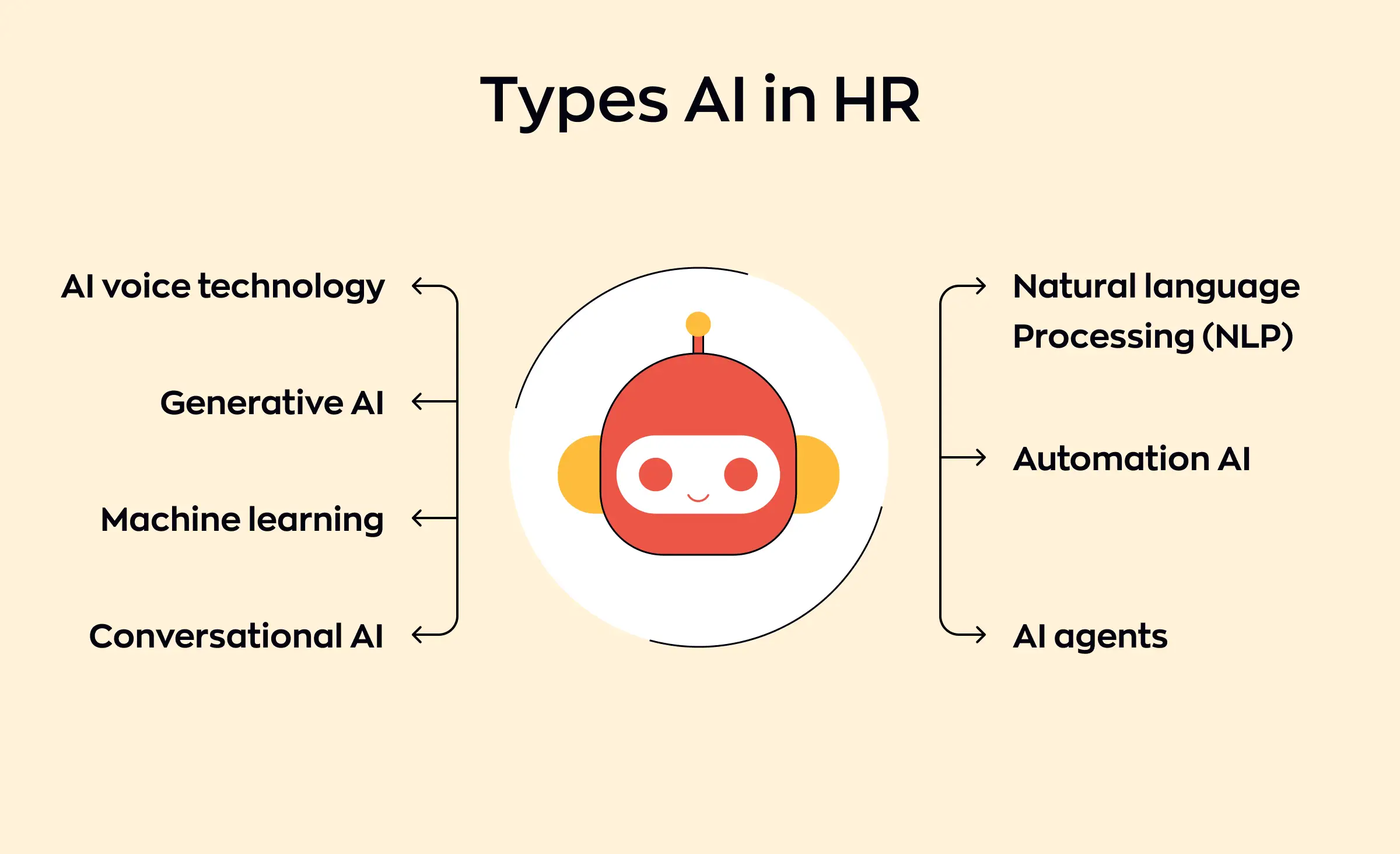
Key applications of AI tools for HR management throughout the employee lifecycle
AI is transforming every stage of the HR lifecycle, from attracting talent to retaining a strong workforce. Many companies now use powerful AI tools for diverse purposes.
Recruitment and talent acquisition
In the HR lifecycle, recruitment often involves time-consuming manual tasks like scanning resumes, crafting personalized messages, and analyzing interviews. AI technologies can automate these repetitive processes and save valuable time. These AI features ease up the talent acquisition.
AI-powered sourcing and screening
AI identifies top candidates from large applicant pools by automatically analyzing resumes and matching relevant skills to job descriptions, saving HR professionals significant time. Beyond screening, AI assistants manage personalized outreach and chatbot support, accelerating hiring and making sure only qualified candidates advance.
For example, Unilever recruits over 30,000 people annually and processes 1.8 million applications. They partnered with Pymetrics to create an AI-driven platform where candidates complete gamified tests assessing aptitude and risk tolerance. This AI matches profiles to successful employees, reducing hiring time by 75%, cutting costs, and increasing workforce diversity.
Intelligent interviewing and assessment
Once you have a strong pool of candidates, AI continues to help. An AI-powered scheduling tool can simplify the often-tricky process of arranging interviews for both candidates and hiring managers. It automatically finds meeting times that work for everyone, cutting down on back-and-forth emails and delays.
Some advanced AI tools even offer video interview analytics, which can provide insight into a candidate's communication patterns and overall sentiment during an interview – though companies must apply this with careful ethical considerations to ensure fairness. Beyond interviews, skill assessment platforms use an AI algorithm to objectively evaluate candidate capabilities, giving a clear, unbiased picture of what a potential employee can do. This foundational assessment information then feeds into ongoing development.
Candidate experience improvement
Ultimately, AI plays a huge role in making the hiring journey more positive and personal for job seekers. It helps companies provide personalized communication, tailoring messages to each candidate's specific stage in the process rather than sending generic updates. This also allows for faster feedback loops, meaning candidates aren't left waiting for weeks, wondering about their application status. This approach makes the hiring journey more engaging and positive for every potential employee, boosting your company's reputation as a great place to work.
Onboarding and training
After a successful hire, an employee's journey truly begins with onboarding and ongoing learning. AI tools can streamline and personalize these early experiences, helping to build a more skilled and engaged workforce from day one and increasing overall employee engagement.
Personalized onboarding journeys
New hires are often overwhelmed by information and paperwork on their first day. AI shines here by creating personalized onboarding experiences tailored to each employee's role and skills, recommending only the most relevant training content. AI assistants can answer common questions, guide new hires through forms, and reduce HR's workload.
IBM, for example, uses AI-powered chatbots to support onboarding: these bots answer questions, help with paperwork, and deliver customized training, reducing onboarding time by 60% and speeding up new hire productivity.
AI-powered learning and development
Beyond initial onboarding, AI plays a crucial role in continuous employee development throughout their entire career. By analyzing performance data, current role requirements, and even emerging industry trends, AI can pinpoint specific skill gaps across the entire workforce.
This allows companies to proactively address areas where employees might need to learn new capabilities to stay competitive. Once these gaps are identified, AI recommends personalized course curricula and learning paths for each employee, moving beyond generic training programs to truly customized learning that supports talent management.
Performance management and employee development
Beyond hiring, a key HR function of human resources is helping every employee grow and succeed. This centers on performance management — setting goals, tracking progress, and providing feedback — and employee development, which builds new skills and supports career growth. AI tools are transforming these areas by streamlining processes and delivering advanced AI capabilities that help HR professionals do workforce management, predict needs, and provide targeted support, ultimately improving the overall employee experience.
Sentiment analysis from employee feedback
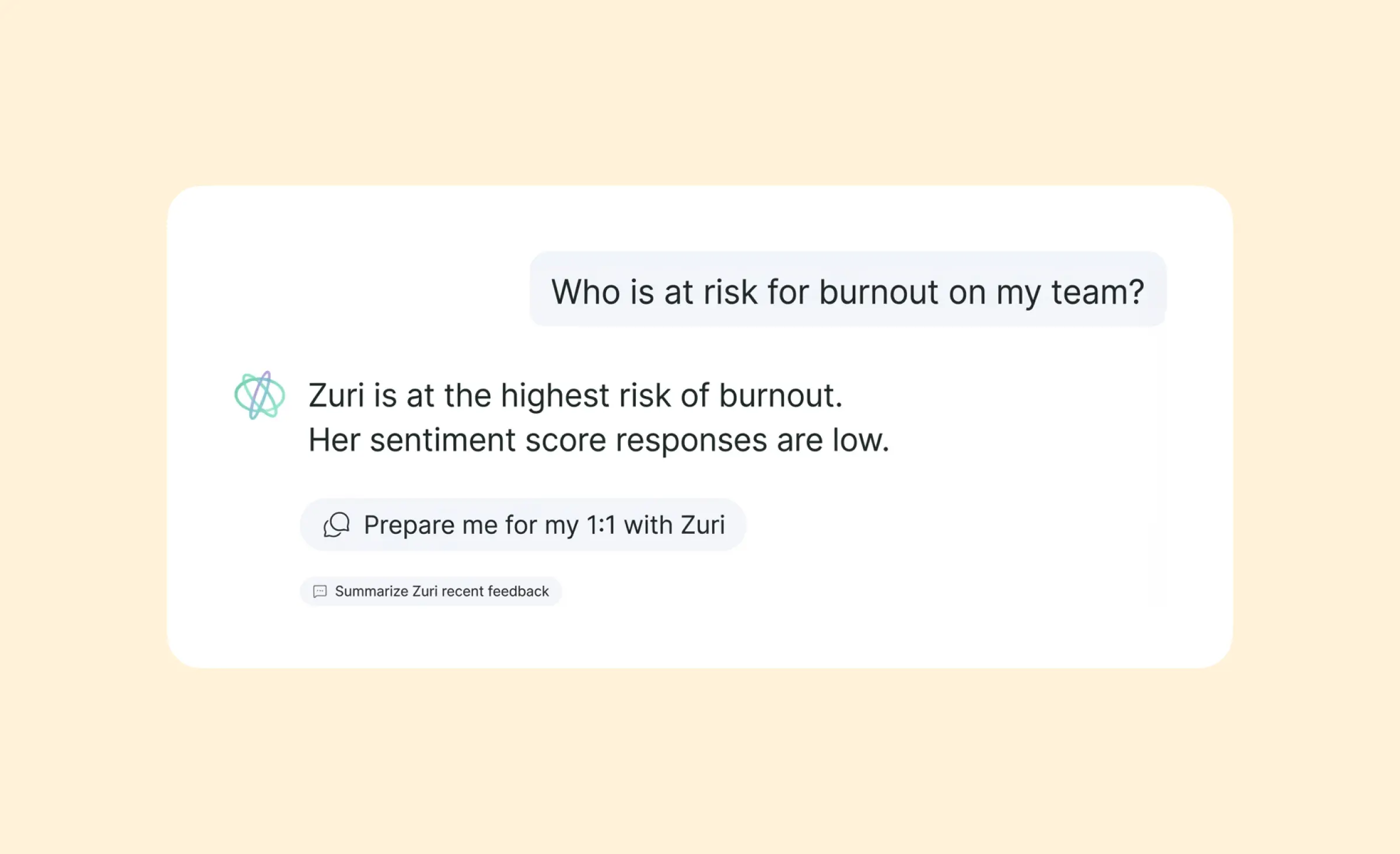
AI tools for HR management can perform “sentiment analysis” on employee feedback, whether from anonymous surveys, internal communication platforms, or regular check-ins. By interpreting the tone and emotions in employee responses, AI algorithms can determine if sentiment is positive, negative, or neutral.
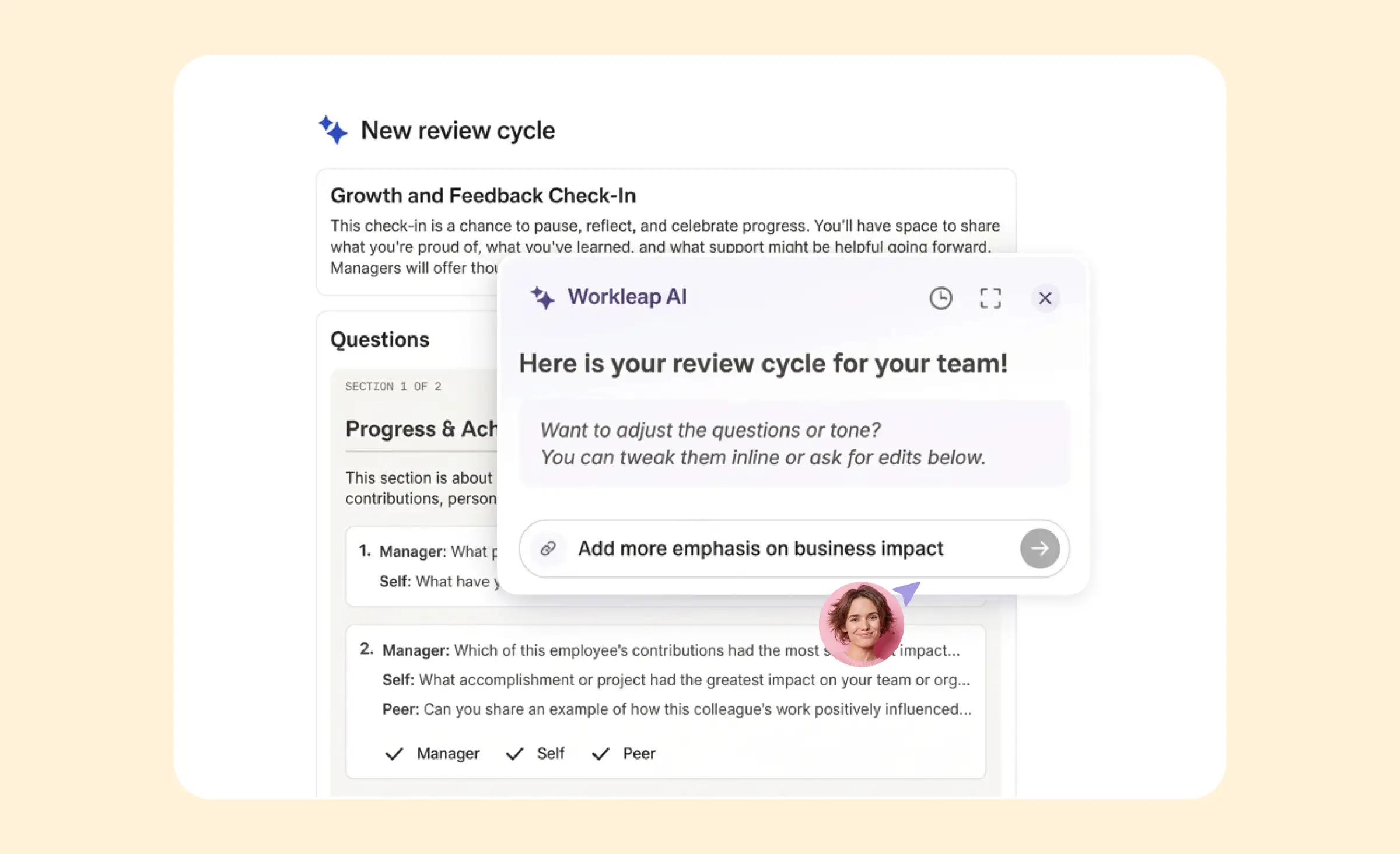
This insight enables HR leaders to gauge engagement, identify potential issues early, and better understand what motivates the workforce. For example, the Workleap platform uses AI tools for HR management to run surveys, analyze responses, and deliver actionable data on employee mood, progress, and overall organizational health.
Predictive analytics for retention
One of the biggest challenges for any HR department is retaining valuable talent and reducing costly employee turnover. AI tools offer powerful predictive analytics by analyzing employee data such as performance reviews, tenure, compensation, engagement scores, and sentiment from feedback.
These AI algorithms provide workforce analytics and identify patterns that indicate when an employee may be at risk of leaving and provide actionable insights into why, enabling HR professionals to take proactive measures. Applications such as Paycor are among the best AI tools to provide predictive HR analytics to help forecast workforce trends, while UKG offers data-driven workforce insights for strategic talent management and improved retention.
Performance feedback analysis and coaching recommendations
Effective performance management is about continuous feedback and employee growth, not just annual reviews. AI tools can analyze feedback — including 360-degree feedback from managers, peers, and self-assessments — to pinpoint strengths, areas for improvement, and emerging skills. These AI capabilities synthesize data into actionable insights, generating personalized coaching recommendations that suggest targeted training or development goals aligned with both career aspirations and company needs.
A good example of Lattice AI, an AI HR tool that helps HR teams write better performance reviews, gain engagement insights, and enable managers to collect and analyze team performance data. The platform also features an AI chatbot that instantly answers HR-related questions, helping to save time for the entire team.
Employee engagement and experience
Beyond performance and development, a thriving workforce depends on how engaged and satisfied employees feel each day. Building a strong employee experience means creating a culture of belonging, purpose, and support—not just offering perks. In this area, AI tools are invaluable, as their capabilities foster a more personalized work environment that significantly boosts morale and retention.
Personalized communication
In a diverse workforce, generic communication often misses the mark. AI enables companies to deliver highly personalized messages by analyzing employee data like role, tenure, location, and engagement history.
This allows for tailored training recommendations, department-specific news, and personalized benefit reminders — helping employees feel valued and connected, and greatly enhancing their overall employee experience. Intelligent targeting like this is essential for modern talent management.
AI-powered internal knowledge management systems
When employees need quick answers about company policies or HR processes, an AI-powered internal knowledge management system can provide instant, accurate responses via a chatbot or virtual assistant. These AI tools understand natural language questions and pull relevant information from a broad internal database, reducing the need for HR to handle repetitive inquiries. This not only lessens the administrative burden on HR teams but also allows employees to resolve issues on their own. For example, Leena AI is a HR AI tool that integrates with over 1,000 corporate apps to answer employee questions around the clock, further streamlining HR operations.
Tangible benefits of implementing AI in HR
Summing up the examples of AI implementation discussed above, it's clear that AI technologies offer several key benefits to businesses that choose to leverage them in the HR field:
Improved efficiency and cost savings
One of the biggest benefits of using AI tools for HR management is increased efficiency and cost savings. AI automates repetitive tasks like screening resumes and scheduling interviews, reducing time-to-hire from weeks to days. This frees up HR professionals to focus less on routine admin work and more on strategic initiatives that support the workforce. Implementation of AI may also help to reduce operational costs.
In the world's business practice, there's already a case where hr automation helped to improve efficiency. One example is Mastercard reduced friction in interview scheduling by partnering with Phenom and using an AI scheduling tool. This led to 85% faster scheduling, with 88% of interviews scheduled within 24 hours of request.
Enhanced candidate quality and retention
AI helps companies find better-matched candidates, which often leads to higher employee satisfaction and reduced employee turnover. By predicting employee success, AI tools help HR leaders make smarter hiring decisions. This is key for talent management.
Reduced bias and increased diversity
AI algorithms can objectively screen candidates and analyze job descriptions to remove biased language or biased assumptions that humans might be prone to. This fosters a more diverse and inclusive workforce. Generative AI helps write more inclusive job descriptions.
PepsiCo already uses AI to analyze job descriptions and remove biased language. This resulted in a 25% increase in the diversity of their candidate pool. By ensuring that job postings are more inclusive, PepsiCo attracts a broader range of candidates, fostering a more diverse and inclusive workplace. This case proves the effectiveness of the AI in achieving true inclusiveness.
Superior candidate and employee experience
Personalized interactions, faster support, and streamlined HR processes greatly enhance the employee experience for both applicants and current employees. This improved experience boosts morale and strengthens your employer brand.
A notable example is General Electric, which uses the AI tool Wingmate, developed with Microsoft, to support employee performance management and productivity. Wingmate summarizes manuals, resolves quality issues, and drafts communications. Within three months of launch, employees used Wingmate over half a million times, reflecting high engagement and the value of AI in HR.
Data-driven decision making
Perhaps one of the most transformative benefits of AI tools for HR management is their ability to revolutionize how HR professionals make decisions. Traditionally, many human resources decisions relied on intuition, anecdotal evidence, or limited sets of data. Now, AI unlocks actionable insights from vast amounts of employee data, transforming it from raw information into clear, understandable patterns and predictions. An AI algorithm can analyze everything from employee performance metrics and feedback to compensation structures and retention rates, providing a comprehensive view of your workforce. This makes analytics a core strength.
What are the challenges of adopting AI tools for hr management?
While artificial intelligence offers clear and exciting benefits in human resources, implementing these advanced solutions comes with its own set of challenges. An HR leader must carefully consider these factors for successful AI implementation, ensuring that the new AI capabilities truly serve the organization and its workforce. Addressing these hurdles proactively is key to maximizing the potential of AI tools for HR management. When evaluating best AI tools, organizations should look for those that align with their strategic HR goals.
- Data privacy and security: Handling sensitive employee data and candidate data responsibly is paramount. Companies must implement robust security measures like advanced encryption and strict access controls, while ensuring full compliance with global data protection regulations to protect the workforce.
- Ethical AI and algorithmic bias: It's crucial to ensure fairness and transparency in AI models to prevent them from inadvertently perpetuating or amplifying existing biases. Developers must regularly audit AI algorithms and train them with diverse data sets to ensure impartial decision-making across all HR processes, especially during custom AI tool development. This ensures responsible AI implementation.
- Integration complexities: Connecting new AI tools with existing HR software and Human Resource Information Systems (HRIS) can be complex, requiring careful planning. Seamless integration demands specialized expertise to build bridges between systems, ensuring smooth data flow and uninterrupted HR operations.
- User adoption and change management: HR teams and employees might naturally resist adopting new AI capabilities if they don't understand the benefits or fear job displacement. Effective change management strategies, including comprehensive training and clear communication about how the AI tool empowers them, are vital to ensure smooth transitions and broad user acceptance.
- Cost of development and implementation: The initial investment for custom AI solutions or extensive integrations can be significant for an HR department. However, focusing on the long-term return on investment by identifying clear business cases where AI automation delivers substantial savings and efficiency gains helps justify these upfront costs, proving the value of the AI tool.
- The human touch: It's vital to emphasize that AI serves as a powerful AI assistant, not a replacement for human interaction in human resource management. AI tools free up HR professionals to engage in more empathetic, strategic, and personal interactions, ensuring the human element and employee experience are enhanced, not diminished, by AI implementation.
Your trusted partner in HR Tech: Ronas IT's expertise
With the challenges of implementing AI tools for HR management — from data privacy to integration — a seasoned software development partner is essential. Ronas IT is precisely the kind of expert partner your business needs, offering both comprehensive AI consulting and advanced AI software development expertise. To showcase our experience with developing HR AI tools, here's a relevant case where we transformed HR processes for a large recruitment agency. This project highlights how our team can elevate your HR operations.
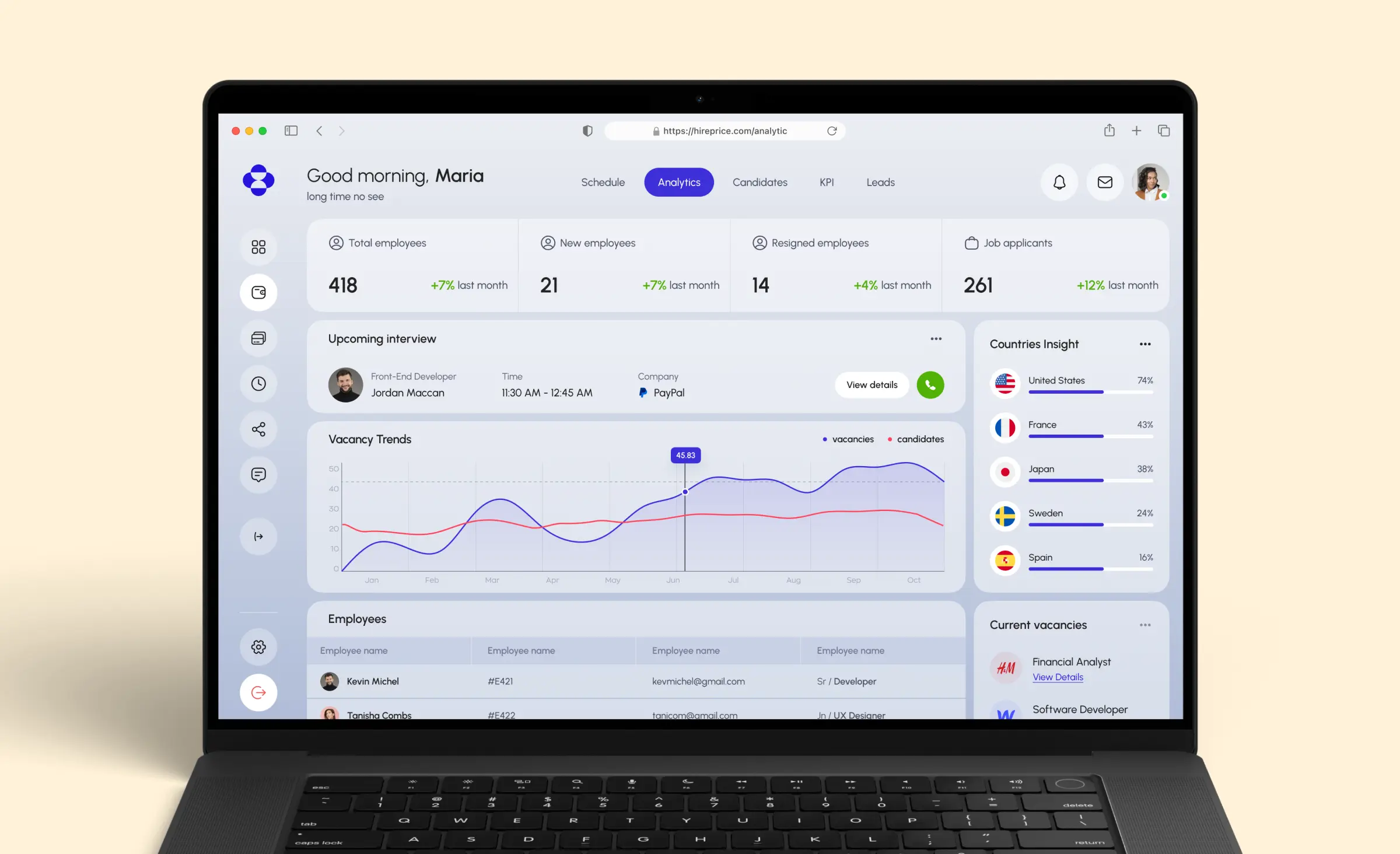
- AI consulting and strategy: During this project our company collaborated with large HR agency to develop a cutting edge applicant tracking platform. Our collaboration involved understanding their ambition to transform talent management services through AI, helping them articulate objectives like faster, more accurate placements and significant reductions in manual workload for HR professionals. We helped them envision how generative AI and other AI capabilities could provide a strong competitive advantage.
- Custom AI tool development: We excel at building unique AI tools tailored to your specific HR needs, moving far beyond generic solutions. In this project, our client sought a cutting-edge web-based applicant tracking system with custom machine learning models to automate candidate-job matching, improve resume analysis, and deliver objective insights from initial interviews. We developed exactly this proprietary AI-driven platform, including an AI agent for smart matching and a predictive success score.
- AI integration services: We ensure your new AI capabilities fit perfectly with an existing HR software and systems, preventing data silos and disruptions. For this platform, we designed and implemented integrations with major external services like various job boards, popular calendar systems, and even planned future connections to HRIS and HCM systems. We always manage different kinds of integration like this for custom enterprise software.
- UI/UX design: Our UI/UX strategy focused on balancing advanced AI capabilities with human-centered and intuitive UI/UX design. We used a clean, card-based layout to present complex AI insights like match scores and predictive candidate success scores, making sure HR professionals could easily understand and act on the analytics and improve the employee experience in their organization.
- Data management and workforce analytics: We ensure robust data pipelines for AI models and the secure handling of sensitive employee data, which is fundamental for any AI tool. In this project, our team acquired and prepared extensive, pre-cleaned historical employee data from the client for training sophisticated AI algorithms. We also implemented strict GDPR compliance measures for sensitive candidate data.
Wrapping up
The human resources function involves many routine HR tasks that are ideal for AI automation. An AI tool can manage processes like resume screening for hiring, analyzing employee reports for performance management, and sharing key information with employees automatically. This frees HR professionals to focus more on talent management and improving the employee experience. Artificial intelligence also helps solve common HR challenges like inefficiency and unconscious bias in HR processes. Leading companies such as IBM, Unilever, and General Electric demonstrate how AI tools for HR management drive real-world efficiency gains.
However, implementing AI automation in your business doesn't come without its complexities and challenges. Therefore, you need a trusted tech partner to make tangible technological progress and build the right AI capabilities. If you are searching for such a partner, Ronas IT can help with the custom development of AI-powered tools for your specific human resource management needs, providing both expert AI consulting and deep AI software development skills.
Related posts







Related Services


Development
React Native App Development Services


Development
MVP Development Services


Development