Benefits of MVP development: how an MVP helps a business grow


The main benefit of MVP development is that a business pays to learn before it pays to scale. A minimum viable product (MVP) is a first working version with only the core features. At Ronas IT, a basic MVP for one platform starts from $5,000 and takes at least 2 weeks, with its design and backend included; a web MVP with an iOS and Android app starts from $7,500. Real users can try the MVP and show whether people want the product before the full budget is spent.
This guide is for founders and product owners who are deciding between an MVP and a full build. It covers what an MVP gives the business, two of our client projects, what it costs next to a full product, the cases where an MVP is the wrong first step, and how to tell that it is working.
How an MVP helps a business grow
A full build pays for every feature before a single user has tried one. An MVP lowers the cost of being wrong: you release only the core flow, real users try it, and each later dollar goes to what they used.
You find out whether people want the product before you pay for all of it
In a March 2026 CB Insights analysis of 431 VC-backed startups that have shut down since 2023, poor product-market fit came up in 43% of the cases with a known reason and bad timing in 29%. Running out of capital came up in 70%, but the report says it is almost always the final cause rather than the root problem.
An MVP checks demand with real behavior. People sign up, finish the main task, come back, and some of them pay. A survey or a pitch meeting gives you opinions; an MVP gives you numbers you can act on.
You spend a smaller budget first and keep the rest for what users ask for
A full product is built on guesses about which features matter. An MVP builds the one flow that the business depends on and leaves the rest for later releases. The money you do not spend on features nobody uses stays available for the changes the first users ask for.
You reach the market by the date that matters
Some products have a date that decides whether they succeed: a season, a sports event, a trade show, or a meeting with investors. A full product may not be ready by then. A smaller first release can be planned backward from that date, with the features that must be ready on the day and a list of what can wait.
Both projects in the case section below had a date like that, and each first release was planned to be ready before it. On one of them, OddsCrowd, we also agreed with the client to drop two features that took a long time to build and were not needed for the launch.
On our projects, the work runs in sprints that usually last one to three weeks. Each sprint ends with something you can open and check, such as an update on the development server or an interface ready to test. You see the product grow in small steps and can change the priorities between sprints.
You make product decisions from real use
Eric Ries, author of The Lean Startup, puts the MVP in the first step of what he calls the build-measure-learn feedback loop: you figure out the problem to solve, build the MVP to begin learning as quickly as possible, measure what users do, and use the results to decide what comes next.
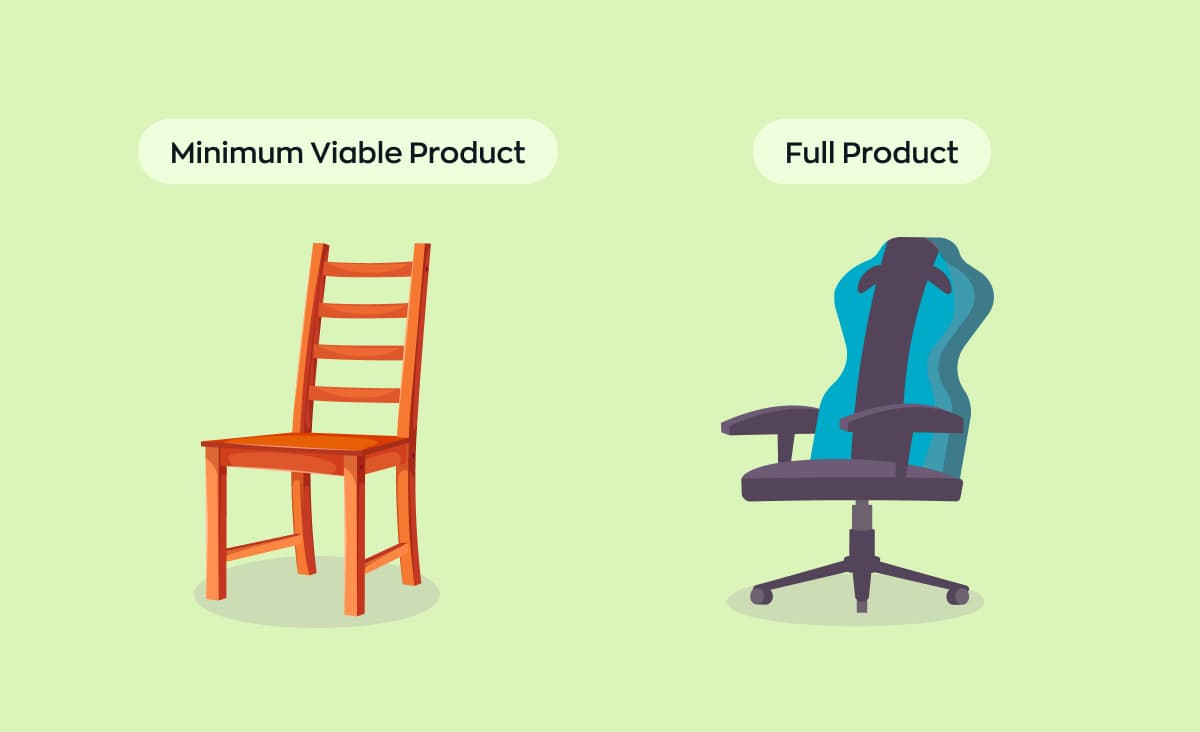
For that loop to work, the first release needs analytics from launch.
You have something real to show investors and partners
A working product with its first users answers the questions a slide deck cannot: does it work, does anyone use it, and can this team deliver. Usage numbers from an MVP also make the next budget easier to defend, whether it comes from investors, a board, or your own revenue.
If the date is a funding round, plan the first release backward from it; an optional analysis phase can settle what fits.
You grow the product in steps instead of rebuilding it
A good MVP is the first version of the full product, not a demo that gets thrown away. It has fewer screens and fewer user roles, but the parts it has are built to stay. When the data says yes, the team adds features on top of it.
“Once real users' data lives in the product, every change to the data model also has to move that data, so we think the model through before the first release. The tests for the core logic go in from the start: they are what lets the team change the product later without breaking what already works.”
Alexander Storozhevsky, Lead Developer at Ronas IT
An established company can test a new line without risking the main product
MVPs are not only for startups. A company with a working product can test a new market, a new customer group, or a new service as a separate small release. If the test fails, the main product keeps working as before; if it works, the company has data for a larger investment.
Two client projects with a fixed launch date and what came next
Each client had a deadline its first release could not miss: 4 months for OddsCrowd and the harvest season for Noah. Both first releases were ready in time. OddsCrowd grew into a mobile app two years later, and Noah went on to new features with the same team.
OddsCrowd: from a first web version to a mobile app
In 2018, OddsCrowd came to us with the idea of a community for sports bettors. Users make forecasts, the platform tracks their results and shows a leaderboard, and odds from legal US sportsbooks can be compared side by side. OddsCrowd does not take bets: users place them on the sportsbooks' own sites. The main requirement was to finish the web app in 4 months. We finished the first version in 14 weeks.
After two years of working together, the OddsCrowd team decided to extend the business with a cross-platform mobile app. We built it with React Native in 10 weeks from design to the first release, in time for the Super Bowl. According to the case study, monthly users grew 10 times shortly after the mobile app's release. Firebase Analytics in the app tracked which screens people visited, how long they stayed, and how many went on to partner websites.
Noah: three apps and an admin panel before the harvest season
In 2019, a founder from Sweden asked us to build Noah, a marketplace to connect local food producers with consumers. Consumers could only buy what producers had listed, so the first release had to serve both sides: iOS and Android apps for consumers, a mobile app for producers, and a web admin panel. That made it a larger first release than a basic MVP. The client came to us in March, and the harvest season in Sweden usually runs from July to October, so everything had to be ready in 4 months.
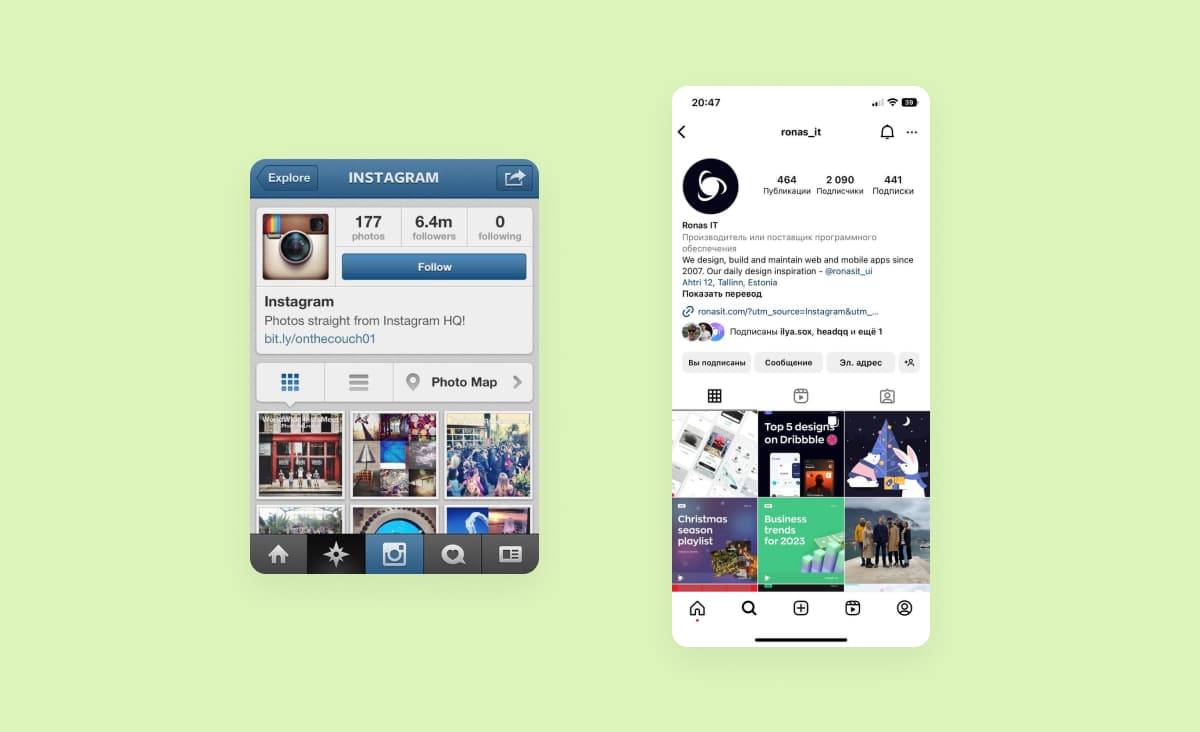
We delivered the apps and the admin panel within that time, and the marketplace was released before the season started. After the first version, the client kept working with us on new features and support. We set up analytics from Firebase in the consumer app so the owners could study how users engage with it.
MVP or full product: what each costs and how long it takes
At Ronas IT, a basic MVP starts from $5,000 and 2 weeks for one platform, and each extra platform adds from 50% of that price. A full product is priced by its scope, whether or not a test release comes first: a narrow product can fit the basic or extended tier, a product with complex business logic or high load is complex product development, from $20,000 and 8 weeks for one platform, and a regulated fintech or healthcare product starts from $30,000. The table shows which first step fits which question. The final budget depends on the features, platforms, and integrations.
| Option | Starting price | Timeline | What you get | When it fits |
|---|---|---|---|---|
| Basic MVP | $5,000 | At least 2 weeks | The core features and main user flows on one platform, with design and backend | You need to test demand for one main flow |
| Extended MVP | $10,000 | At least 5 weeks | A wider feature set with more roles and integrations | First users will compare you with products they already use |
| Basic MVP on the web and on phones | $7,500 | Set in the estimate | A web app and one React Native app for both iOS and Android, sharing one backend and admin panel | Your first users work at a desk and on their phones |
| Complex product | $20,000 | At least 8 weeks | A product beyond an MVP: complex business logic, custom design, and architecture for high load | The scope has many features, roles, and rules, whether or not a test release comes first |
| Marketplace with an app for each side | $30,000 | Set in the estimate | A buyer app and a seller app, payments, third-party services, and an admin panel; the second app adds from half of the first | The product works only when both sides, such as sellers and buyers, use it from the first release |
Each of these prices already includes design, project management, testing, and the backend and admin panel if the product needs them.
For a mobile MVP, one React Native app for iOS and Android and a native iPhone-only app cost the same, so the choice follows your users, not the budget.
If the first release is not written down yet, we recommend starting with an optional analysis phase of $1,000-$2,000. It takes at least 1 week and ends with the first release described flow by flow, plus a written scope, budget, and timeline. After launch, support covers monitoring, fixes, and updates: from $1,000 per month for one app and from $2,000 per month for a web app with its mobile apps. Each new feature gets its own development estimate.
When an MVP will not help the business grow
An MVP is the wrong first step when a small version cannot answer your question or cannot be released at all. In these cases, a different first step fits better, such as a proof of concept, a larger first release, or a well-planned full build. Check your product against these four cases:
- The product cannot be legal or safe in a small version. Payments, lending, and health data can come with requirements that apply from the first user, and then the first release is larger. A banking, lending, or insurance product, or one that keeps patient records under HIPAA, starts with us from $30,000 and 10 weeks.
- The open question is technical. If you do not yet know whether the core function can work, test that with a proof of concept before you test the market. Our comparison of a PoC, a prototype, and an MVP explains the difference.
- You cannot reach users to test it. An MVP that nobody sees produces no data. Plan how the first users will find the product before you plan its features.
- The plan will not change. If the full feature list is fixed by a contract or a decision that data cannot move, there is nothing to learn, and a well-planned full build is the honest choice.
“We give the client the full scope and budget of a regulated first release before development starts. A budget planned for a small test runs out before such a product can legally go live.”
Evgeny Leonov, CTO at Ronas IT
How to tell that the MVP is working for the business
An MVP is working when new users finish the core task, come back without a reminder, and some of them pay or commit in another way. Choose these signals and a target number for each before launch. After each release, compare the results with the targets and decide whether to continue, change direction, or stop.
- Activation: the share of new users who finish the main task, such as a first booking or a first order.
- Return: the share who come back in the following weeks on their own.
- Commitment: payments, pre-orders, or signed pilots, which show that people value the product enough to give something for it.
- Requests: what users ask for most often, which becomes the input for the next release.
- Cost per active user: if the core task runs on an AI model, the model provider charges for the text each request processes (Anthropic, for example, prices it per million tokens). Each active user adds to that bill, and hosting costs alone do not show it. Track the model cost per user next to what users pay, because an AI product can grow in usage while each new user costs more than they bring.
The Lean Startup principles describe the same choice: if the drivers of the business model are not moving, it is a sign to pivot, which means a structural change that tests a new basic assumption about the product, the strategy, and the way it grows. Our guide I have an app idea: where do I start? shows how to plan the next version after the first users arrive.
What to do next
- Write down the one assumption that must be true for the business to work, such as “small shops will pay monthly for this”.
- Check it against the list of cases where an MVP does not help.
- Pick the first step from the cost table and, if there is a date that matters, plan the release backward from it.
- Choose the signals and target numbers you will use to judge the MVP before it launches.
An MVP drives growth when it is treated as a question with a deadline and a budget, and the answer decides where the next money goes.