Composable architecture for e‑commerce: Flexibility and agility in online retail

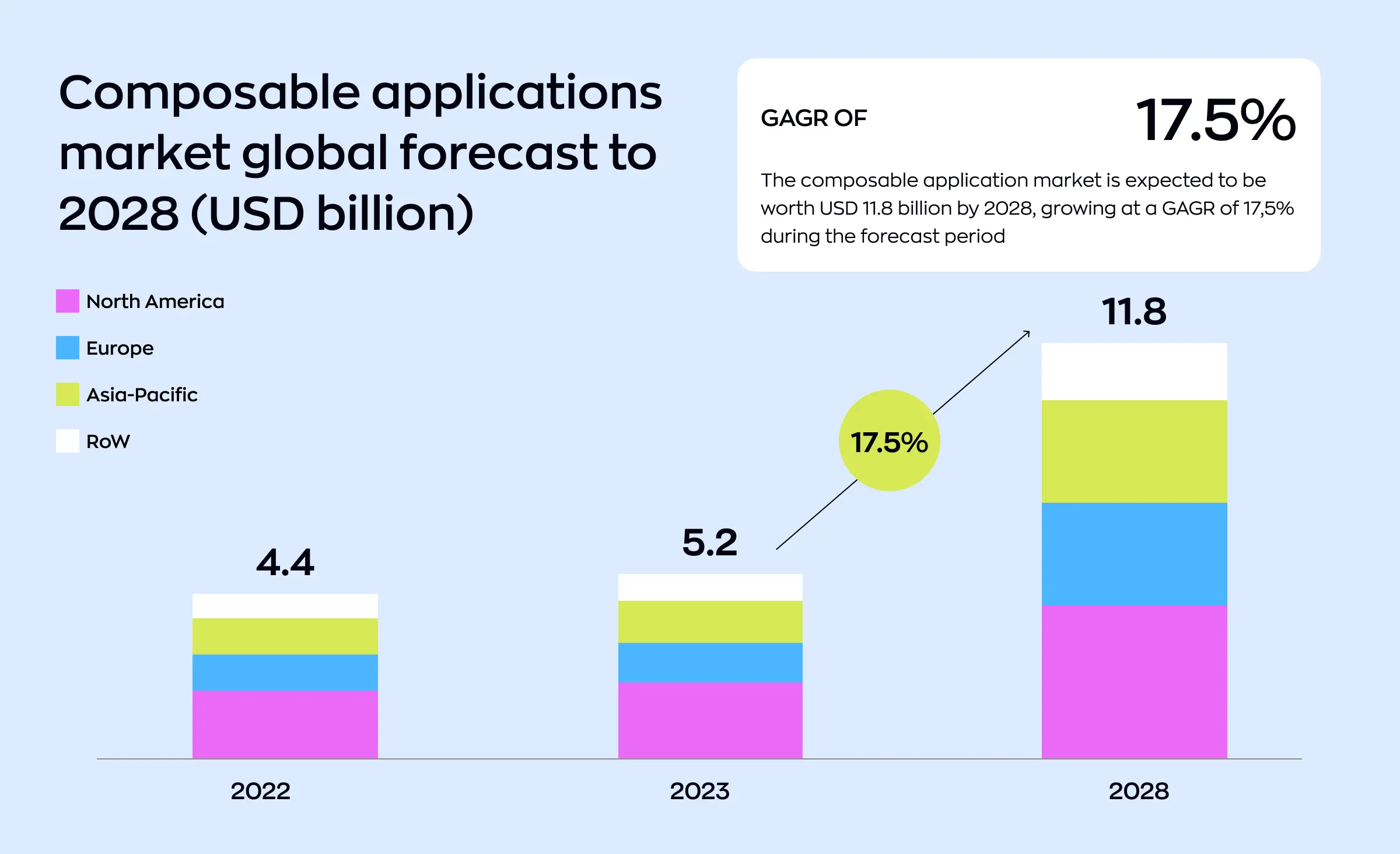
The pace of change in online retail keeps speeding up. MarketsandMarkets projects the composable applications market will double from $5.2 billion in 2023 to $11.8 billion by 2028. Retailers want fast ways to adapt, scale, and build for the future of e-commerce. Optimizing the customer experience e-commerce offers is paramount, and understanding the future of e-commerce demands adaptive strategies.
Composable architecture for e-commerce helps brands do this. With this approach, teams pick the best tools for each job and connect them with modern APIs. As a result, e-commerce platforms stay flexible and grow with business needs. This setup supports better customer experience e-commerce provides and fits any retail technology plan.
Digital transformation in retail technology does not have to come with high risk. Brands gain online retail agility without major changes to the whole system. In the next sections, we'll show why composable architecture for e-commerce shapes the future of e-commerce — and how it can help your business take the next step.
What is composable architecture in e-commerce development?
Composable architecture in e-commerce swaps the old “all-in-one” idea for a new mindset. Instead of relying on one big system, you build with smaller parts. Each part, or module, does its own job and connects with others. This forms a flexible e-commerce technology stack that shifts as your needs change.
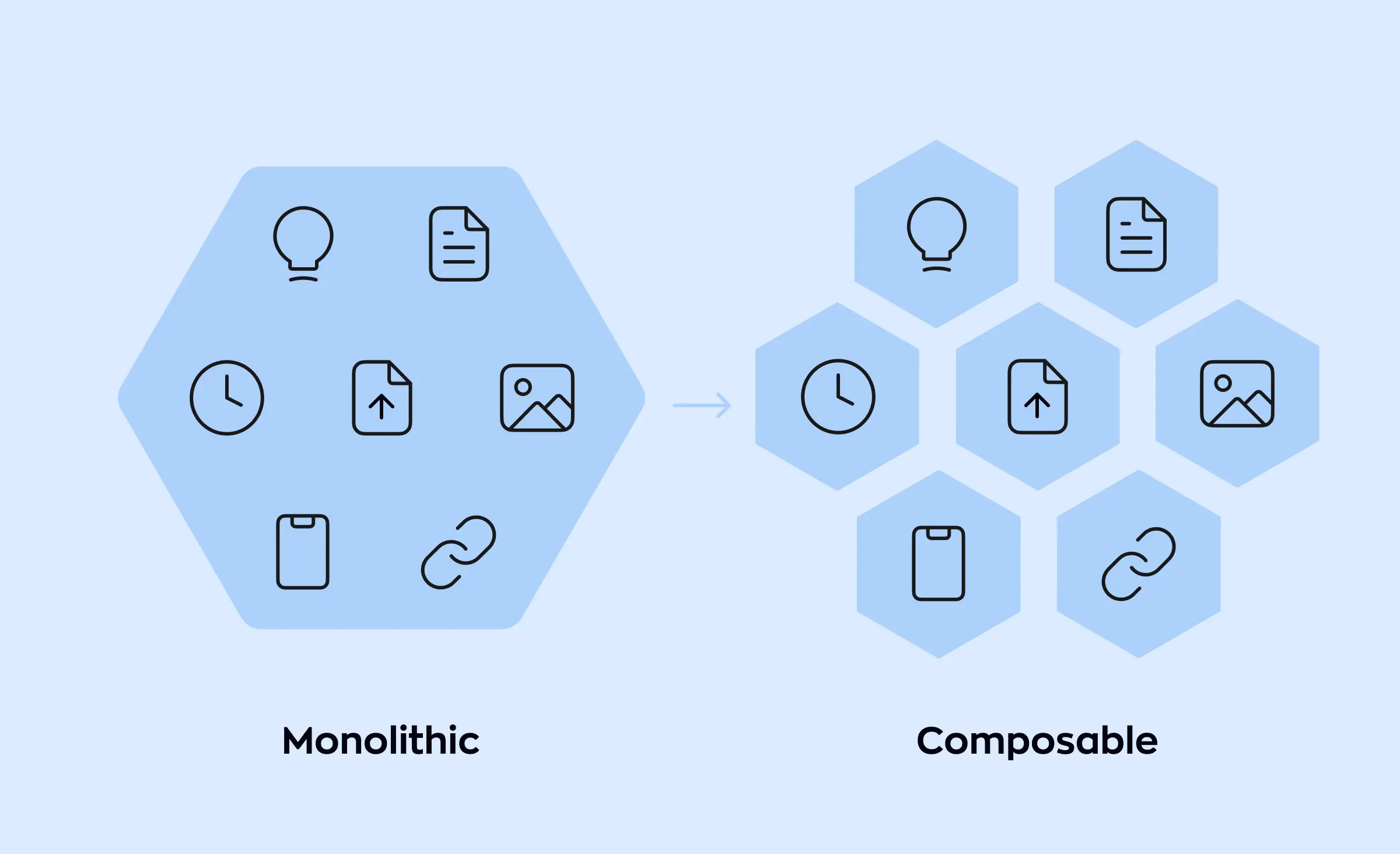
Imagine your online store as a toolkit. Want a new search tool or a faster checkout? With composable web application architecture for e-commerce, you can upgrade one piece without affecting the rest. This approach keeps your web application architecture clean and easy to manage. As the future of e-commerce evolves, composable architecture positions your business to quickly adapt to new trends and technologies.
Headless commerce stands out in this space. Here, your front-end and back-end work separately — giving you freedom to create a custom shopping experience on any device. Many modern e-commerce platforms offer headless commerce, along with microservices architecture, where each feature — such as payments or recommendations — runs as a small, independent app.
Spotlight: Modular and best of breed commerce
- Modular commerce means you pick and mix parts as you go, like adding blocks to a set.
- Best of breed commerce lets you choose top vendors for each function, instead of settling for a single provider.
Composable architecture empowers brands to tailor their platforms, leading to a superior customer experience e-commerce can deliver. When you use composable architecture, your digital storefront quickly adapts to trends or customer demands. As part of a digital commerce strategy, this approach makes your business ready to move — fast and smart, embracing the future of e-commerce.
Key components of composable architecture
Composable architecture for e-commerce works because of its core building blocks. Each component has a clear job, but together, they create a fast, flexible system that supports frictionless online shopping experience. Let's look at what makes up this new approach and why these parts matter for online retail.
1. Headless сommerce
We've already mentioned the concept of headless commerce but let's dive deeper. Headless commerce removes the link between your store's back-end and front-end.
It works by sending product data, pricing, and content to any device or channel through APIs. The customer-facing side updates quickly, while the back-end handles inventory, orders, and data in the background.
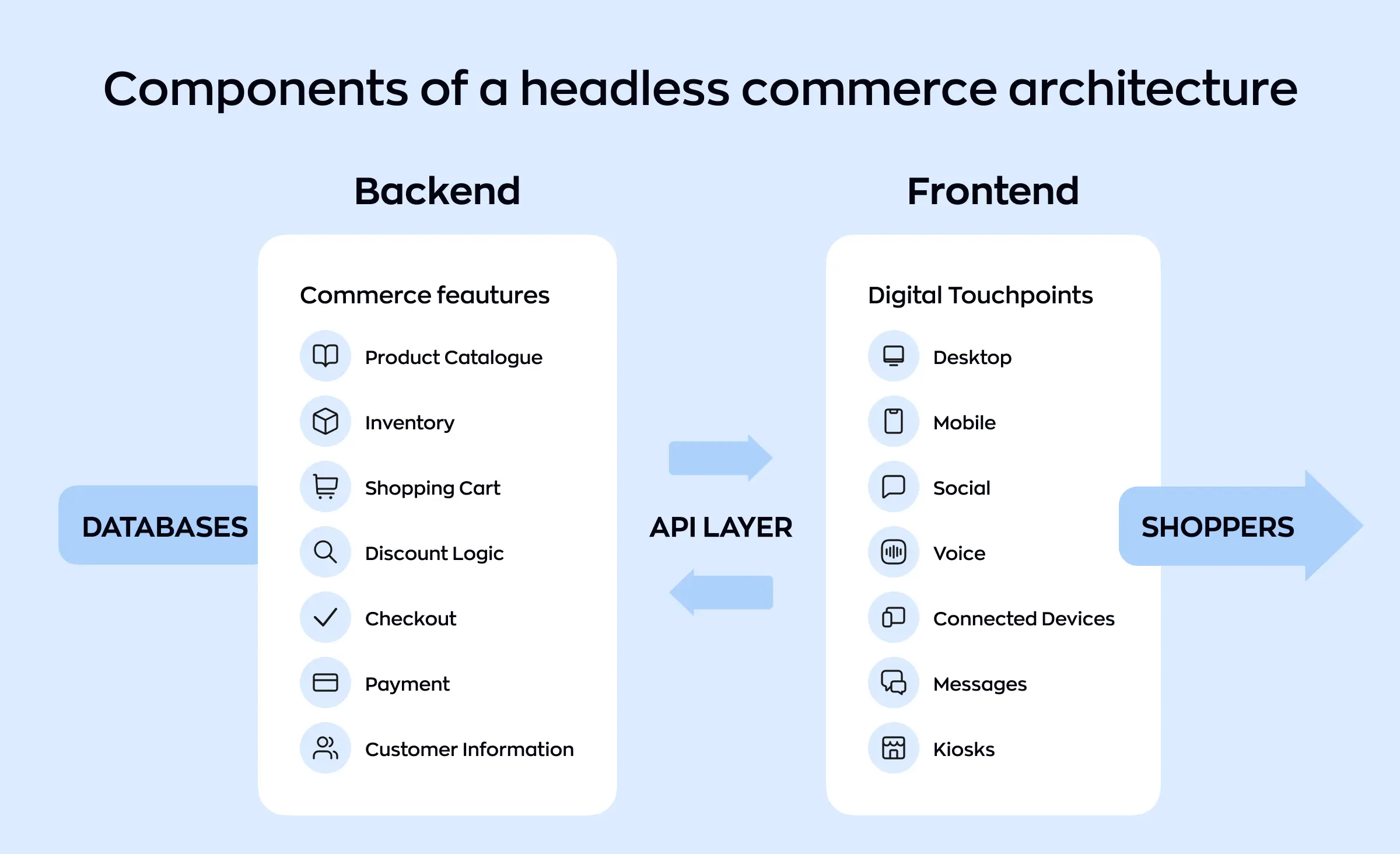
This approach gives teams freedom during custom e-commerce development. You can update websites, apps, or kiosks without shaping everything from scratch. For customers, headless commerce builds a better online shopping experience — faster pages, up-to-date info, and more ways to shop. It is a strong part of composable architecture for e-commerce and supports digital retail innovation.
2. Microservices for e-commerce
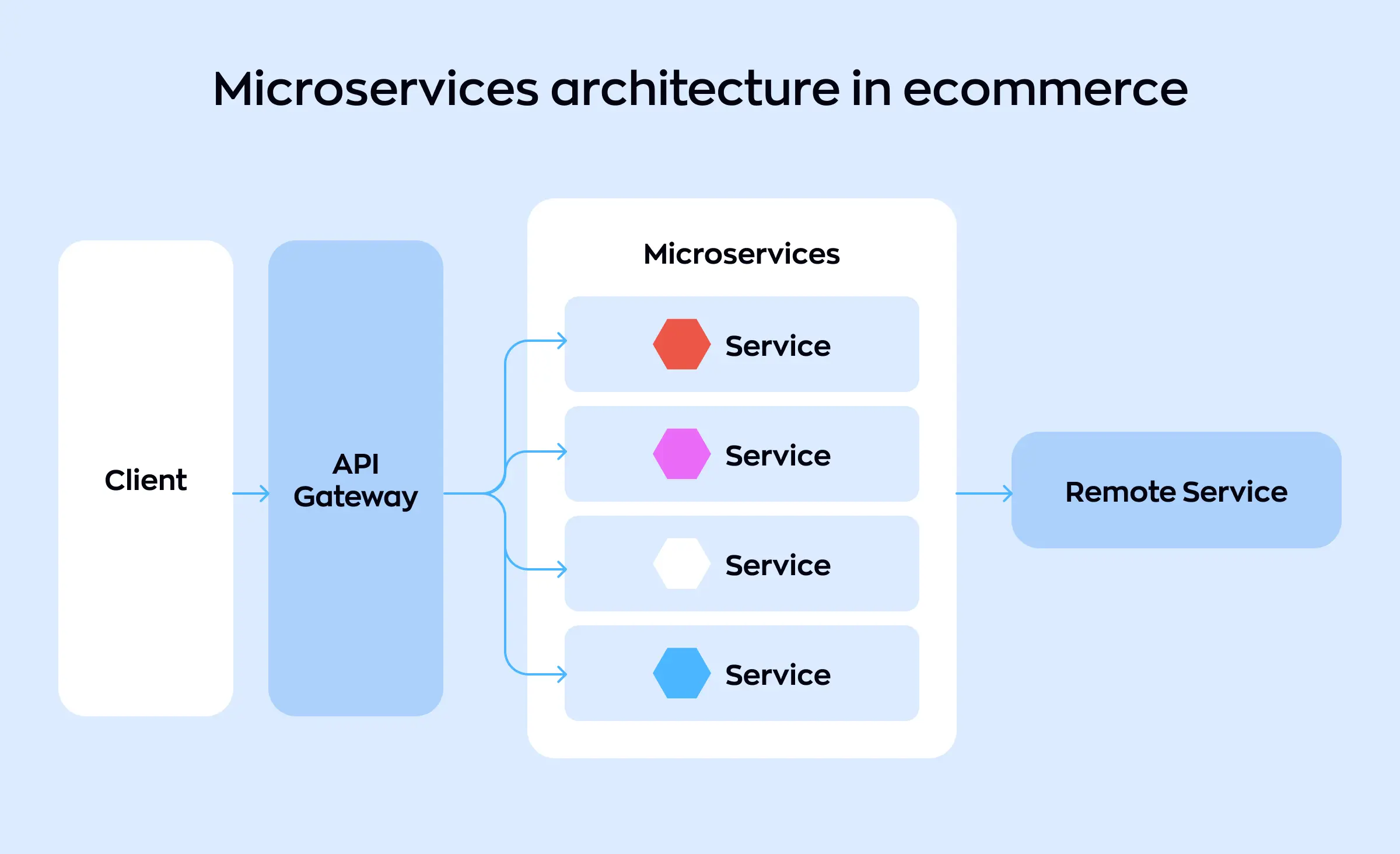
Microservices for e-commerce break the online store into smaller, independent services like checkout, catalog, or payments.
Each service works alone and connects with others using APIs. This division means developers can update or scale parts without touching the entire e-commerce platform.
Microservices architecture helps keep things stable during busy periods and fast when trying out new features. E-commerce integration becomes easier since new tools or vendors connect one piece at a time. For modern e-commerce, this approach supports quick growth and smooth changes.


3. API-driven e-commerce development: Linking everything together
APIs are the connectors in a composable e-commerce technology stack.
They help back-end and front-end systems “talk” and mix with third-party apps or cloud tools. API-first development means every new feature or integration starts with a clear way to connect.
A strong API-driven e-commerce setup gives business leaders more choices. You can launch scalable e-commerce solutions, add cloud e-commerce tools, or mix in new tech on your own timeline. APIs keep the entire web application architecture flexible so teams can meet new business goals, faster.
These components — headless commerce, microservices architecture, and powerful APIs — form the backbone of a modern e-commerce platform. But the true advantage comes from how they improve agility and flexibility for online retailers, which is essential for staying ahead in the future of e-commerce. In the next section, we'll explore the real benefits this approach offers for businesses that want to adapt and grow.
Benefits: Flexibility and agility for online retail
Faster launches. Smoother updates. More ways to stand out. These are just a few reasons retailers turn to composable design. By focusing on e-commerce flexibility and online retail agility, today's brands move alongside customers and trends instead of playing catch-up. Let's break down how this approach puts retailers ahead — one benefit at a time.
E-commerce flexibility
E-commerce flexibility means your digital storefront can change fast without heavy rework.
With modular commerce, you add or swap features with little risk. Each part stands alone and fits your needs, whether it's payments, product discovery, or search.
This kind of flexibility leads to better custom e-commerce development. You can roll out new designs, sales channels, or customer tools as business demands shift. For online stores, this saves time and opens the door to steady updates.
Online retail agility
Online retail agility gives retailers a way to move quickly — whether reacting to trends, new competition, or customer habits.
Agile e-commerce depends on teams working in short sprints and not waiting months for big system changes. Updates reach shoppers sooner and respond to real feedback.
This agility is key for digital transformation in retail. As expectations grow and traffic shifts, stores need scalable e-commerce solutions that keep up. With agile e-commerce, businesses reduce downtime and launch features with less friction. Among other methods, embracing an API-first development approach provides future compatibility.
Customer experience e-commerce and omnichannel impact
A seamless online shopping experience across every channel builds loyalty and trust.
Most shoppers expect a connected customer journey e-commerce provides — moving between web, mobile, and even physical stores without hassle. Omnichannel retail links these touchpoints into a single flow. Optimizing the customer journey e-commerce offers is paramount.
Modern e-commerce platforms unlock this through digital transformation retail and strong backend systems. You personalize the customer journey e-commerce provides, track needs, and solve pain points at every step. Implementing personalized e-commerce features boosts conversion. Every strategy in modern e-commerce aims to elevate the customer experience e-commerce delivers.
All together, composable web application architecture delivers on the promise of e-commerce flexibility and online retail agility. With each module and channel working together, you create scalable e-commerce solutions that match both customer demand and business growth.
Retail technology choice: Building a modern e-commerce stack
A modern e-commerce store needs more than fresh design and strong branding. The real work happens underneath — the e-commerce technology stack that powers every product search, purchase, and update. Our recommendations here reflect our hands-on experience with well-established frameworks and cloud platforms. With the right foundation, teams shape better customer experience e-commerce and stay ready for the next big shift. Adopting new retail technology is key to market leadership.
E-commerce technology stack
An e-commerce technology stack is the set of tools, frameworks, and applications that make your online store work. At Ronas IT, we build all core systems with fast frontend frameworks and reliable backend tools, selecting React or Next.js for user interfaces and Laravel or FastAPI for processing and business logic. PostgreSQL manages our data layer. Cloud e-commerce platforms, like Google Cloud, provide scalability, data safety, and fast feature delivery. This kind of stack connects your store with payment providers and other e-commerce platforms, and helps your business stay flexible as needs change.
Web application architecture
Web application architecture is the blueprint that connects every part of your store, guiding how information moves between the frontend and backend. We use API-driven e-commerce and headless commerce patterns, where APIs link customer-facing interfaces with business logic and databases. This approach allows developers to update features or fix bugs without breaking the whole system. It also lets you reach customers wherever they shop — on websites, mobile apps, or in-store kiosks — by making each channel independent, but still part of a unified online shopping experience.
Microservices architecture and headless commerce
Microservices architecture divides store processes — like checkout, search, or user accounts — into stand-alone services, each focused on a single task. APIs connect these services, so updates or scaling happen without disruption. Headless commerce allows new channels and features to roll out quickly since the digital storefront stays separate from core systems. We manage these services with modern container tools and cloud infrastructure, so the stack stays strong and ready for change as traffic grows or new requirements arise.
Laying out a digital commerce strategy
Every digital commerce strategy relies on this kind of flexible foundation. Matching cloud resources, modular e-commerce development, and proven web frameworks helps brands adapt early and stay efficient as they grow. By investing in a modern e-commerce technology stack, you prepare for new shopping trends with confidence, backed by real-world projects that prove the approach works.
The modern e-commerce technology stack gives retailers options. As e-commerce platforms change and customer habits shift, you can expand or refine the stack to stay ahead. Using the latest retail technology helps your business remain competitive and responsive to evolving market demands.
Implementation best practices: From monolith to composable
Moving from a single, all-in-one system to a modular, composable setup is a major step in digital transformation for retail. Success comes from clear planning, the right tools, and a willingness to rethink old habits. Here we focus on what works, based on our experience with modern e-commerce development.
Rethink the monolith
Most legacy platforms are monoliths — big, single apps where even small changes can break other parts. The first step in agile e-commerce is recognizing which parts of your system slow you down. Start with a clear plan to shift towards composable retail technology, breaking down the system into smaller, focused services.
Focus on best of breed commerce
Modern e-commerce favors quality over quantity. When you move to a composable model, pick best of breed commerce tools for each task: best search, best payments, best analytics, and so on. This gives you more control and helps your stack stay current as retail technology evolves.
Prioritize e-commerce integration
Good e-commerce integration is the backbone of every composable platform. As you add new tools, make sure they connect smoothly with each other. This means using standard APIs and keeping integration points simple. API-first development supports quick additions, bug fixes, and updates across your platform.
Adopt microservices architecture step by step
Breaking your system into microservices for e-commerce does not have to happen all at once. Choose critical features — like cart, product management, or recommendation engines — and shift them one by one. This lets your business grow and adapt without stopping everyday sales. By strategically adopting retail technology through a microservices architecture approach, you can modernize your operations at your own pace while maintaining a seamless online shopping experience for the customers.
Keep agile principles at the center
Agile e-commerce is not just about quick launches. It means listening to feedback, releasing in short cycles, and adjusting based on real results. Small, independent teams can own different services, speeding up both e-commerce development and problem solving.
By following these best practices — choosing modern tools, focusing on smart integration, and bringing an agile mindset to every update — you set your business up for long-term success. In the next section, we'll look at real stories from digital transformation retail adopts and see these principles at work.
Case studies
At Ronas IT, our approach to digital retail innovation brings practical solutions to a wide range of e-commerce challenges. Below are a few examples of how we deliver modern online shopping experiences, build scalable e-commerce solutions, and support businesses at every stage.
Eco cosmetics marketplace: Flexible growth for niche retail
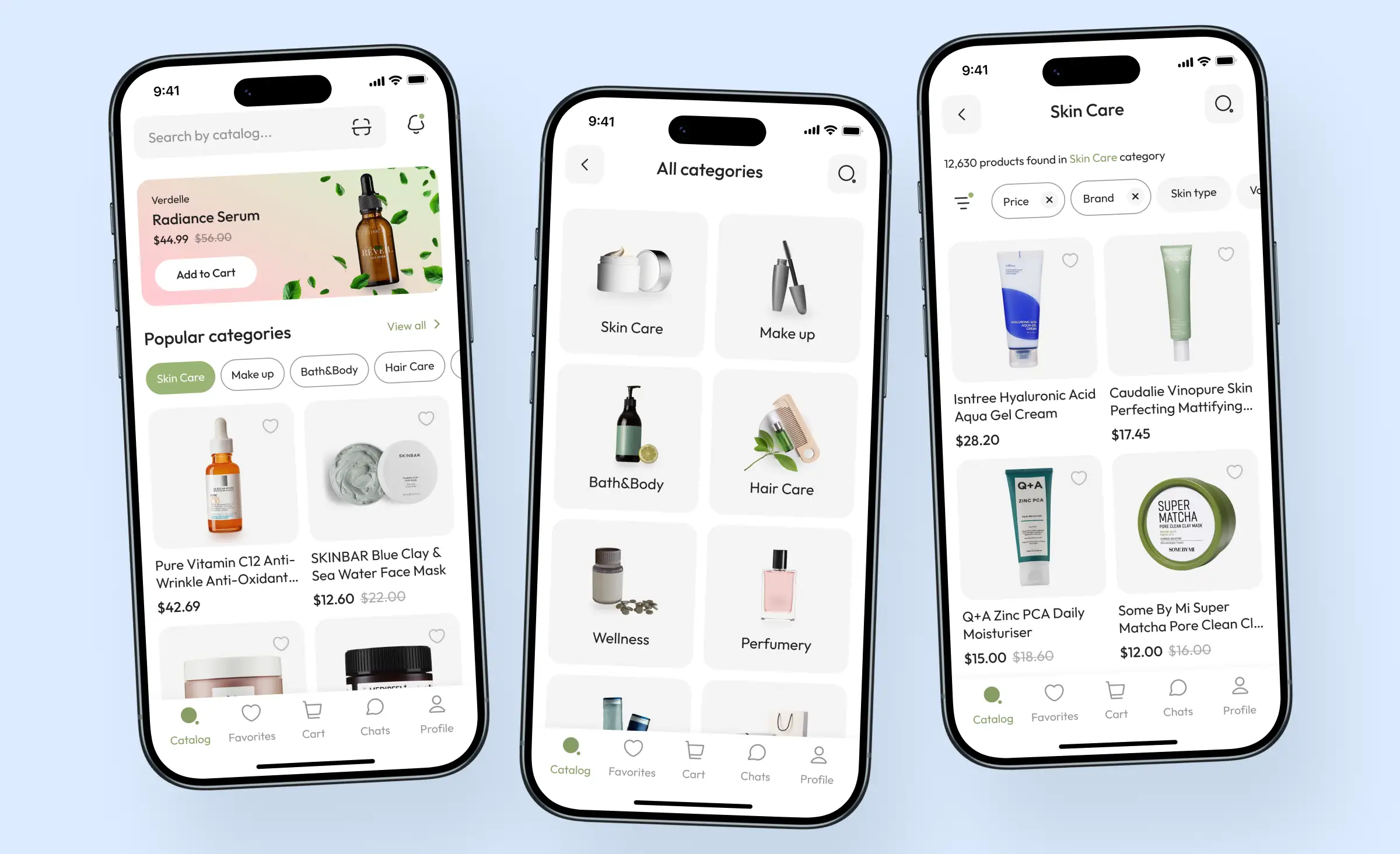
One project is the Eco cosmetics marketplace. We designed it for manufacturers and buyers of eco-friendly cosmetics in Australia. This platform uses a composable architecture e-commerce approach, blending React Native and Laravel to keep the marketplace fast, flexible, and ready for change. With clear filters, certified product listings, and simple user flows, we focus on improving the online shopping experience for everyone. The marketplace is also built for growth — cloud e-commerce tools and custom admin features help brands and administrators work smoothly as the platform scales. Over time, this marketplace has attracted both new brands and loyal buyers, making it a strong example of customer experience e-commerce done right.
Locker network admin platform: Omnichannel retail technology
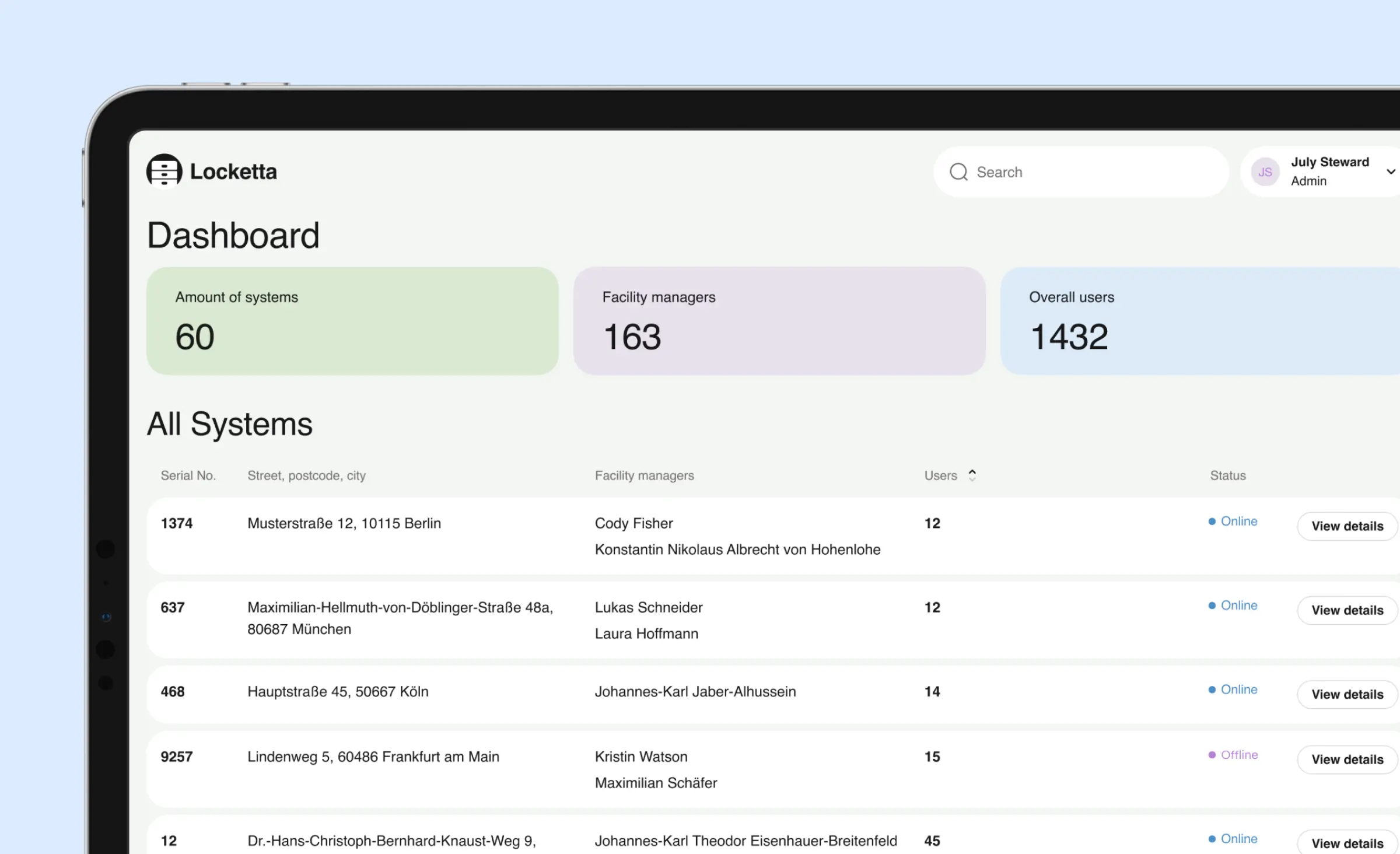
Another case involves an admin platform for a European retailer with a growing locker network. Here, our team built a web app that connects office teams, store staff, and locker devices in real time. Managers assign lockers, oversee pickups, and control everything from a single dashboard, thanks to smart e-commerce integration and scalable e-commerce solutions. These cloud-based tools keep the system reliable, even as locations and customer demands grow. As a result, the retailer delivers a frictionless online shopping experience and supports a true omnichannel retail strategy — customers can shop online and pick up items on their schedule.
Microservices architecture versatility: E-commerce development for scale and security
Our team is also highly versatile in microservices architecture. For one neobank project, we split the application into small, independent services to keep each process secure and responsive. This approach now powers modern e-commerce platforms as well. We can design systems where each feature — product catalogs, search, checkout — runs as its own service and connects through APIs. This brings speed, reliability, and flexibility to any custom e-commerce development, so stores are ready for growth and quick to adapt when business changes.
Each example highlights how we use digital retail innovation, microservices, and composable mobile and web application architecture to build reliable modern e-commerce solutions. Whether you need to launch fast, expand quickly, or support omnichannel retail, Ronas IT develops customer-centered e-commerce platforms ready for the next stage.
The road ahead: The future of e-commerce is composable
The future of e-commerce belongs to brands that can move fast, build with flexibility, and focus on the customer. Composable mobile or web application architecture for e-commerce is no longer a trend — it's becoming the new standard. As retail technology evolves, more businesses swap rigid systems for e-commerce platforms built with headless commerce, powerful microservices architecture, and clear web application architecture. It's easy to see now that these technologies are definitely shaping the future of e-commerce.
Online retail agility means rolling out updates in days, not months. Teams can launch personalized e-commerce experiences, add new features, and reach customers on any channel. Digital commerce strategy now revolves around composable building blocks, so stores never stand still. This approach makes scalable e-commerce solutions possible, supporting both growth and rapid response to customer needs regarding online shopping experience.
Looking ahead, leading e-commerce platforms will double down on composable architecture e-commerce, using it to meet rising expectations around speed and service. Investments in headless commerce and robust APIs, backed by smart microservices, will keep stores ready to evolve. As digital transformation retail keeps accelerating, the brands that invest in e-commerce flexibility will create standout customer experience e-commerce — and stay ahead of whatever comes next. Driving the best possible customer experience e-commerce can offer is our goal.
Ready to shape the future of your online store with personalized e-commerce features and composable mobile/web application architecture? Fill out the short form below to start your journey with Ronas IT. Let's build a flexible, modern e-commerce platform that grows with your business and provides a unique online shopping experience to your customers.
Related posts










Related Services


Development
React Native App Development Services


Development
MVP Development Services


Development