AI-powered personalization engines: Crafting hyper-tailored user experiences

Standing out in a crowded online marketplace means giving each customer more than just basic service. AI-powered personalization engines are now the key to meeting these rising expectations, letting companies deliver unique, relevant experiences at scale. These advanced systems use artificial intelligence to deliver a personalized user experience on every website, app, and digital platform.
For any company working with digital products, offering a personalized user experience is now essential — not just a bonus. Customers want content, products, and services that match their unique needs and interests. AI-powered personalization engines answer this demand by analyzing real-time and historical data, then using those insights to tailor what each user sees. This approach is called data-driven personalization, and it allows businesses to move past generic marketing into true hyper-personalization.
Artificial intelligence makes all this possible, helping companies respond to how people behave and what they like. Instead of one-size-fits-all content, every user interaction can feel unique. AI applications can now recommend products, adjust content layouts, or send custom offers automatically, all thanks to the latest AI technology. This isn't just about smarter marketing — it's about improving every part of the customer's journey.
In this article, we'll explore how AI for customer experience makes next-level engagement possible, the mechanics behind today's most effective AI-powered personalization engines, and the practical steps your business can take to build a future-proof personalization strategy.
How AI-powered personalization engines work
AI-powered personalization engines rely on advanced tools and smart processes to serve the right content or product to every user, at every moment. Let's look at the core technologies and key mechanisms that make this personalized user experience possible.
Core technologies behind personalized user experience
Artificial intelligence and machine learning personalization
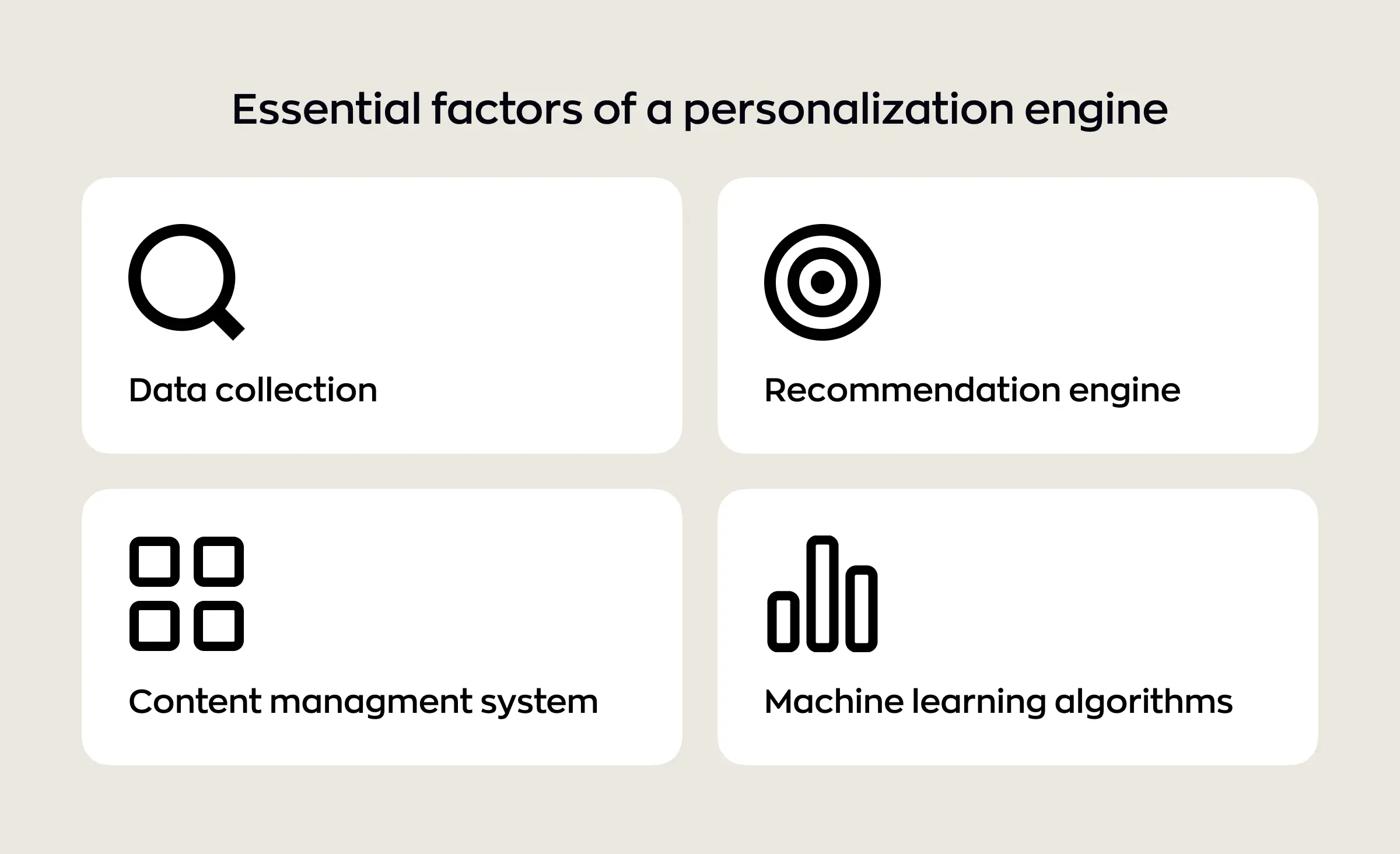
At the heart of every AI-powered personalization engine is artificial intelligence. Using machine learning personalization, these engines learn from every click, view, and purchase. Models adapt in real time, so suggestions become more accurate with each interaction.
Customer data platforms (CDPs)
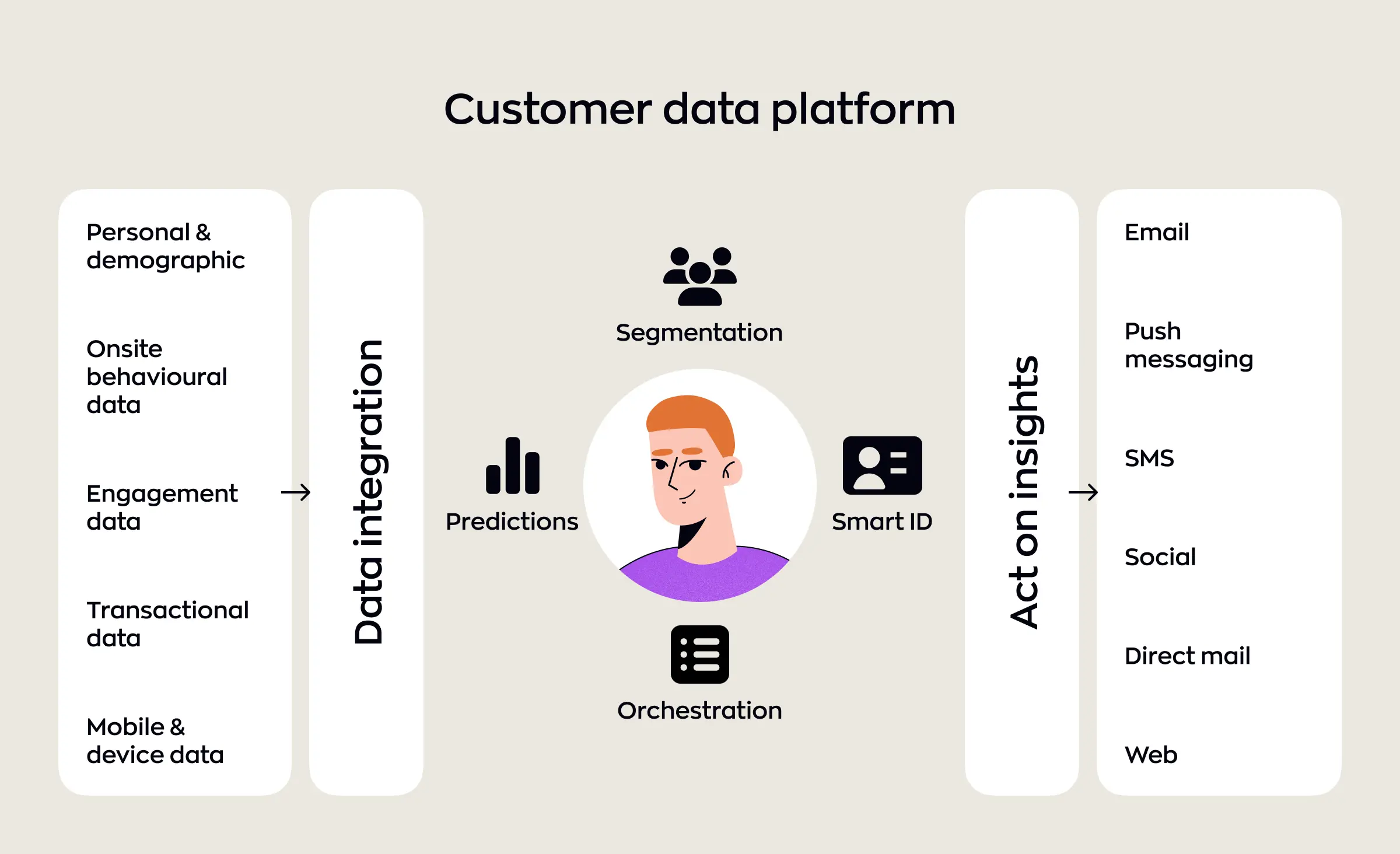
Customer data platforms (CDPs) connect all the pieces. These platforms collect and organize data from websites, mobile apps, email, and even physical locations. When unified, this data gives a full picture of what every user wants and needs.
AI technology and predictive personalization
AI technology powers tools that study patterns in user behavior. Customer insights AI breaks down this data to predict what users want next. Predictive personalization then delivers suggestions that match a customer's likely choices, sometimes even before they start searching — for example, surfacing a new product when a user's interests shift.
Key mechanisms: From data collection to dynamic content
AI for customer experience is transforming how businesses connect with their audiences, using advanced personalization at every touchpoint.
Recommendation systems AI and product recommendation engines
Recommendation systems AI are central to personalized experiences. These engines process user data to match each user to the best product or content. Product recommendation engines do this at scale, constantly updating as new trends and actions appear.
Content recommendation and dynamic content delivery
Content recommendation engines pick the most relevant articles, news, or media for each user. With dynamic content delivery, banners, offers, and page layouts change instantly to match the visitor's profile and current interests.
Real-time personalization and personalized app experience
Real-time personalization updates experiences as users browse, making adjustments within seconds. Whether on a mobile device or desktop, users get a personalized app experience that feels smooth and engaging.
Data-driven personalization and AI for customer experience
All of these tools rely on data-driven personalization. Here, user experience optimization is central to every step, from onboarding to the final purchase, keeping the digital journey smooth and intuitive. AI for customer experience brings all insights and actions together, making sure every communication reflects what matters most to each user. Modern AI applications help scale these efforts, so personalization is seamless no matter how many users interact with your platform.
Personalization engines that combine these AI-driven marketing technologies and mechanisms create value for both users and businesses. The next section explores the business benefits that come from this level of intelligent, automated personalization.
Strategic business benefits of AI-driven marketing
Today, AI-powered personalization engines are transforming how companies connect with users across digital channels. These digital marketing AI systems let businesses deliver the right content, offers, and product recommendations in real time — fueling measurable impact on engagement, retention, conversion, and decision-making.
Boosting customer engagement and user retention with AI technology
Customer engagement AI is a powerful tool for any brand that wants to stand out. With AI-powered personalization engines, every touchpoint adapts to a user's needs, making experiences more meaningful. These engines boost customer engagement AI efforts by presenting content, offers, or products tailored to each visitor — encouraging longer sessions and more frequent returns.
User retention AI focuses on keeping customers happy and loyal. By continuously learning from user feedback and actions, machine learning models spot patterns that show when someone might leave or lose interest. As a result, user retention AI delivers timely messages, rewards, or product suggestions, lifting satisfaction and lifetime value. By focusing on user experience optimization, companies can reduce drop-off rates and improve overall satisfaction.
AI for engagement also allows for faster experimentation and testing, so teams can optimize digital journeys without guesswork. When you prioritize a personalized user experience and user experience optimization, trust and satisfaction improve. AI for engagement keeps every interaction smooth and welcoming, making customers more likely to advocate and return over time. For many brands, including Starbucks and Sephora, AI for engagement offers a way to personalize touchpoints and encourage customers to interact more often with their apps and loyalty programs.
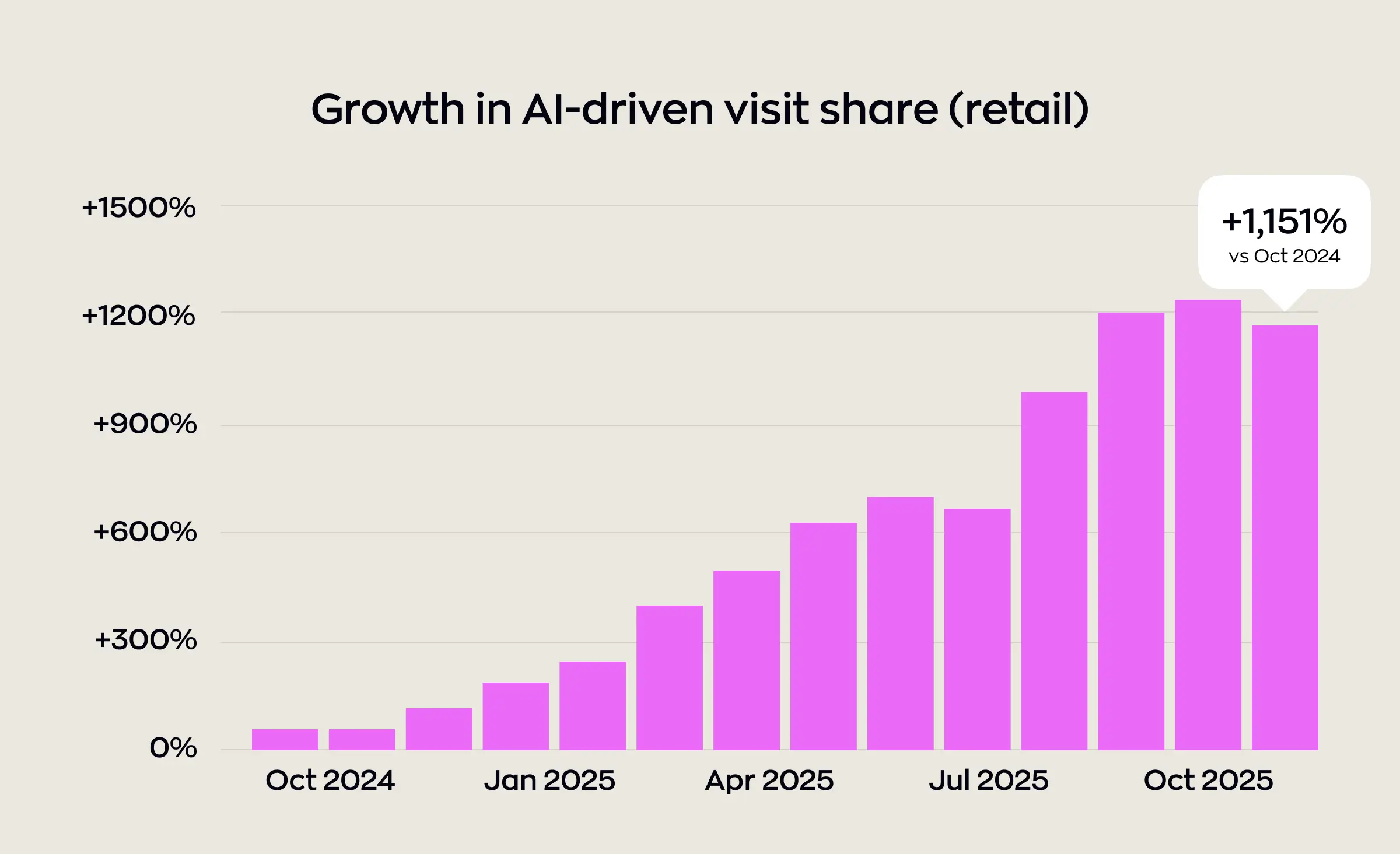
The 2025 holiday season broke online shopping records, with people spending $257.8 billion — much more than before. Visits to retail sites from digital marketing AI tools jumped by more than 690% compared to last year, and overall, AI-driven traffic to stores grew by over 1,100%. These numbers show that more people are using AI in e-commerce to find and choose brands, and this trend is only getting stronger. Thus, even small improvements in user experience optimization can boost conversion rates and create lasting brand loyalty.
Elevating conversion rates and ROI with AI-driven marketing
Across online retail, e-commerce personalization is now a competitive must-have. AI in e-commerce helps to make sure that product recommendations, checkout flows, and even promotions fit each buyer's needs. Digital marketing AI solutions for business elevate campaign precision, helping target the right users at the right moment.
AI-driven marketing goes beyond old-fashioned segmentation. These systems tap into hyper-personalization, using recommendation systems AI and data-driven personalization to fine-tune every message or offer. AI marketing strategies test and update campaigns faster, measuring results in real time and scaling what works.
Conversion rates rise when users see products that match their interests. A product recommendation engine and content recommendation engine can drive more clicks, add-to-cart actions, and completed purchases. Recommendation systems AI also support seamless browsing, making sure users don't get lost in overwhelming catalogs. For many, this means higher average order values and better ROI. AI for customer experience makes online shopping and browsing easier and more enjoyable, raising both conversion and retention.
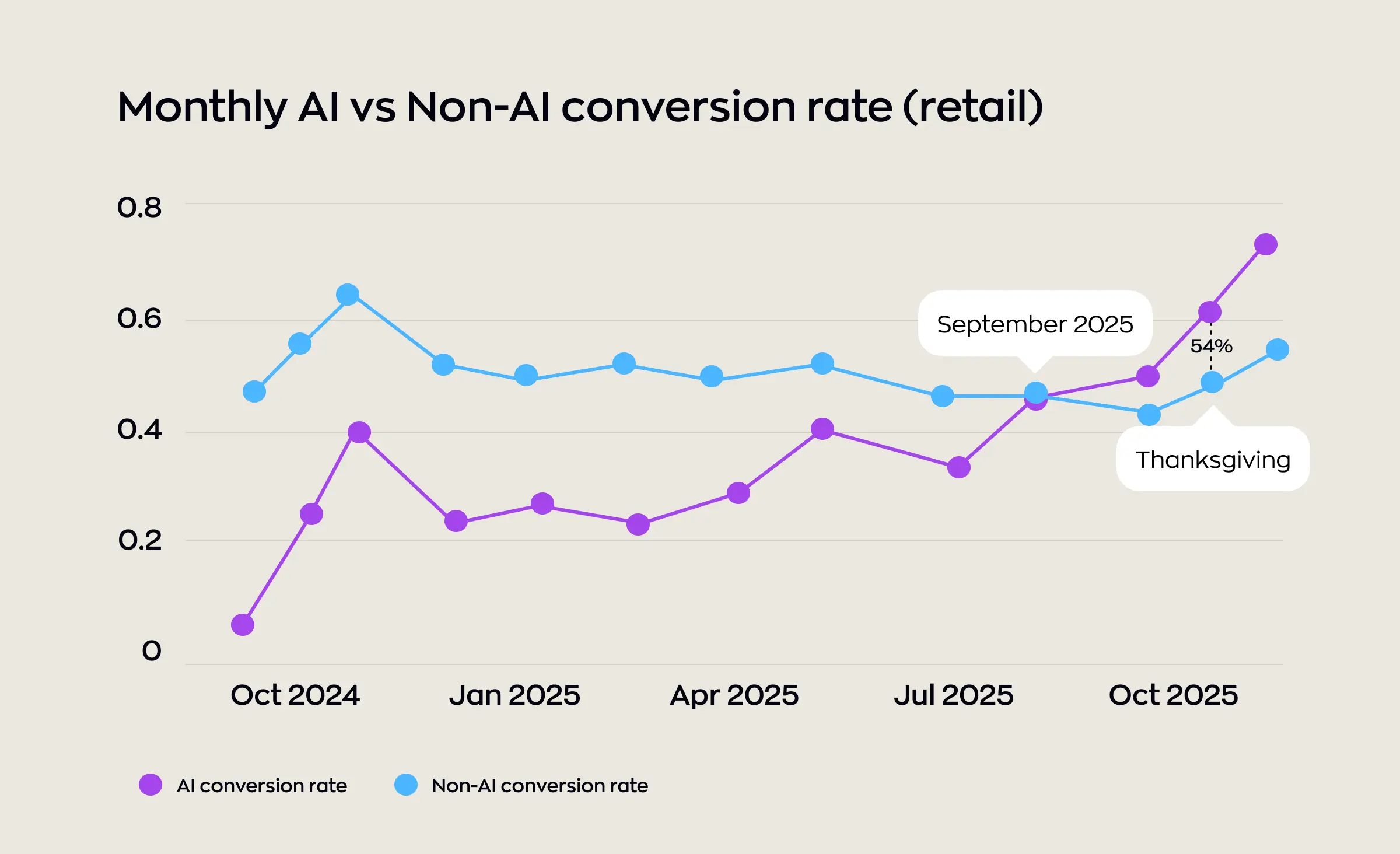
For example, during the 2025 holiday season in the US, AI-powered traffic did more than just browse — it converted, with referral conversions up 31% over other sources and revenue per visit jumping 254% year-to-date. AI technology-driven conversions were 54% higher than non-AI traffic on Thanksgiving and 38% higher on Black Friday. Shoppers who arrived via generative AI assistants bounced 33% less often, spent 45% more time on-site, and viewed 13% more pages per visit. Overall, 81% of customers using AI assistants said their shopping experience improved, and between January and July of 2025, revenue per visit from AI for customer experience was up 84% versus non-AI solutions for business.



Separately, user experience optimization helps buyers move smoothly from discovery to purchase. Data-driven personalization helps to make sure every communication and offer is relevant — strengthening brand loyalty and keeping revenue growing. Artificial intelligence brings new levels of accuracy and speed to this process, helping your business adapt with every user action.
Informed decisions with customer insights AI
Building a successful personalization strategy depends on accurate data and timely insights. Customer journey personalization helps brands map and optimize every stage of the relationship, from the first click to repeat purchases and referrals. Many teams now use AI solutions for business to measure results, identify where users drop off, and test new ideas quickly.
Customer insights AI processes data from every interaction, surfacing the signals that lead to long-term success. With machine learning personalization, teams learn which features, products, or messages drive positive behavior. Data-driven personalization guides smarter resource allocation and informs content planning, product updates, and customer care.
Customer data platforms (CDPs) store and organize multi-channel data, supporting deeper analysis. With AI-powered personalization engines at the center, your team can launch and refine campaigns using the most current and complete information. New AI applications make these insights available instantly — so strategy stays proactive, not reactive.
In the end, hyper-personalization and clear insight support customer trust and business growth. When your personalization strategy is built on robust technology and data, you're prepared for today's market demands and ready for future changes as well.
Best practices for implementing digital marketing AI
When implementing AI-powered personalization engines, focusing on both technology and strategy is essential for success. Smart deployment helps businesses achieve their goals, meet compliance standards, and deliver real value to users across all digital channels.
Aligning digital marketing AI technology with business goals
Start by connecting your AI technology to clear business objectives. A strong personalization strategy should guide every decision, helping teams pick the right tools and features. Leading companies rely on digital marketing AI solutions for business that flex as needs grow — whether it's boosting sales, raising retention, or improving customer service.
Customer data platforms (CDPs) play a pivotal role by consolidating and standardizing user data from every channel. This gives artificial intelligence systems the foundation they need to support hyper-personalization and accurate recommendations. When your AI-powered personalization engines access clean, unified data, they can drive greater user experience optimization and data-driven personalization for every visitor or customer. Choose AI technology that's flexible, future-proof, and proven to increase ROI. Investing in the best AI solutions for business will provide long-term adaptability and value.
Maximizing customer trust and data privacy
Earning user trust starts with responsible data handling. Use customer data platforms (CDPs) that are secure and transparent about how data is collected and processed. It's vital that AI-powered personalization engines respect privacy preferences — delivering relevant experiences without crossing boundaries. Strong privacy protections reflect well on your brand and reduce risk. Businesses that rank user safety highly encourage loyalty and positive perception.
Cross-vertical AI applications and use cases
Personalized apps are now common in retail, finance, healthcare, and beyond. A personalized app experience means every user sees the features, content, or services most relevant to them. In digital marketing AI technology, targeted campaigns become more efficient and less wasteful thanks to personalization at scale.
AI for customer experience is critical in all sectors. AI applications help support chatbots in customer service, custom dashboards in financial tools, and learning content in education. Many leading companies Amazon, Netflix, and Spotify trust recommendation systems AI to deliver spot-on suggestions, helping users quickly find what matters to them. The most successful AI solutions for business are those that adapt to any industry, driving meaningful results no matter the setting.
E-commerce personalization brings tailored offers and recommendations to every shopper. User retention AI can identify churn risk in both subscription apps and banking products, prompting outreach or special offers at just the right moment. With a focus on personalized user experience, brands build deeper connections. The most successful AI solutions for business adapt to any industry, driving meaningful results.
Key domains and AI applications benefits:
- Retail: AI in e-commerce personalization delivers tailored product recommendations, offers, and improved user retention AI for customer experience and higher sales.
- Finance: Personalized apps provide real-time insights, fraud detection, and user-specific investment advice, improving user experience optimization.
- Healthcare: AI applications support patient engagement, reminders, and personalized health content for better outcomes.
- Education: Recommendation systems AI provides learning paths, adjusts content to individual progress, and supports adaptive testing.
- Marketing: Digital marketing AI targets ads and content to the right audience for improved engagement, while AI-driven marketing and strategies increase reach and efficiency.
Every business can benefit by using recommendation systems AI to surface products or services, AI-driven marketing to optimize campaigns, and AI marketing strategies to raise awareness. These best practices keep user needs at the center — making your personalization engine both effective and future-ready.
Future trends: Predictive and real-time personalization
As artificial intelligence evolves, the future of personalization will be shaped by even more advanced recommendation systems AI technology. Predictive personalization is becoming a game-changer by using machine learning personalization and data-driven personalization to anticipate what users want next. Instead of reacting to user behavior, recommendation systems AI and a modern product recommendation engine can now predict needs and deliver offers in advance — boosting conversion and customer satisfaction.
Real-time personalization will continue to raise the bar for user experience optimization. Today's AI applications adjust content, offers, and navigation in the moment, so every user interaction feels unique and timely. With the acceleration of AI-driven marketing, these instant updates help companies respond to trends as they appear, not after the fact. This change is central to modern AI marketing strategies, making hyper-personalization at scale a business standard.
In the years ahead, artificial intelligence will link every touchpoint along the customer journey personalization path. User activity, preferences, and purchase histories will power AI for customer experience, allowing organizations to create more tailored, engaging moments. Teams will rely on data-driven personalization and strong personalization strategy to support ongoing user experience optimization and reach higher retention.
As AI applications become more sophisticated, the entire industry is moving closer to a world where each interaction is truly personal. Companies that invest in these AI-driven marketing technologies now will build a lasting advantage, providing a personalized user experience that sets them apart in the digital marketplace.
Conclusion
AI-powered personalization engines have become an essential part of today's digital strategy, driving growth and loyalty for businesses of all sizes. With artificial intelligence and machine learning personalization, companies can offer a personalized user experience that goes beyond the basics and keeps customers engaged at every touchpoint.
A strong personalization strategy and advanced AI technology allow you to build hyper-personalization into every channel, from personalized apps to e-commerce personalization and digital marketing AI. By using AI solutions for business — like recommendation systems AI and product recommendation engines — brands can deliver relevant offers and content in real time, increasing conversion and customer engagement AI across the board.
Modern AI applications turn data-driven personalization into actionable insights, powering smarter decision-making and better user experience optimization. Artificial intelligence helps map every customer journey personalization and adapts to shifting needs, while AI for customer experience brings a seamless and tailored feel to every interaction.
As you plan for the future, invest in technologies that deliver on these promises. AI-driven marketing, personalized user experience, and customer-focused tools set your business apart. If you're interested in AI solutions for your business, fill out a short form below and we'll recommend the best possible solution for your product.
Related posts






Related Services
React Native App Development Services
Save time and costs with Ronas IT's React Native app development, allowing cross-platform capabilities for iOS and Android. Our team has built over 30 apps across various sectors, ensuring rapid development, flexible maintenance, and cost-effective solutions.
MVP Development Services
Need to launch your startup quickly? Ronas IT offers urgent MVP development services, allowing you to get a fully-functional app in just 1-3 months. Ideal for testing business ideas, presenting to investors, or entering the market swiftly. Benefit from our extensive experience and accelerated development process.
Custom Mobile App Development
Transform your business with Ronas IT's custom mobile app development. We create tailored UI/UX designs, write clear and efficient code, and ensure seamless releases to Google Play and the App Store. Our experienced team delivers high-performance, secure apps within 3-4 months.