AI-driven recommendation systems: Building smart engines for e-commerce and content platforms


AI-driven recommendation systems are transforming the way businesses connect with their customers. Powered by artificial intelligence and machine learning, these advanced engines analyze user data and behavior to suggest products, services, or content that best fit individual preferences. Whether you're shopping online or browsing a streaming platform, a recommendation engine AI is often working behind the scenes to make your experience more personal and relevant.
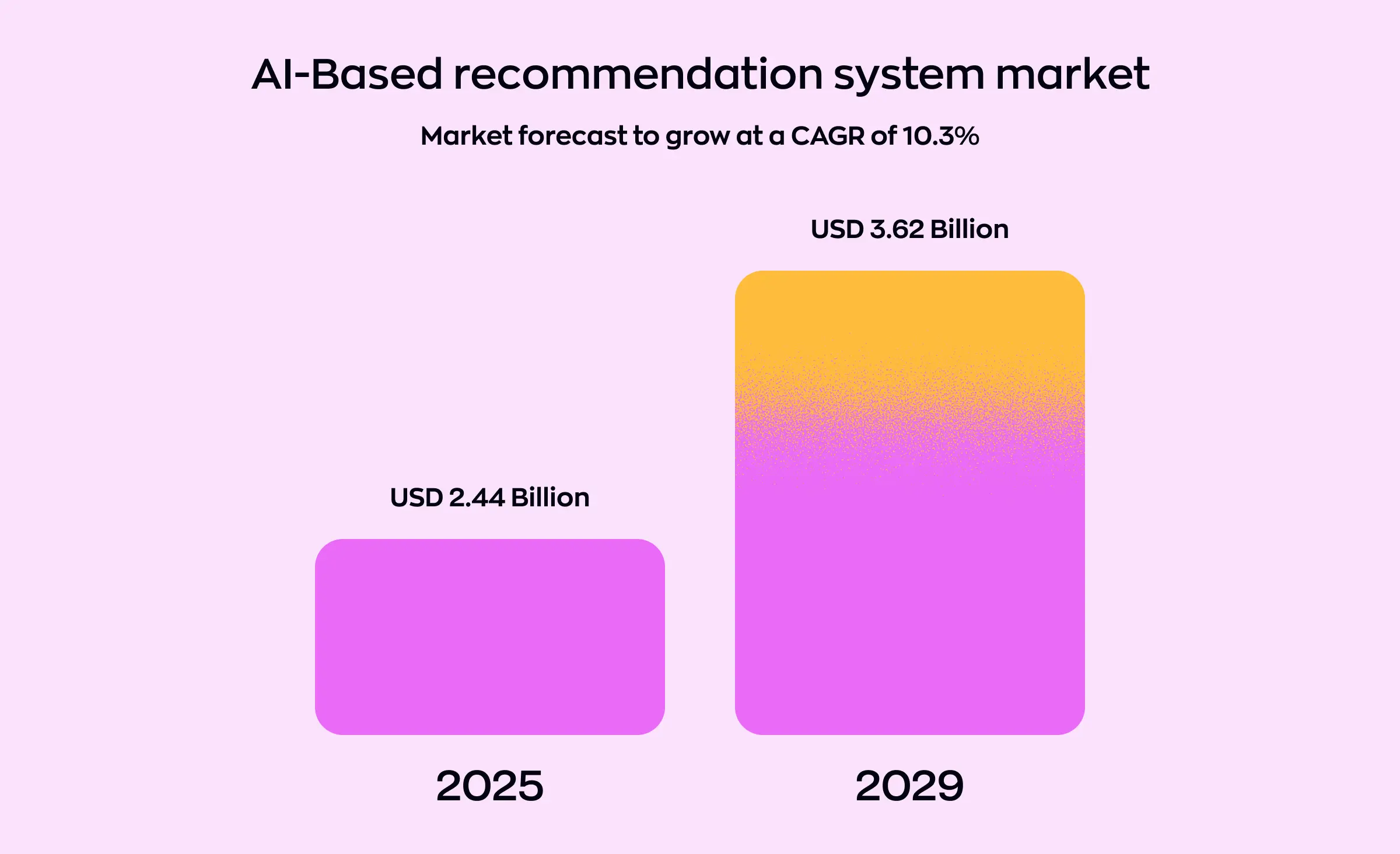
Today, AI-driven recommendation systems e-commerce uses are essential for any business aiming to boost personalization and stay ahead in a competitive market. Not only do these systems enhance the user experience, but they also drive customer engagement, improve content platform engagement, and increase conversion rates by delivering the right offerings at the perfect time.
The integration of AI solutions into e-commerce development and content management is a major force in the current digital transformation. By connecting data analytics with smart technology, businesses see real impact in how users interact — and return again and again.
In this article, we'll explore how AI-driven recommendation systems e-commerce uses work, the core strategies behind their effectiveness, and why AI business integration is becoming a must for companies who want to lead in e-commerce personalization, retention, and revenue growth.
Fundamentals of AI-driven product recommendation engine
Modern recommendation engine AI relies heavily on artificial intelligence and machine learning to make sense of vast amounts of customer data. These product recommendation engine technologies analyze shopping habits, browsing patterns, and even content preferences, allowing businesses to craft personalized strategy. By learning from user interactions over time, AI applications improve user experience through hyper-relevant product and content suggestions, fueling deeper engagement and satisfaction.
Key components of a recommendation engine AI
A successful recommendation engine AI typically involves several layers: data collection, feature extraction, model training, and real-time prediction. Data analytics and big data for e-commerce fuel the process, as personalized user experience AI systems digest information from every click, view, and purchase. As a result, these engines are able to deliver tailored insights that power sophisticated e-commerce personalization and content recommendations.
Data collection: Building a strategic foundation
Data is the fuel for all machine learning recommendations. Data collection should be viewed as an asset-building exercise — combining transactional records, clickstreams, dwell time, and cross-device interactions into a comprehensive profile of user intent.
Feature extraction: Turning data into intelligence
Once you've gathered raw data, feature extraction translates it into meaningful signals. This phase is where technical capability meets market insight. The features you choose determine how effectively the personalized user experience AI will align with real customer motivations.
Model training: Crafting the predictive engine
At this stage, your data becomes the foundation for actionable predictions. Model training is both a technical and business experiment. Different algorithms fit different goals: collaborative filtering for similar-user insights, content-based models for new users, or hybrid systems for advanced personalization.
Real-time prediction: Delivering personalized experiences
This final layer powers the user-facing experience. When customers interact with your website or app, real-time prediction helps to make sure each recommendation feels relevant and immediate — the heartbeat of modern personalized user experience AI.
Mastering these layers means creating a self-learning ecosystem that continuously improves AI for increased conversion, enriches customer engagement, and drives measurable growth through intelligent personalization strategy.
The strategic role of AI in digital marketing and AI business integration
AI in digital marketing changes the essence of customer engagement and content management. By using real-time data analytics and automated insights, marketers can run campaigns that feel personalized to every user. This not only increases satisfaction but also drives loyalty and conversion. Strategic AI business integration helps to make sure that AI isn't an isolated tool, but a vital part of daily operations — from product strategy to customer engagement interactions. With customer lifetime value (CLV) AI, digital marketers can allocate budgets more effectively by targeting segments likely to deliver higher returns.
“AI business integration isn't just about adding new technology — it's about aligning intelligent systems with real business objectives. When recommendation engines are fully integrated with marketing, analytics, and content management platforms, we see a measurable impact on personalization, engagement, and revenue. The real power comes from making AI a seamless part of every user interaction and business process, allowing us to adapt quickly to changing customer needs and drive sustainable growth.”
At the heart of this digital transformation are robust AI applications and a thought-through e-commerce personalization strategy. Teams invested in e-commerce development and content management need to recognize the value of data-driven tactics, seamlessly blending data analytics and smart algorithms into the core of their platforms. When supported by advanced machine learning and artificial intelligence, companies unlock the full potential of targeted customer engagement and ongoing growth.
Core algorithms and system architecture
To deliver powerful, scalable recommendations, modern platforms rely on a combination of advanced algorithms and robust technical infrastructure. The backbone of any successful recommendation engine AI is its ability to analyze user behavior and large sets of data, adapting in real time as needs and preferences change. Let's explore the most common algorithmic approaches and the architectural strategies that bring AI-driven recommendation systems e-commerce to life.
Collaborative filtering, content-based filtering, and hybrid systems
Collaborative filtering
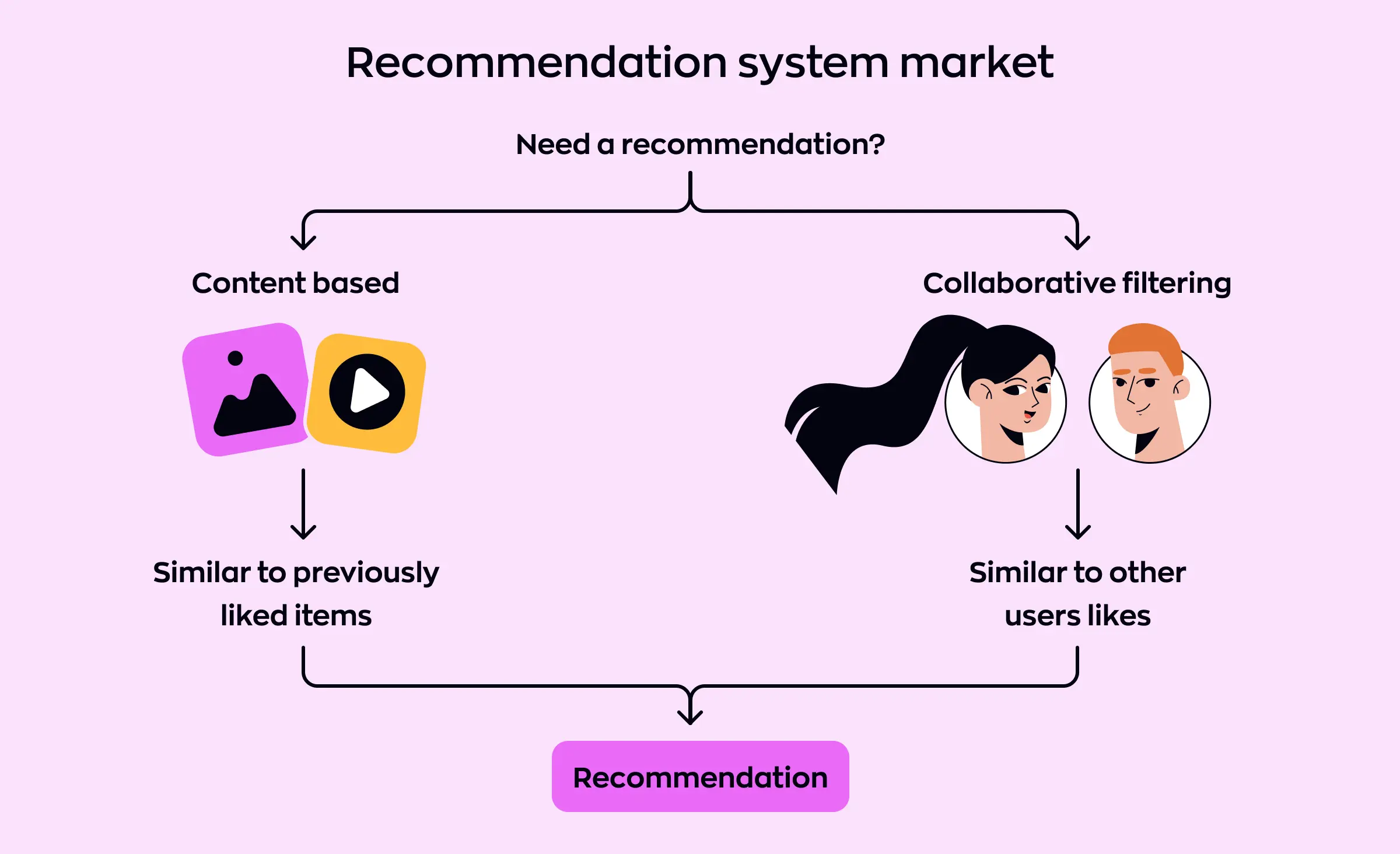
One of the most widely adopted methods in any recommendation engine AI is collaborative filtering. This technique uses behavioral data from many users to uncover shared preferences and patterns. By comparing users' actions, machine learning recommendations suggest new products or content based on what similar users have enjoyed.
Content-based filtering
Content-based filtering looks at individual preferences and product attributes to generate relevant recommendations. Artificial intelligence and data analytics analyze a user's history — such as previous purchases, ratings, or interactions — to recommend items with similar features. This approach is especially effective for new users or unique tastes.
Hybrid recommendation systems
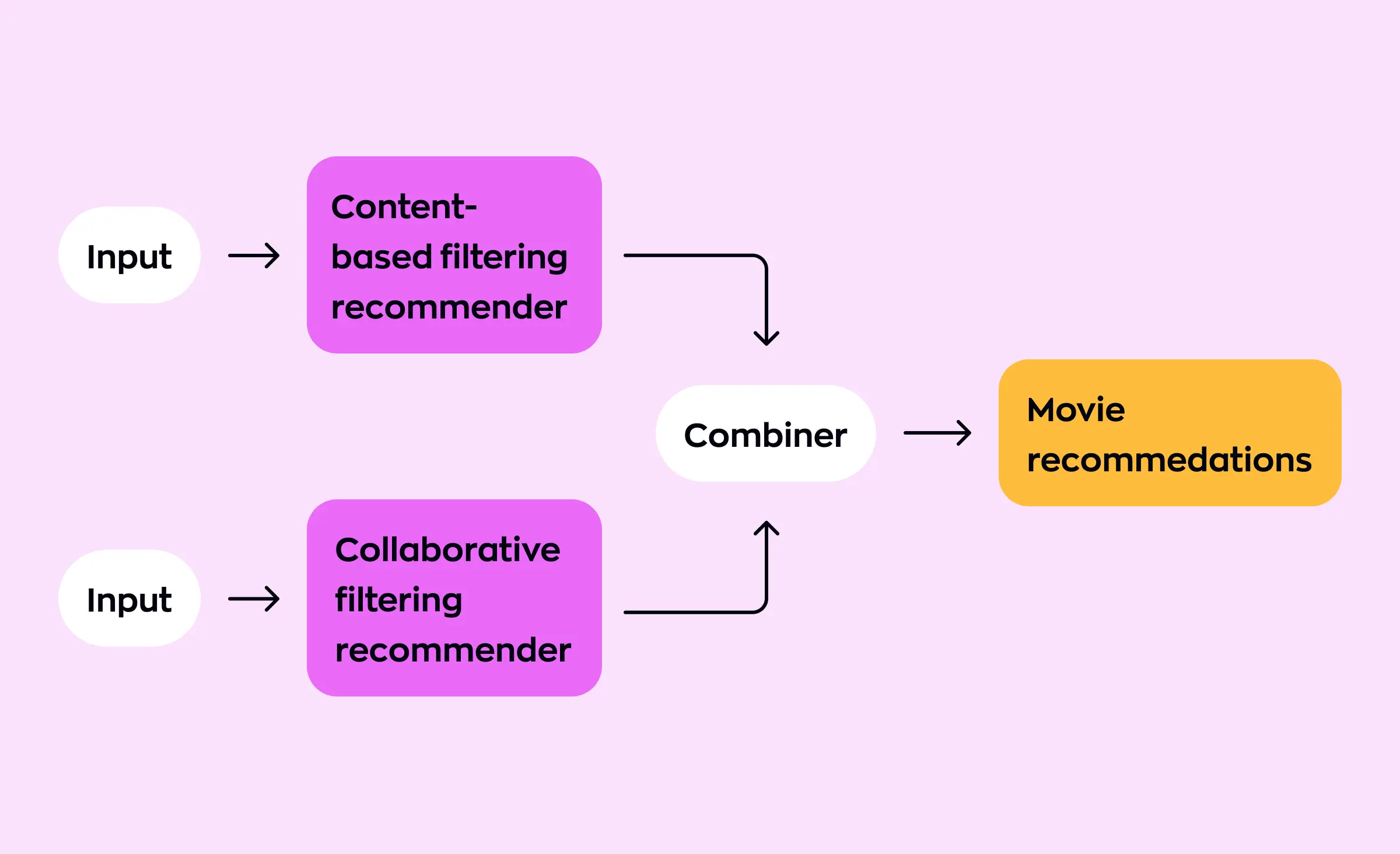
To increase accuracy and flexibility, many organizations deploy hybrid recommendation systems. These combine collaborative and content-based filtering within a unified framework, allowing AI solutions to provide smarter, more adaptable results that overcome the “cold start” and data sparsity problems found in single-method systems.
Real-time recommendations and backend architecture
The role of real-time recommendations
Today's users expect instant results. Real-time recommendations require powerful backend development to process current behaviors and deliver updates without delays. Such agility demands that systems process and analyze big data for e-commerce as users interact with platforms — scaling up as visits spike during promotions or peak seasons.
Building a scalable product recommendation engine
Designing a scalable product recommendation engine is central to robust e-commerce development. Teams build flexible architectures that handle vast product catalogs, track fast-changing user preferences, and support millions of personalized sessions. Alignment with your core AI strategy provides effective AI business integration, so tailored machine learning recommendations are directly connected to your business goals and revenue growth.
AI business integration: Connection with broader systems
Successful recommendation systems are never isolated. They work closely with other parts of your stack, feeding data into marketing, content management, and analytics platforms. This allows for unified machine learning recommendations, informed by behaviors from across the entire site, to improve the overall user experience.
By combining cutting-edge algorithms, smart backend development, and an integrated strategy for artificial intelligence, you set your business up to delight users and stay ahead in a rapidly evolving market.



E-commerce personalization and content management
Effective e-commerce personalization redefines the online shopping journey. Through advanced artificial intelligence and machine learning recommendations, retailers can analyze browsing habits, purchase history, and even social signals to tailor each site visit. This strategy delivers timely, relevant product suggestions — often powered by a sophisticated product recommendation engine working seamlessly in the background.
E-commerce personalization strategy lies at the core of today's digital businesses. With the right AI applications and strong backend development, personalization can boost sales, increase average order value, and foster long-term loyalty. Personalized user experience AI is a vital force driving both customer engagement and overall e-commerce development.
Improving user experience and customer engagement
Going beyond just product suggestions, personalized user experience AI fine-tunes every step — recommended categories, tailored offers, and contextual content, all working together to drive higher customer engagement. On modern content platforms, this approach means suggesting the right articles, videos, or playlists based on individual interests and behaviors, building stronger content platform engagement.
The role of AI in dynamic content management and delivery
Dynamic content delivery AI makes each digital interaction feel unique. Algorithms analyze user actions in real-time and adapt banners, headlines, or entire layouts instantly. This personalized user experience AI's responsiveness not only keeps users interested, but also helps to make content stay relevant across devices — supporting priorities like mobile accessibility for an even broader reach.

Real-world applications
Leading e-commerce sites now use real-time recommendations to nudge shoppers toward bestsellers or rediscover forgotten items in their carts. Streaming services use personalization to fuel content platform engagement, keeping viewers active longer and increasing subscription rates. These digital transformation advances are possible thanks to innovative AI solutions, robust content management systems, and refined e-commerce personalization strategy.
E-commerce personalization, digital transformation, and beyond
As companies adapt to rapid digital transformation, investing in personalization is no longer optional. By integrating AI in digital marketing, deploying scalable AI applications, and using the power of big data for e-commerce, brands set themselves apart in a crowded marketplace. Every improvement to user experience — backed by a future-focused personalization strategy — adds value, fosters loyalty, and positions teams for success in an ever-changing digital world.
Achieving business impact through AI in digital marketing
Implementing AI for increased conversion is a game-changer for modern businesses. Artificial intelligence and machine learning are at the heart of solutions that encourage more purchases, foster loyalty, and lift revenue across both e-commerce and content platforms. Powerful product recommendation engine systems use real-time triggers and behavioral insights to boost customer engagement and push users toward high-value actions.
Maximizing customer lifetime value (CLV) AI
Long-term success depends on building deeper relationships — not just making a single sale. By measuring and boosting customer lifetime value (CLV) AI, brands can personalize follow-ups, anticipate needs, and target the right offers at the right times. The integration of personalization strategy in e-commerce development helps to make sure every interaction delivers value, driving higher retention and customer satisfaction.
Using A/B testing recommendations to optimize results
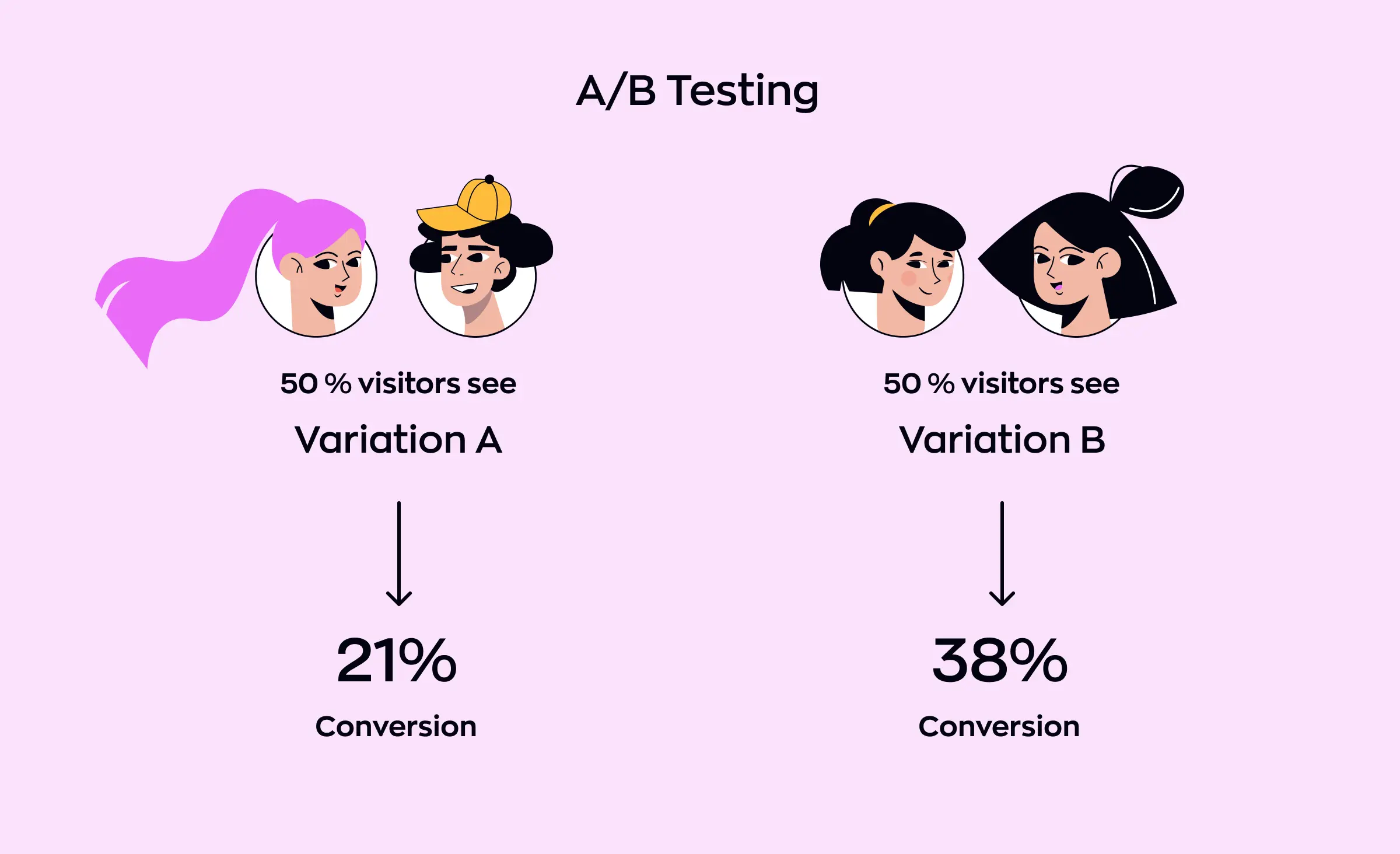
The smartest teams use A/B testing recommendations to fine-tune every aspect of their AI applications. By experimenting with different versions of machine learning recommendations, offers, or user flows, companies uncover what truly drives results for their target audience. This data-driven approach uses data analytics and big data for e-commerce to make each improvement evidence-based and actionable.
E-commerce personalization strategy and measurable outcomes
With a robust personalization strategy, brands can closely track how each tweak impacts user experience, content platform engagement, and overall sales. Whether it's using dynamic content delivery AI to surface trending products or refining navigation based on user behavior, AI applications help teams to act quickly on actionable insights.
Continuous integration and scalable backend development
Business impact isn't a one-time project — it's an ongoing process. AI business integration and savvy AI strategy keep things evolving. That means constant refinement of your backend development and product recommendation engine to support scaling, changing user needs, and competitive pressures.
With seamless AI in digital marketing, user data flows into every campaign, and insights from customer engagement translate into smarter offers and higher ROI. When all parts of your business — from marketing to engineering — work together using insights gathered through AI, your organization is positioned for sustainable growth and industry leadership.
Best practices for deployment and optimization
A successful AI strategy begins with defining clear goals for your recommendation engine AI. Decide what you want to achieve — higher conversion rates, better user experience, increased retention — and select the right AI solutions and AI applications to match your ambitions. It's important to align your team's expertise, tools, and process with the business objectives at every stage.
Step 1. Prioritizing seamless and ethical user experience
For AI-driven recommendation systems e-commerce to be truly effective, they must deliver a frictionless, ethical user experience. This means not only providing accurate and timely suggestions, but also addressing key legal and ethical considerations: privacy, transparency, and fairness. Make your recommendation logic as transparent as possible and allow users control over their data. Personalized user experience AI should empower, not manipulate, your audience.
Step 2. Leveraging big data and data analytics
Optimal recommendations rely on quality information. Tap into big data for e-commerce and advanced data analytics to understand your customers, monitor system performance, and reveal hidden opportunities. Tracking how users interact with your platform enables your machine learning recommendations to improve over time, delivering smarter and more relevant results.
Step 3. Maintaining high performance and scalability
Ensuring consistent performance is key to ongoing impact. Build your backend development and e-commerce development layers to handle spikes in demand, large product catalogs, and massive volumes of real-time data. Design your recommendation engine AI for speed, reliability, and agility, so that updates, new features, or business pivots can happen quickly.
Step 4. Continuous testing and personalization
Keep testing and refining your algorithms. Use analytics and real-world feedback to optimize your personalized user experience AI, and always adapt to new trends and user expectations. Routine audits of your AI strategy ensure your solution remains state-of-the-art, fair, and aligned with user needs.
By following these best practices, you create a recommendation platform that's scalable, ethical, high-performing, and tuned to deliver ongoing value — fueling business success and building long-term trust with your customers.
The future of AI-driven recommendation systems
The landscape for AI solutions in recommendations is moving fast. Among the most exciting changes, real-time data analysis and contextual awareness now power even more relevant suggestions, while machine learning and artificial intelligence grow smarter with every user action. Expect to see new AI applications built directly into shopfronts and content feeds, delivering a seamless, personalized experience in both e-commerce and content platforms.
Digital transformation and integration
As the next wave of digital transformation accelerates, the integration of smart recommendation engine AI into every touchpoint is becoming standard practice. Forward-thinking businesses are embedding these engines within mobile apps, web platforms, and even offline experiences to maximize personalized user experience AI and deepen customer relationships.
This shift demands close coordination between AI business integration, strategy, and robust backend development. Teams that bridge data, marketing, and engineering functions are best equipped to adopt new technologies or scale their existing AI solutions with minimal friction.
Innovations in e-commerce and content management
New frontiers are opening in e-commerce personalization and content platform engagement. Modern AI applications dynamically tailor product suggestions, adapt interfaces, and guide users to new discoveries, while improved content management helps to make sure these changes are easy to deploy and maintain. This means every interaction — whether shopping or streaming — can be continually refined.
Practical steps and strategic upgrades for AI in digital marketing
For companies looking ahead, practical steps include auditing current systems, upgrading or rebuilding your product recommendation engine, and aligning your AI strategy with broader business objectives. Continuous AI business integration and investment in future-ready data infrastructure will keep your company agile and competitive. For businesses undergoing digital transformation, the following steps can help align technical improvements with measurable growth outcomes:
- Conduct a thorough system audit. Assess your current data pipelines, recommendation logic, and personalization workflows. Use data analytics to identify performance gaps and opportunities where automation or customer lifetime value (CLV) AI models could improve results.
- Modernize your product recommendation engine. Rebuild or upgrade outdated systems with modular, cloud-native architecture that supports real-time machine learning recommendations and scalable AI business integration across marketing and sales channels.
- Revamp data infrastructure. Establish unified storage and governance frameworks to connect marketing data, CRM systems, and content management platforms. Clean, well-structured data is the backbone of every personalized user experience AI system.
- Align AI goals with business objectives. Define how AI impacts key metrics — from retention and upselling to overall customer engagement and digital transformation milestones.
- Prioritize continuous learning and optimization. Regularly retrain models, implement A/B testing, and adjust campaigns based on up-to-date insights from data analytics dashboards.
- Invest in talent and culture. Encourage teams to use AI applications responsibly and creatively while maintaining compliance, transparency, and long-term user trust.
- Measure real business impact. Track improvements not just in conversions but in overall profitability, especially improvements related to customer lifetime value (CLV) AI predictions.
Collectively, these upgrades form the operational blueprint for sustainable AI in digital marketing, helping companies to personalize at scale, refine decision-making, and future-proof their growth in an increasingly AI-driven marketplace.
How Ronas IT can help
Ronas IT delivers comprehensive services across the entire digital product lifecycle, with deep expertise in e-commerce development, custom backend development, and advanced AI solutions. Our team is skilled at building data-driven architectures that support high scalability, security, and seamless user experiences. Whether your goal is to create a robust product recommendation engine, implement cutting-edge personalized user experience AI, or modernize your digital business through digital transformation, we provide solutions that drive measurable business value.
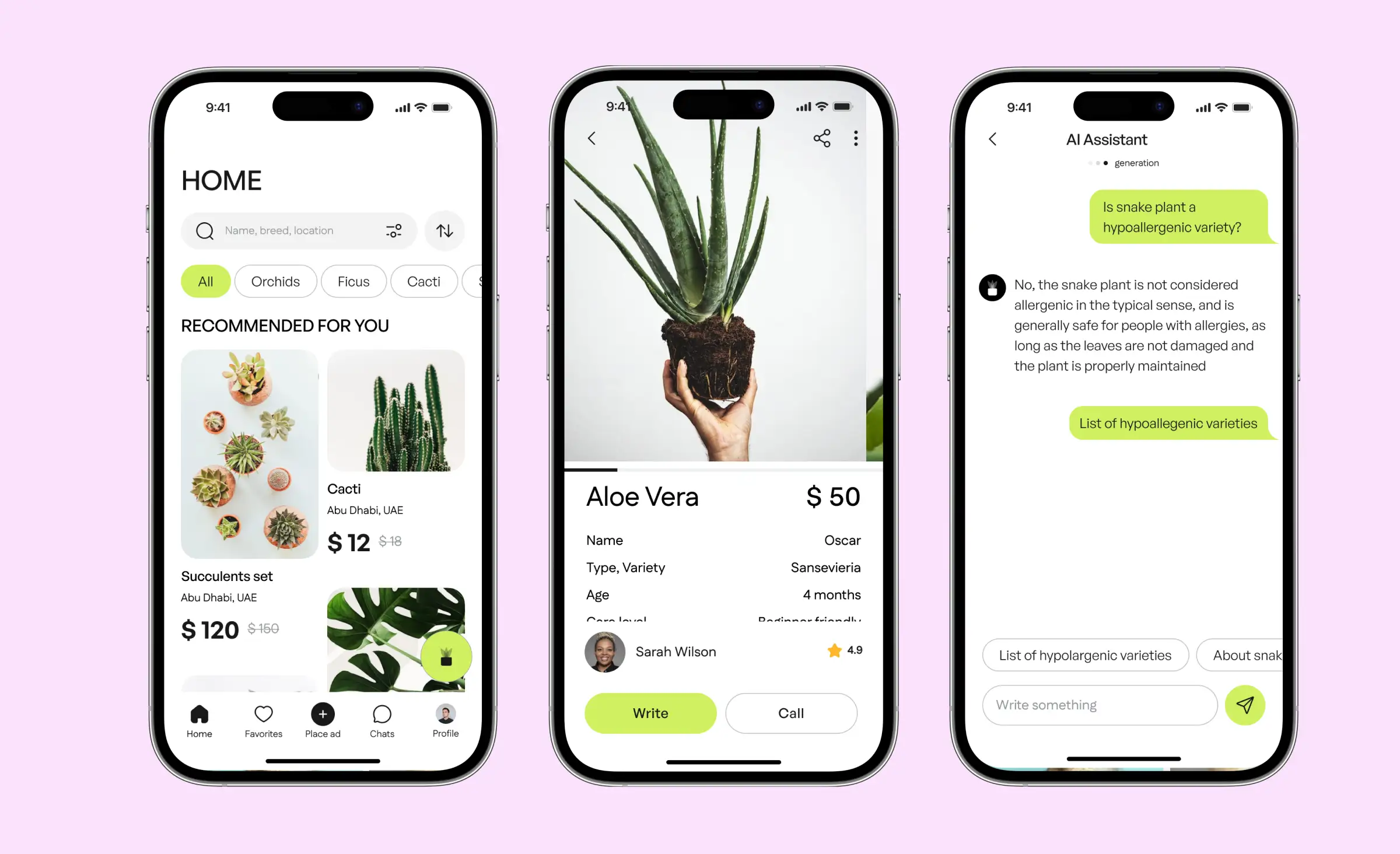
One example of our work is the e-commerce development of a marketplace platform for the UAE market, where we integrated AI-powered smart recommendations and a chat assistant to help buyers discover the perfect products for their needs. The platform features a scalable backend infrastructure, dynamic content management, and personalized onboarding flows fueled by advanced AI solutions.
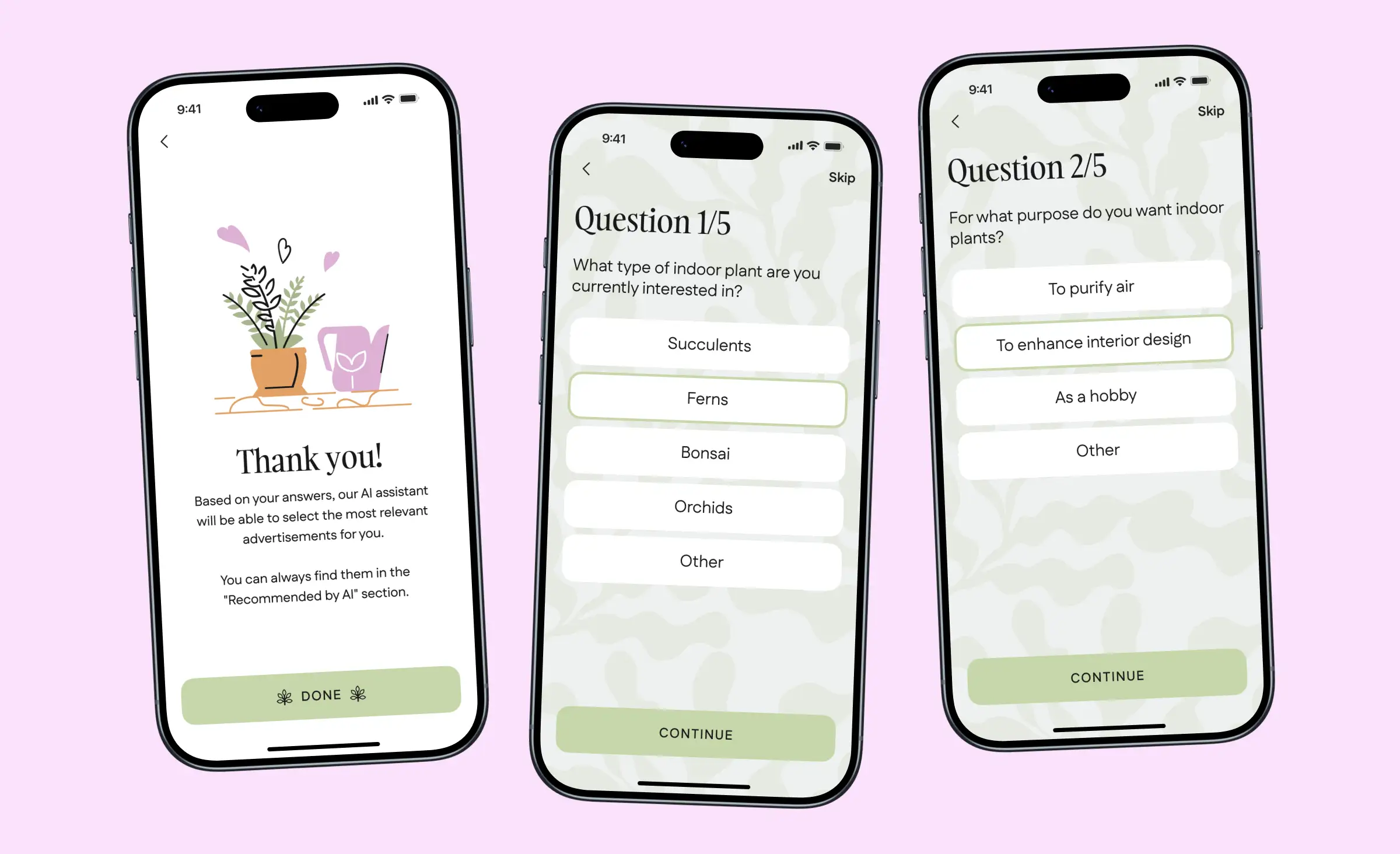
Our engineers leveraged proven technologies in both backend development and mobile platforms to ensure the product delivers a consistent, engaging user experience for every user, regardless of device or language. The smart recommendation feature enriches searching and matching, supporting both sellers and buyers in a growing marketplace environment.
“Building recommendation systems always means adapting to each client's needs. For this UAE marketplace, we paid special attention to right-to-left layouts and local regulations — like adding KYC for sellers. We also tested different onboarding paths to match how users interact with the platform and what the market expects.”
We also bring our expertise to projects that require tailored AI business integration and actionable data analytics, making sure your business can adapt to real-time demands and future challenges. If you're looking to launch or improve e-commerce or content platforms with robust recommendations and smarter personalization, Ronas IT can guide your journey from strategy to launch.
Ready to take the next step toward scalable AI in digital marketing? Contact us for a consultation or audit to see how our e-commerce development, backend development, and AI solutions can help your business grow.
Conclusion
AI-driven recommendation systems e-commerce uses have become a vital part of successful online businesses, fueling growth and transforming the way customers interact with products and content. Integrating a powerful recommendation engine AI into your platform helps you craft a tailored personalization strategy, elevate the user experience, and drive measurable results through the power of artificial intelligence.
With the right AI solutions and a modern product recommendation engine, you can leverage advanced AI applications to increase sales, boost engagement, and create lasting connections with your customers. Whether your business is focused on e-commerce development or content platforms, the benefits extend across every stage of the customer journey, from discovery to purchase and retention.
Now is the time to assess your organization's readiness for the next step in AI business integration and digital transformation. Start a pilot project, consult with industry experts, or simply fill out the form below to find out how you can future-proof your strategy and maximize the impact of AI in your business.
Related posts











Related Services
React Native App Development Services
Save time and costs with Ronas IT's React Native app development, allowing cross-platform capabilities for iOS and Android. Our team has built over 30 apps across various sectors, ensuring rapid development, flexible maintenance, and cost-effective solutions.
MVP Development Services
Need to launch your startup quickly? Ronas IT offers urgent MVP development services, allowing you to get a fully-functional app in just 1-3 months. Ideal for testing business ideas, presenting to investors, or entering the market swiftly. Benefit from our extensive experience and accelerated development process.
Custom Mobile App Development
Transform your business with Ronas IT's custom mobile app development. We create tailored UI/UX designs, write clear and efficient code, and ensure seamless releases to Google Play and the App Store. Our experienced team delivers high-performance, secure apps within 3-4 months.